

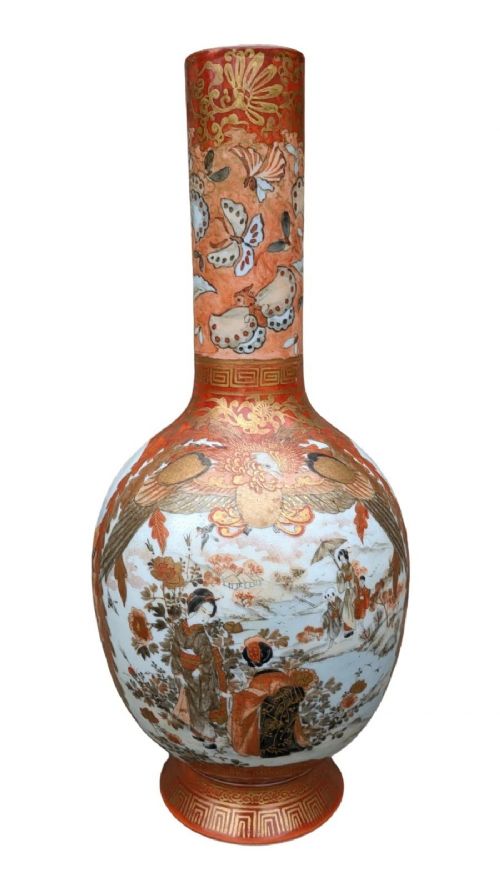


Kutani Ware Vase
These kutani ware vase examples bring bold overglaze enamel and gold leaf into interiors, offering striking Meiji period forms.
Kutani Ware Vase
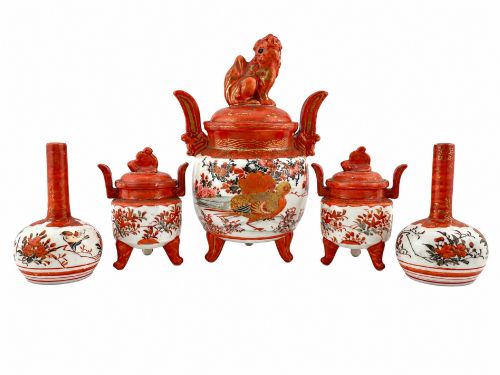
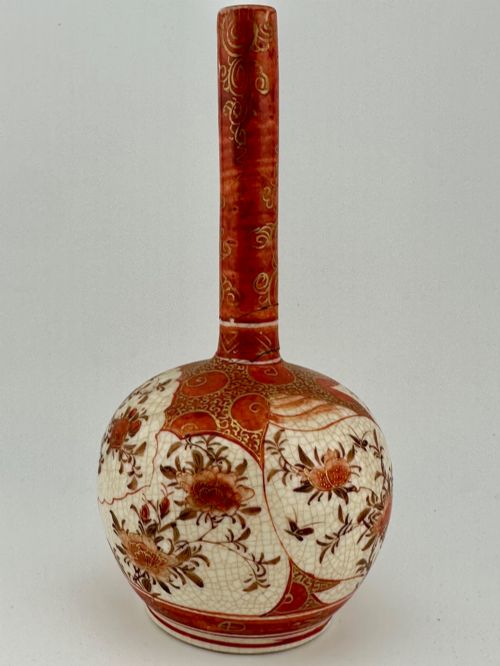
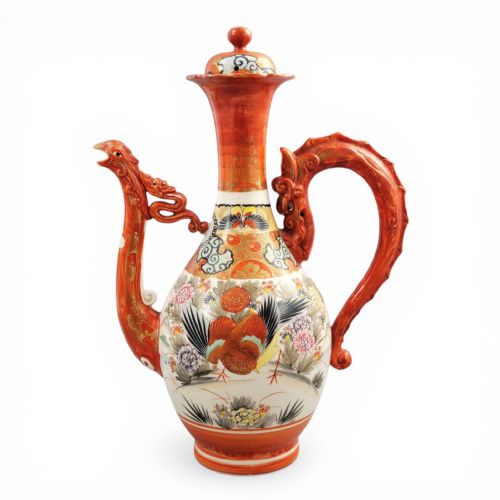
A kutani ware vase sits at the heart of Japanese ceramic export history, taking forms from cylindrical vessels and long neck bottle shapes to massive floor vases and five piece garnitures. Buyers searching this phrase look for pieces defined by rich palettes, frequently featuring shishi, birds, dragons, and phoenix motifs.
Most examples encountered on this page belong to the Meiji period and Taisho period, spanning the late nineteenth century into the early twentieth century. These include paired sets, pieces with lion handles, and vessels accompanied by carved wood stands.
How they were made
These porcelain pieces rely on high-temperature firing before receiving detailed decoration through overglaze enamel work. Artisans built up complex designs utilising iron red pigments alongside heavy gilding and gold leaf applications.
Certain vessels incorporate moriage technique, building up raised enamel dots and relief details that stand proud of the glaze surface. Carved wood stands often accompany the porcelain forms to complete the display.
Kutani Ware Vase Retail Price Guide 2026
Typical asking prices for kutani ware vase among the pieces listed under this phrase on Sellingantiques today, from the lower quarter to the upper quarter. They describe what is for sale here now, not the wider market.
Listings feature porcelain forms spanning the nineteenth and twentieth centuries, including Meiji period and Taisho period pieces.
What varies in quality
The precision of the overglaze brushwork and the thickness of the gilding separate standard production from superior pieces. Stronger examples display crisp delineation in the iron red motifs and balanced compositions across the porcelain surface.
Scale and ambition also define the upper tier, where large floor vases, garniture sets, and pieces from named workshops demonstrate greater control over complex pictorial scenes and raised moriage decoration.
Kinrin Workshop
The Kutani Ware Vase Glossary
- Kutani ware
- Japanese porcelain traditionally produced in Kaga province, known for vibrant overglaze enamel palettes and extensive gold leaf decoration. The style evolved through distinct historical revivals.
- Meiji period
- The era of Japanese history running from 1868 to 1912, corresponding with the majority of decorative export ceramics seen here. Pieces from this time frequently combine traditional motifs with techniques aimed at Western markets.
- Moriage
- A ceramic decoration technique where clay or thick enamel is piped onto the surface to create raised dots or patterns in relief. This adds a tactile, three-dimensional element to the vase body.
- Garniture
- A set of matching ceramic vessels designed to be displayed together on a mantelpiece or sideboard. These arrangements often comprise three or five pieces, including vases and covered jars or koro.
- Shishi
- A mythical guardian lion or dog frequently depicted in Japanese art and ceramics. These creatures appear modelled in relief as handles or painted within the decorative panels.
Kutani Ware Vase: Frequently Asked Questions
How do I identify a Meiji period piece?
Meiji period porcelain is generally identified by stylistic markers such as dense iron red and gold leaf decoration, alongside specific export era signatures. The weight of the porcelain and the execution of the overglaze enamel also offer clues to this timeframe.
Examination of the base and any associated wooden stands helps confirm the production era. Comparing the decorative motifs with documented examples from the late nineteenth century provides further clarity.
Where were these vases made?
These vessels originate from Japan, specifically associated with the Kaga province where the Kutani kilns operated. Production during the nineteenth and early twentieth centuries was largely geared towards international export.
Workshops in the region produced diverse forms ranging from everyday decorative items to large exhibition pieces. The regional style is characterised by bold colour palettes and intricate pictorial panels.
How should I display a large vase?
Large floor vases and heavy garnitures require stable placement on a level surface away from high traffic areas. Using the carved wood stands often supplied with these pieces helps distribute weight and protects the base.
Positioning the vase where natural light catches the iron red enamel and gold leaf brings out the fine details. Pairing related forms together creates a balanced arrangement reminiscent of historic interiors.