
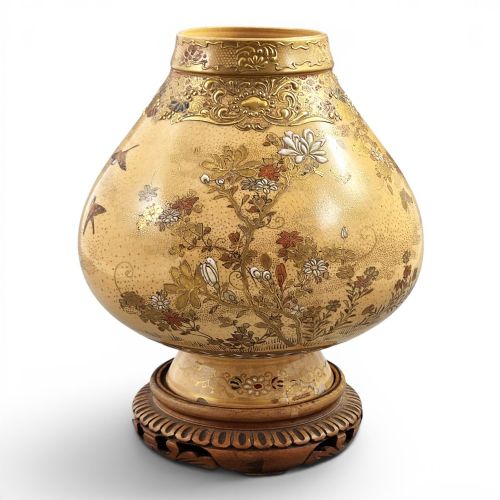
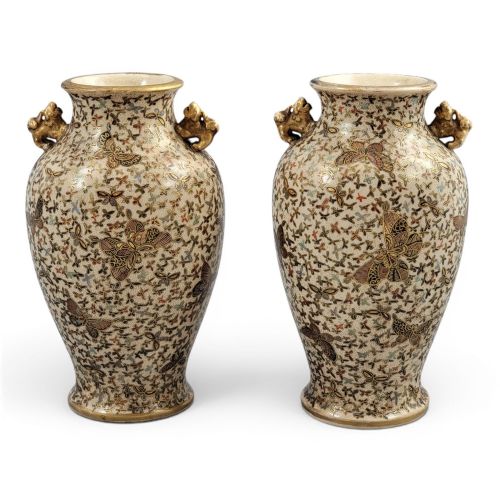


Cream Crackle Ceramic Vase
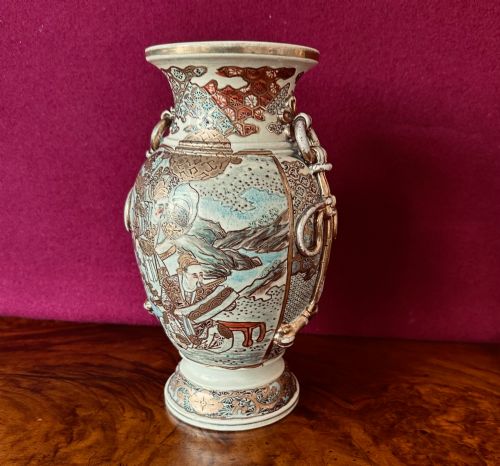
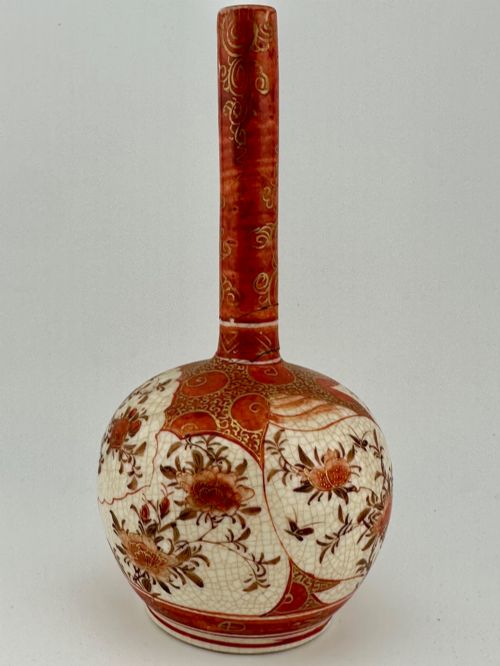
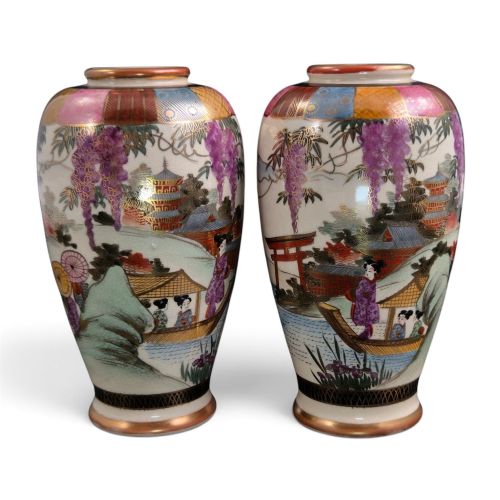
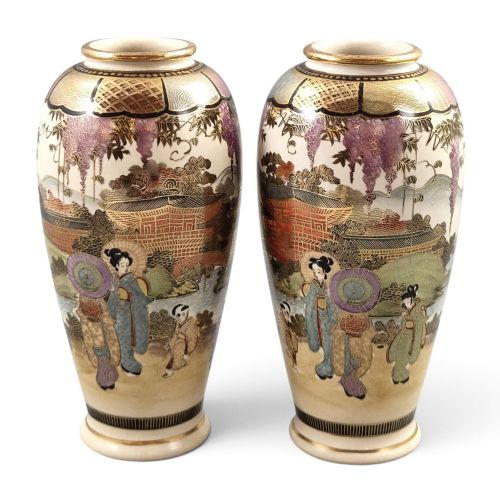
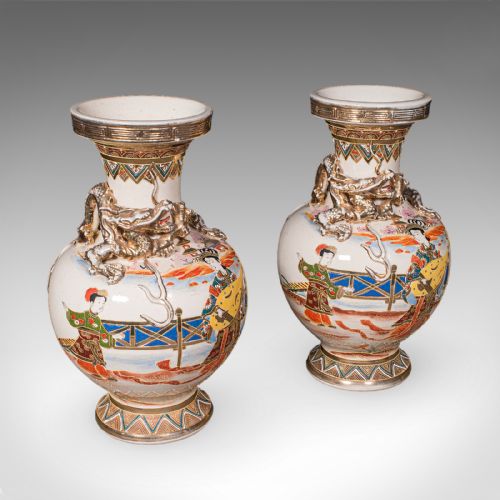
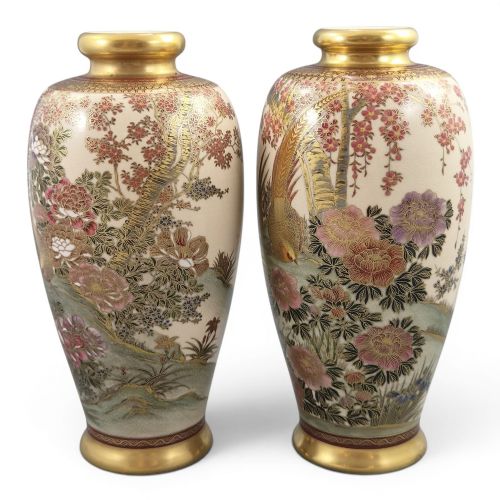
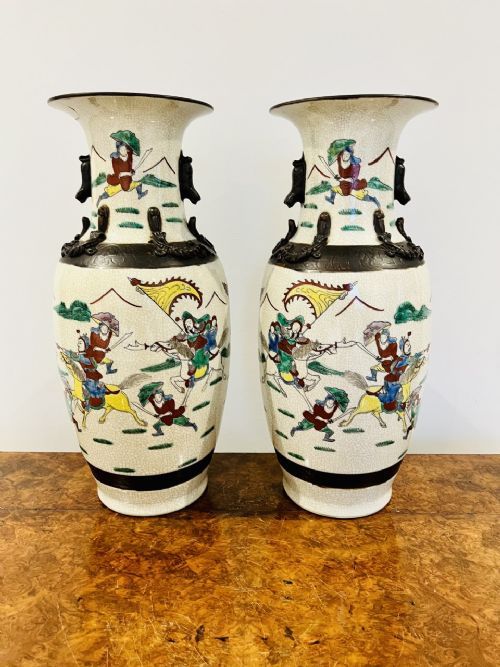
These cream crackle ceramic vase pieces bring intricate Meiji period Satsuma ware and nineteenth-century Chinese crackleware into a room, offering finely painted figural scenes and delicate crazed glazes.
Cream Crackle Ceramic Vase
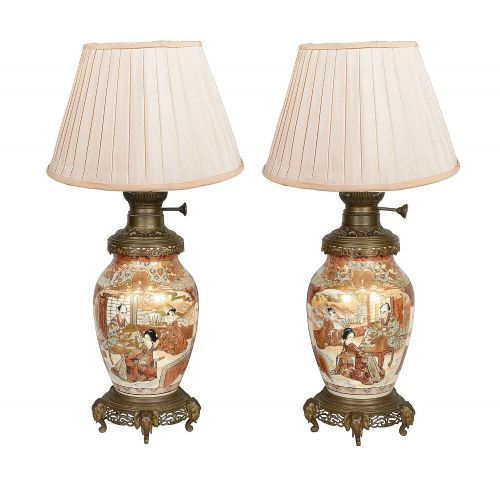
When you search for a cream crackle ceramic vase, you encounter Japanese Satsuma ware from the Meiji, Taisho, and early Showa periods alongside nineteenth-century Chinese crackleware. The selection ranges from monumental baluster vessels and long neck bottle forms down to miniature cabinet pieces and table lamps.
Most examples originate from Japanese workshops in Kyoto and Kobe, featuring earthenware bodies with characteristic cream craquelure glazes. These pieces frequently depict figural processions, landscapes with Mount Fuji, and floral motifs such as wisteria.
You will also find Chinese ceramic vessels displaying deliberate crackled glaze effects, often adapted into lamps during the Victorian and Edwardian eras. The inventory balances pair formats with individual statement items.
What varies in quality
The standard of painting determines the tier of a piece, separating densely populated figural processions and precise botanical studies from simpler, repetitive brushwork. Mastery in the control of the crackle glaze and the crispness of the gilt detailing also distinguish finer workshop output.
Signature placement and legible artist or workshop marks indicate higher production standards associated with prominent Meiji period names. Preservation of the enamel pigments and untouched gilding elevate the status of an antique vessel.
The listings on this page span the 19th century, the Edwardian era, and the Taisho and Showa periods.
Kinkōzan Workshop·Manpei·Chosei·Seiko-en Chokei·Choshuzan
The Cream Crackle Ceramic Vase Glossary
- Satsuma ware
- Earthenware pottery originating from Satsuma province in southern Japan, traditionally characterised by a fine ivory crackle glaze and elaborate overglaze polychrome and gilt decoration. These pieces were widely exported to Europe during the nineteenth century.
- Craquelure
- A network of fine cracks in the ceramic glaze formed intentionally or through age during the cooling process. It provides the signature textured surface seen on these cream vessels.
- Meiji Period
- The era of Japanese history lasting from 1868 to 1912, marked by a surge in decorative arts produced specifically for Western export markets. This period accounts for the majority of the Satsuma pieces listed.
- Baluster
- A vertical architectural form featuring a rounded body swelling near the base and tapering towards the neck. Many of the ceramic vases on this page utilise this traditional shape.
- Enamel
- Opaque vitreous composition fused to the ceramic surface through firing, used to build up the colourful robes, landscapes, and floral patterns. It sits slightly raised above the crackle glaze.
Cream Crackle Ceramic Vase: Frequently Asked Questions
How do I identify Satsuma ware?
Satsuma ware is recognised by its characteristic cream-coloured earthenware body covered in a fine network of crackled glaze. The surface is typically decorated with intricate hand-painted enamel scenes and heavy gilding depicting figures, deities, or flora.
Many pieces also feature artist signatures or workshop seals painted on the base. These marks help attribute the vessel to specific Meiji period studios in Kyoto or Kobe.
What is crackleware?
Crackleware refers to ceramics featuring a deliberately induced network of fine cracks across the glaze layer. This aesthetic effect occurs when the glaze contracts at a different rate than the clay body during firing.
Both nineteenth-century Chinese vessels and Japanese Satsuma pieces utilise this technique to add texture and depth to the surface. The resulting lines are often enhanced with dark staining to make the pattern prominent.
How were these vases used?
These decorative vases served as ornamental display pieces in nineteenth-century European and Japanese interiors, often showcased on mantelpieces and cabinets. Their detailed narratives and gilded motifs were designed to appeal to international collectors during the Meiji export boom.
Some examples were subsequently converted into table lamps during the Victorian and Edwardian eras. This adaptation preserved the original ceramic body while giving the antique a functional role in lighting.
How do I care for antique ceramic vases?
Dust these antique vessels gently with a soft, dry brush to protect the delicate enamel work and raised gilding. Avoid using liquid cleaners or abrasive cloths, as moisture can penetrate the crackle glaze and damage the underlying earthenware.
Keep the pieces away from direct sunlight and areas of high humidity to prevent stress on the ceramic body. Stable indoor temperatures ensure the historical glaze remains preserved.