


Gilded Japanese Bottle Vase
A gilded japanese bottle vase brings disciplined form and striking metallic contrast to a room, drawn mainly from the Meiji period and Victorian eras.
Gilded Japanese Bottle Vase
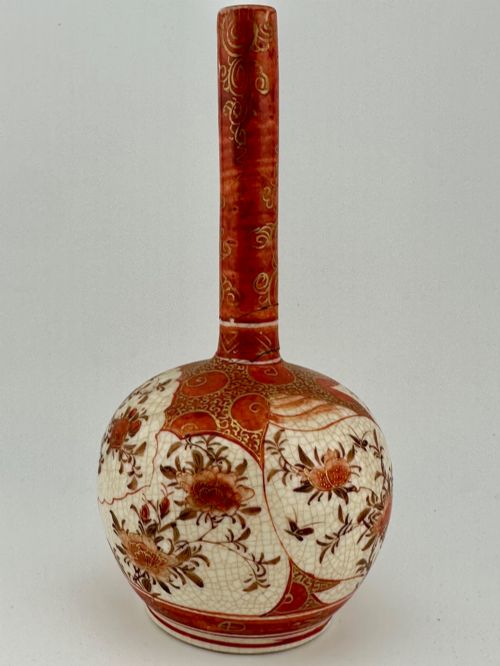
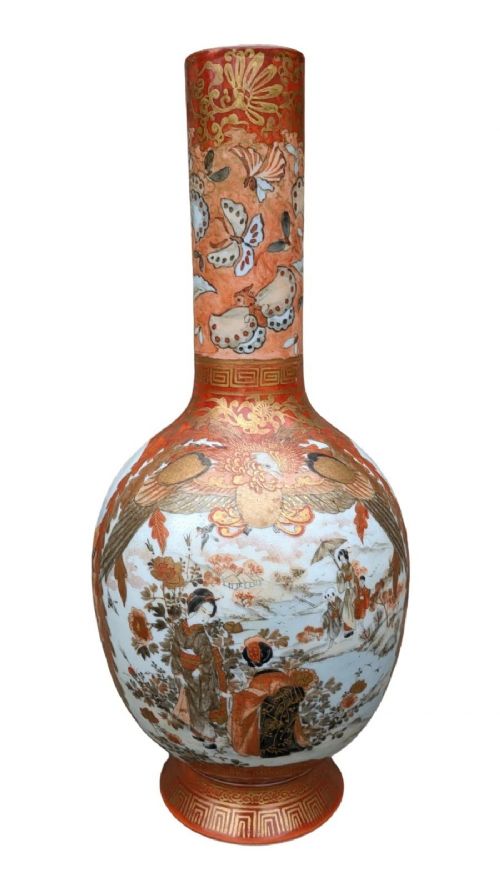
A gilded japanese bottle vase presents a narrow neck expanding into a rounded or shaped body, designed to hold single stems or stand alone as a decorative centrepiece. These vessels emerge primarily from late nineteenth century production, spanning Meiji period export wares and Victorian interpretations.
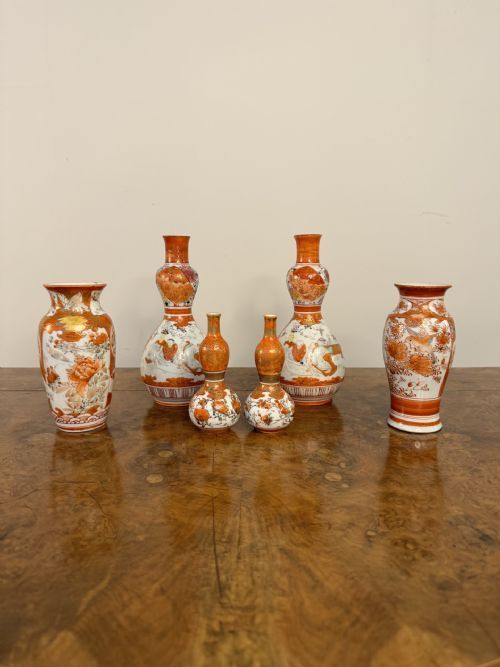
The most common examples encountered here are Japanese Imari wares featuring iron red and gilt ornamentation, alongside Kutani long neck bottle vases and Satsuma ceramics. Collectors also find domestic Victorian porcelain variations such as Derby pieces adopting the Imari palette.
Forms range from small slender neck bud vases to large decorative items, reflecting both Japanese export traditions and British nineteenth century taste for Eastern aesthetics.
How they were made
These vessels rely on hard porcelain or earthenware bodies shaped on the wheel or in moulds to create the characteristic long neck and bottle profile. Potters applied underglaze pigments and overglaze enamel colours before adding gold leaf or gilt details to accentuate the patterns.
Firing techniques in both Japanese kilns and English factories fused the mineral glazes and metallic highlights, resulting in durable decorative surfaces that withstand centuries of handling.
Current listings demonstrate a strong presence of nineteenth century Japanese Imari and Kutani wares alongside Victorian porcelain.
What varies in quality
Quality rests in the precision of the hand-painted brushwork and the richness of the iron red and gilt pigments applied across the body. Superior pieces display crisp detailing on the slender neck and balanced proportions that elevate them above routine commercial export output.
The weight of the porcelain and the stability of the glaze finish distinguish finer works from simpler decorative items, rewarding closer inspection of the painted motifs.
Stevenson and Hancock King Street Derby
The Gilded Japanese Bottle Vase Glossary
- Imari
- A traditional Japanese style of porcelain decoration defined by a palette of underglaze blue, iron red, and abundant gilt highlights. This aesthetic influenced European ceramic factories heavily during the nineteenth century.
- Kutani
- A style of Japanese coloured porcelain and earthenware known for bold iron red designs and extensive gold leaf application. Pieces often depict figurative scenes or intricate natural motifs.
- Satsuma
- A type of Japanese earthenware featuring a crackle glaze decorated with fine enamel patterns and gilt work. It gained immense popularity in the West during the Meiji period.
- Meiji Period
- The era in Japanese history spanning from eighteen sixty-eight to nineteen twelve, marked by extensive craft export to Western markets. Works from this time display exceptional technical skill in ceramics and metalwork.
- Bud vase
- A small vessel designed to hold a single flower stem, featuring a narrow neck that supports the bloom upright. These compact pieces showcase delicate painting on a reduced scale.
Gilded Japanese Bottle Vase: Frequently Asked Questions
What is a gilded japanese bottle vase?
A gilded japanese bottle vase is a ceramic vessel featuring a narrow neck and decorated with metallic gold leaf or gilt accents, originating largely from nineteenth century export and domestic production.
These pieces combine traditional Eastern motifs with forms suited for Western display, utilising porcelain or earthenware bodies painted in vibrant palettes.
How were these vases used?
These vessels served primarily as decorative objects on mantelpieces and tables, though some smaller examples held single floral stems.
Their striking metallic decoration made them focal points in Victorian and Meiji interiors, reflecting a widespread fascination with imported Asian design.
How do I date a bottle vase?
Dating relies on stylistic markers such as the specific iron red and gilt patterns of Imari wares, the characteristics of Kutani painting, and broader period indicators like the Meiji era.
Porcelain bodies and glaze textures also help separate nineteenth century examples from later reproductions.
Where should I display a bottle vase?
Place a bottle vase where adequate light catches the gilt highlights on the slender neck and body, such as on a sideboard or mantel.
Keep them away from high traffic areas to protect the delicate enamel and gold leaf details from accidental bumps.