


Kutani Porcelain Vases
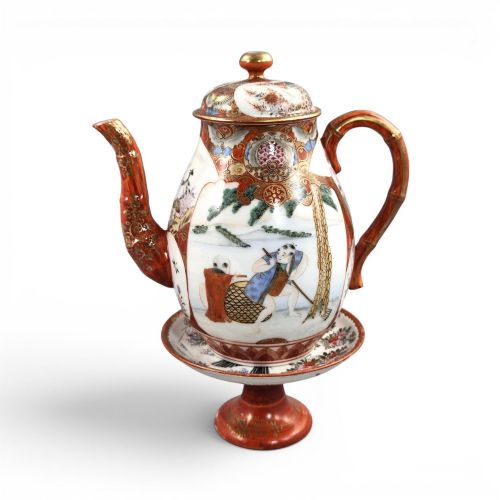
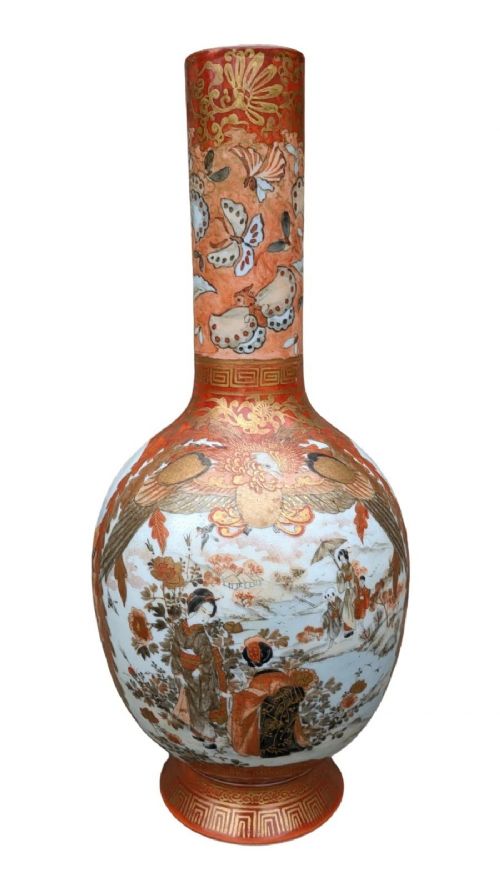
These kutani porcelain vases bring vibrant painted enamel and gold leaf from nineteenth century Japan directly into a room.
Kutani Porcelain Vases
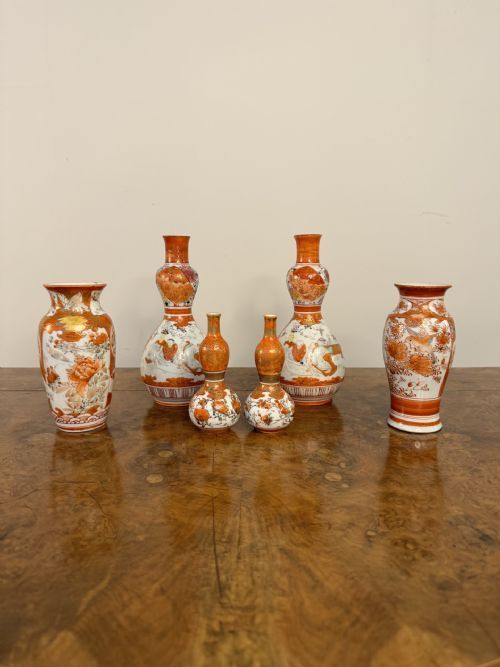
Buyers seeking kutani porcelain vases encounter historic Japanese vessels originating predominantly from the nineteenth century and the Meiji period. The selection includes single statement pieces, matched pairs, cylindrical shapes, flare neck profiles, and occasional floor vases or converted lamps.
Most examples date from the late eighteen-hundreds, particularly around eighteen-ninety, reflecting the craftsmanship of Japanese export wares from that era. Forms range from small hand-painted vessels to large decorative jars featuring lion handles and geometric inset panels.
How they were made
Potters shaped the base bodies from white porcelain before applying intricate hand-painted enamel designs. Artisans frequently integrated gold leaf and gilding to highlight specific motifs across the ceramic surface.
Certain pieces incorporated specialised decorative techniques such as moriage, building up thick layers of slip to create textured relief details. Workshops also utilised brass or wood elements for stands and mounts on specific vessels.
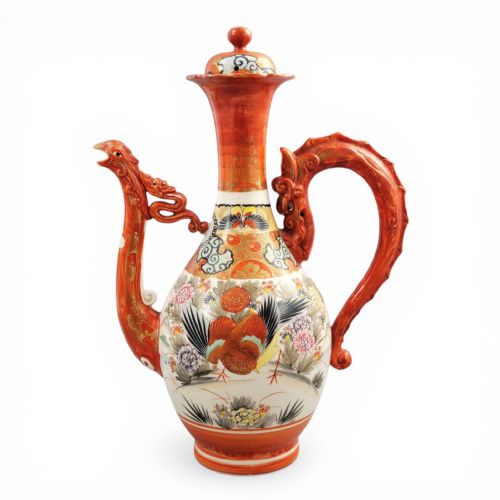
A dragon ewer featuring a phoenix spout stands ready to pour imaginary tea across the centuries.
What varies in quality
Distinctions in quality rest upon the precision of the hand-painted brushwork and the complexity of the enamel palette. Pieces featuring detailed figural scenes, dragon and phoenix motifs, or dense geometric inset panels demonstrate higher artistic ambition.
The scale and proportion of the vessel also influence standing, with large matched pairs commanding particular attention. The skilful application of gold leaf and raised moriage relief further separates standard production wares from superior workshop outputs.
Kinrin Workshop
The Kutani Porcelain Vases Glossary
- Kutani
- A style of Japanese porcelain characterised by colourful painted enamels and frequent use of gold. It originated in the Kaga province.
- Meiji Period
- The era in Japanese history spanning from eighteen-sixty-eight to nineteen-twelve. Much of the exported porcelain found today dates from this period.
- Moriage
- A decorative ceramic technique where clay is applied in raised dots or lines to create a textured relief effect. It often appears beneath coloured enamels.
- Gilding
- The application of gold leaf or gold powder to the surface of porcelain. It serves to accent specific design elements and borders.
- Ewer
- A large jug with a wide spout traditionally used for holding water. In this context, ceramic versions serve decorative display purposes.
Kutani Porcelain Vases: Frequently Asked Questions
What is a kutani vase?
A kutani vase is a piece of Japanese porcelain decorated with painted enamels and gold leaf.
These vessels date largely from the nineteenth century and the Meiji period.
How do I date a kutani vase?
Dating relies on stylistic markers associated with the Meiji period and late nineteenth-century export production.
Documentation, period styles, and workshop characteristics help narrow the decade of manufacture.
What is moriage on porcelain?
Moriage is a decorative technique where slip is piped onto the porcelain before firing to create raised textures.
This method adds a tactile, three-dimensional quality beneath the painted enamels.
Were these vases made for export?
Many nineteenth-century examples were produced specifically for international markets following the opening of Japan.
These export pieces often combined traditional local motifs with forms suited to Western interiors.