
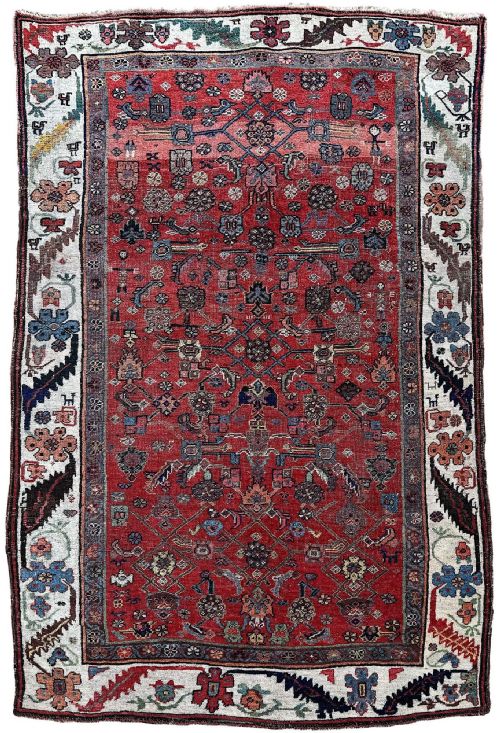
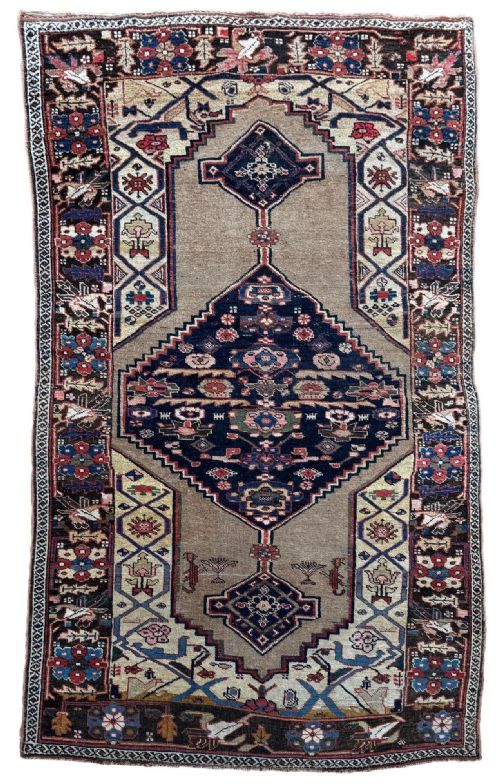


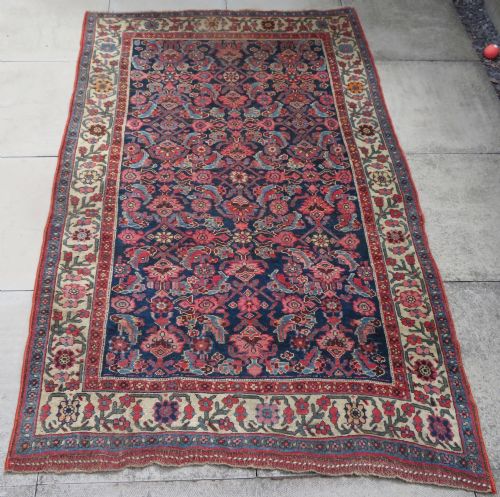
Kurdish Bidjar Rug
These kurdish bidjar rug pieces bring dense village weaving and enduring tribal character into a room, offering a rich anchor for traditional interiors.
Kurdish Bidjar Rug
A kurdish bidjar rug represents a distinct tradition of Persian village and tribal weaving, originating from the Kurdish weavers of the Bijar region. These pieces appear in formats ranging from small bag faces and compact area rugs to substantial runners and large kelleh carpets.
The objects on this page span dates from the late nineteenth century through to the early twentieth century, encompassing Persian tribal and traditional styles. Buyers encounter both room-size carpets and smaller formats like long rugs, showcasing the versatility of Kurdish craftsmanship.
Materials and construction
These floor coverings utilise traditional organic materials, specifically wool for the dense pile and foundation structures alongside cotton foundations in specific examples. The interplay of these natural fibres gives the textiles their renowned physical weight and resilient handle.
Weavers from the Kurdish tribes of Bijar employed robust knotting techniques that produced a remarkably heavy, tightly packed fabric capable of withstanding generations of heavy floor traffic. This rigorous construction method defines the physical character seen across the regional formats.
The selection includes pieces dated across several decades, spanning from the 1870s to the 1930s in wool and cotton.
Assessing quality
Quality in these textiles rests upon the density of the weave and the crispness of the drawing within the traditional Persian and tribal motifs. Heavier construction and superior handling indicate a higher grade of regional village production.
Colour distribution also separates examples, particularly where distinct palettes like lemon ground colour or rich regional hues enhance the visual depth of the pile. The integrity of the wool and the precision of the tribal patterns dictate the upper tier of the range.
The Kurdish Bidjar Rug Glossary
- Kelleh
- A large format carpet, typically longer than a standard room-size rug but narrower in width. These substantial pieces served specific traditional room layouts.
- Bag face
- The front panel of a tribal storage sack, woven with durable pile and repurposed as a small decorative mat. These compact items display concentrated regional designs.
- Runner
- A long, narrow format designed for hallways, corridors or alongside large furniture pieces. The evidence shows these elongated formats among the regional output.
- Pile
- The upright yarn loops that form the soft upper surface of the carpet. In these pieces, the wool pile is packed densely for durability.
Kurdish Bidjar Rug: Frequently Asked Questions
What is a Kurdish Bidjar rug?
A Kurdish Bidjar rug is a heavy, durable textile woven by Kurdish tribes in the Bijar region of Persia. These pieces utilise wool and cotton materials to create resilient floor coverings.
They display traditional Persian and tribal styles, appearing in formats ranging from small bag faces to large kelleh carpets dating from the nineteenth and early twentieth centuries.
How do I date an antique Bidjar?
Dating relies on examining the structural characteristics, material wear, and stylistic nuances typical of late nineteenth and early twentieth-century village production. Pieces span decades from the 1870s through to the 1930s.
Comparing the wool quality, natural dyes where present, and regional Kurdish motifs helps place an item within this historical timeline.
Where were Bidjar rugs made?
These textiles were produced by Kurdish tribes and village weavers operating in and around the town of Bijar in the Kurdistan province of Persia. The weavers utilised local materials suited to the harsh regional climate.
This specific geographical origin imparts the heavy handle and robust construction characteristic of the town and surrounding tribal areas.
How should I use a runner?
Runners are long, narrow formats well-suited for hallways, entryways, or narrow gallery spaces where standard rugs do not fit. Their sturdy wool construction handles regular foot traffic effectively.
Placing an appropriate underlay beneath the runner helps secure it to the floor and protects the historic foundation fibres.
What makes these rugs heavy?
The notable weight of these pieces stems from dense packing during the knotting process, often referred to as iron rugs in trade terminology. Weavers hammered the weft down firmly between rows of knots.
This technique compresses the wool and cotton materials tightly together, creating a rigid and exceptionally durable textile structure.