


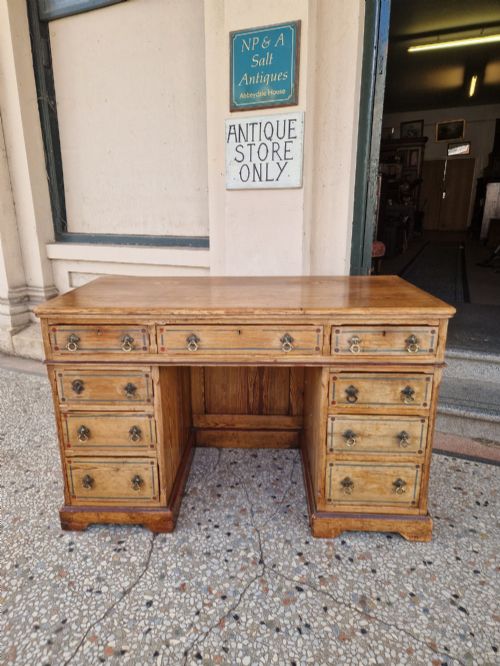
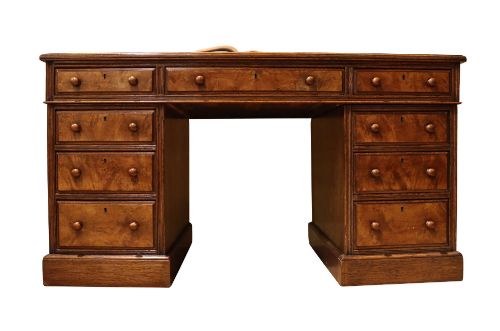
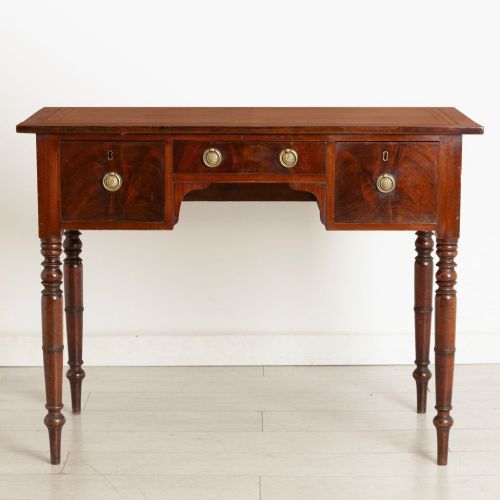
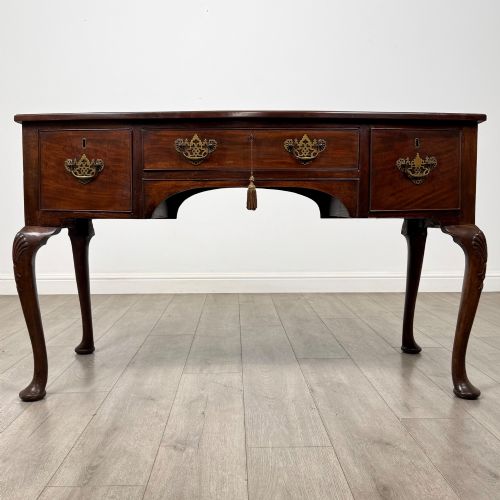
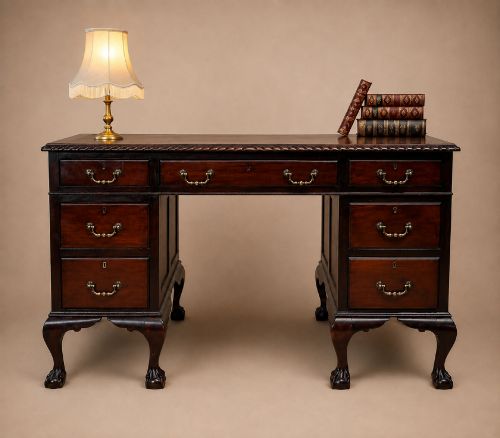
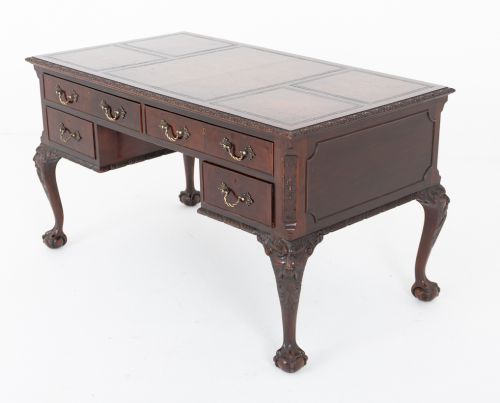
Kneehole Office Desk
A kneehole office desk provides a compact, twin-pedestal workspace with a central recess, offering timeless utility and classic proportions.
Kneehole Office Desk
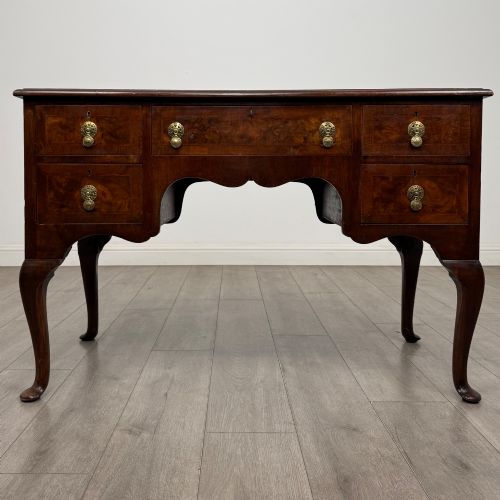
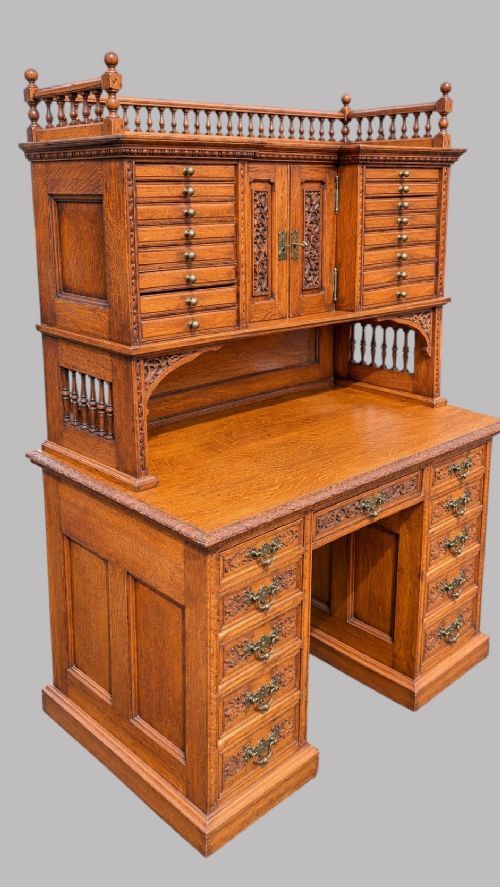
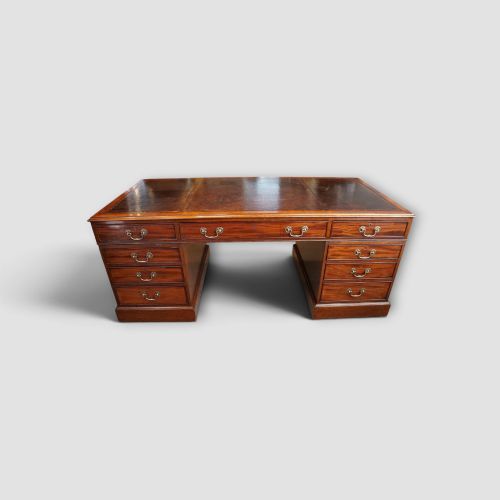
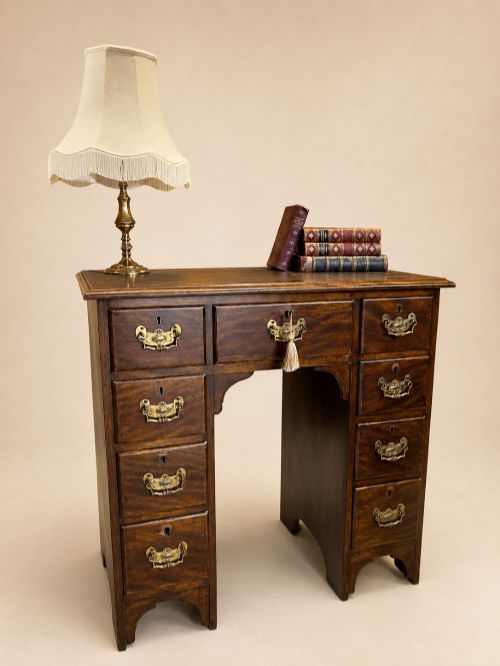
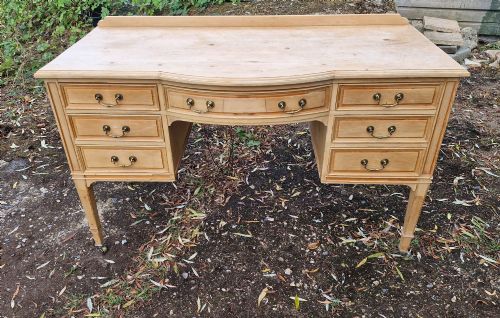
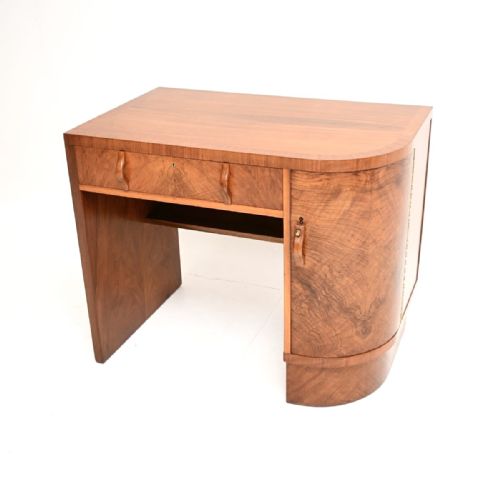
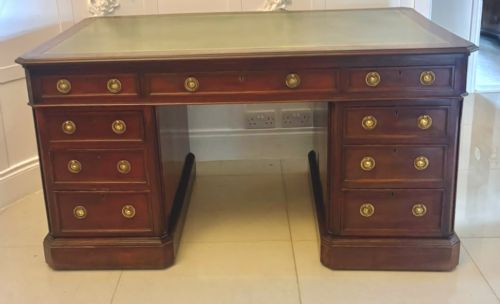
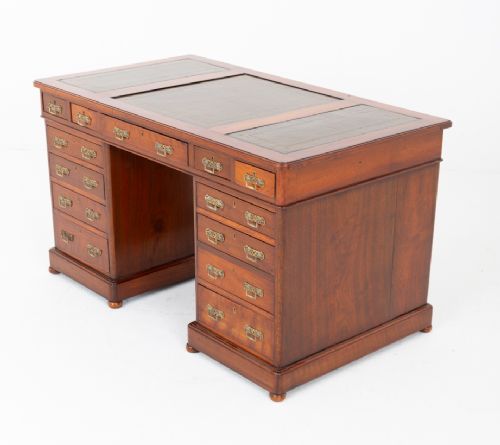
A kneehole office desk is primarily encountered in nineteenth-century and early twentieth-century formats, spanning Victorian, Edwardian, and Art Deco periods. These pieces serve as working tables with banks of drawers flanking a central recess for the user.
The most common examples on this page are constructed from mahogany, walnut, or oak, often incorporating fitted stationery drawers, leather writing surfaces, and writing slides.
Design influences range from plain utilitarian estate desks to revival styles such as Chippendale, Queen Anne, and Georgian, alongside French painted interpretations.
Materials and construction methods
Makers utilised solid timbers such as mahogany, oak, and pine for the main framework, drawer linings, and structural integrity. Veneers in figured walnut and burr walnut were applied to drawer fronts and top surfaces to display rich grain patterns.
Leather inserts with blind tooling were frequently let into the top writing surface, while brass hardware, including handles and drop pulls, completed the construction.
Several estate desks show the honest marks of nineteenth-century administration, having served generations of hardworking clerks before reaching the antiques market.
Distinctions in quality and execution
The distinction between standard utility items and superior examples lies in the selection of timbers, such as highly figured burr walnut veneer versus plain pine. Finer pieces demonstrate meticulous dovetailing on drawer construction and retain original brass handles.
Trollope & sons·Maple & Co.·Holland & Sons·Wylie & Lochhead Glasgow
The Kneehole Office Desk Glossary
- Kneehole
- A recessed space beneath the desktop designed to accommodate the legs of the person sitting at it. This central void separates the two pedestals of drawers.
- Pedestal desk
- A heavy freestanding desk comprising two supporting columns of drawers with a central desktop spanning the space between them. It is sometimes fitted with a modesty panel at the back.
- Writing slide
- A pull-out board located just beneath the desktop that provides extra surface area for writing or sorting papers. It slides flush into the frieze when not in use.
- Burr walnut
- Timber taken from the warted excrescences of a walnut tree, yielding intricate, swirling grain patterns. It is typically sliced into veneers for decorative desk surfaces.
- Tooled leather
- Leather inset into the top of a desk decorated with gold or blind-stamped patterns along the perimeter. It provides a smooth, durable writing surface.
Kneehole Office Desk: Frequently Asked Questions
How do I style a kneehole office desk?
Pair the desk with a comfortable chair that fits cleanly into the central recess without catching the side drawers. Keep tabletop accessories minimal to let the timber grain and leather insert remain visible.
Position the desk freestanding in a room if the back is finished, or anchor it against a wall in a study for a traditional arrangement.
Can I use an antique desk for daily computer work?
Many period desks accommodate modern equipment well, provided the depth and height match your ergonomic requirements. Check the internal dimensions of the kneehole space to ensure your legs and chair fit comfortably underneath.
Protect the leather or polished wood surface with a suitable desk mat if you write directly on paper or place heavy hardware on the top.
How do I date a mahogany kneehole desk?
Examine the secondary timbers inside the drawers, such as oak or pine, alongside the construction techniques used for the drawer joints. Hand-cut dovetails typically indicate pieces made before the widespread adoption of industrial machinery in the later nineteenth century.
Stylistic markers like Georgian bracket feet, Victorian classical proportions, or Edwardian simpler lines also help narrow down the decade of manufacture.