




Traditional Oak Partner Desk
A traditional oak partner desk is a generous double-sided workspace designed for two people to sit opposite one another.
Traditional Oak Partner Desk
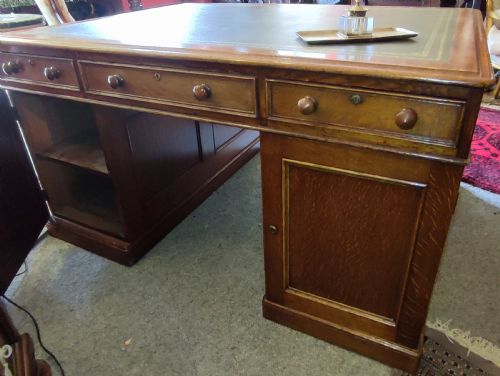
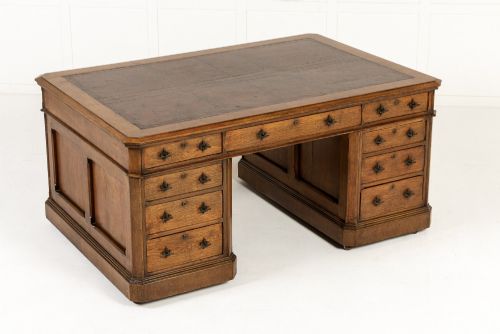
A traditional oak partner desk provides matching workspaces on both sides, typically featuring banks of drawers or cupboards beneath pedestals. These large pieces were originally built for offices, banks and grand libraries where two clerks or associates needed to work face-to-face.
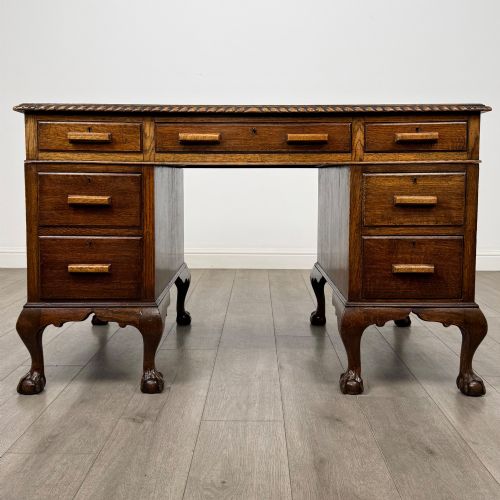
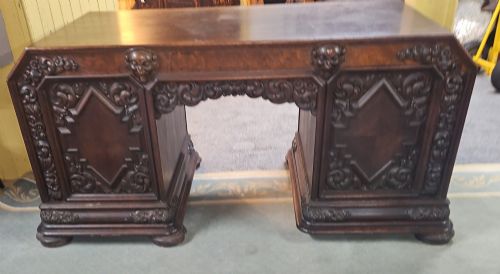
Most examples found here date from the Victorian and Edwardian eras, spanning the late nineteenth century into the early twentieth century. These period pieces frequently showcase revival influences such as Jacobean carving or Chippendale details alongside solid timber construction.
While single-sided pedestal desks and writing tables also appear in oak, the true partner desk retains drawers or dummy drawers accessible from both the front and the reverse.
Materials and construction
Makers built these substantial frames primarily from solid oak, occasionally incorporating burr walnut, ash or secondary timbers within the internal drawer linings. Timber selection focused on durable heartwood capable of enduring daily commercial or domestic use.
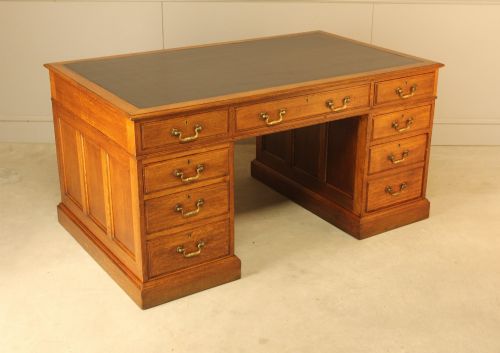
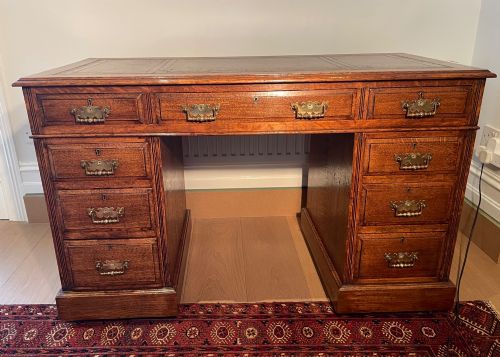
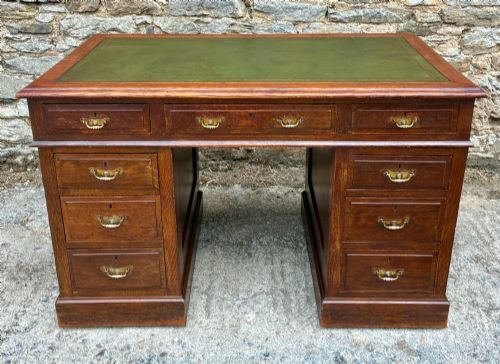
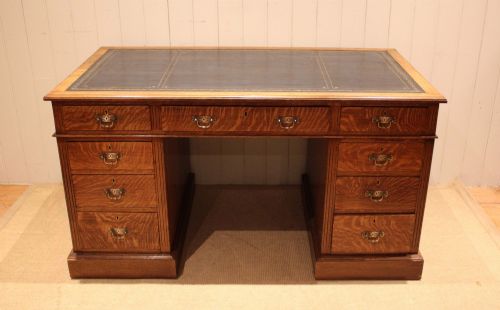
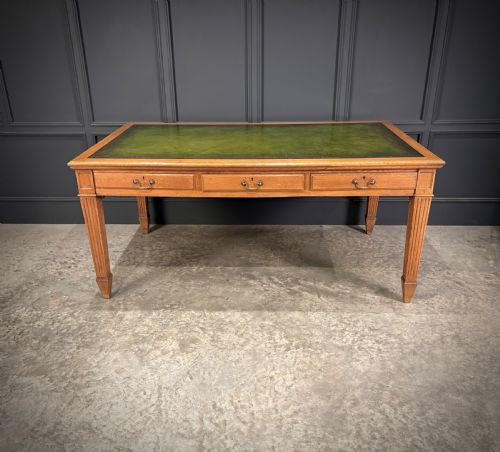
Writing surfaces were traditionally inset with tooled leather skivers, surrounded by moulded wooden borders. Brass handles, drop pulls and escutcheons finished the drawer fronts, while structural joints relied upon traditional dovetails and mortise-and-tenon framing.
Recorded forms include pedestal desks, kneehole writing tables and large double-sided partners desks with up to nine drawers.
Judging quality and craftsmanship
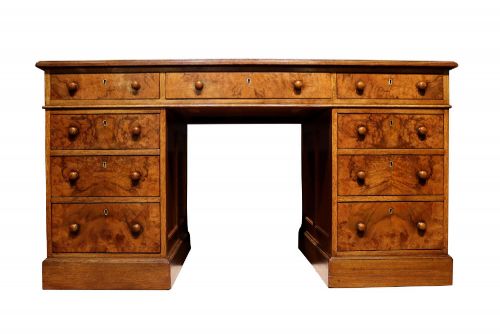
Quality rests upon the selection of timber figure, the crispness of any carved ornamentation, and the overall scale of the piece. Desks featuring figured oak or burr walnut veneers alongside deeply moulded drawer fronts occupy the higher tiers of craftsmanship.
Internal construction also defines grade, distinguishing mass-produced commercial furniture from pieces finished by prominent cabinet-making firms. Smoothly running drawers with hand-cut dovetails indicate superior workshop standards.
Gillow & Co·Edwards & Roberts·Merryweather & Son
The Traditional Oak Partner Desk Glossary
- Partner desk
- A large double-sided desk designed with workspaces and storage accessible from both the front and the back. These were originally intended for business associates or banking partners.
- Pedestal desk
- A freestanding desk comprising two supporting pedestals of drawers or cupboards beneath a wide writing surface. The top rests directly upon these drawer units rather than on four independent legs.
- Skiver
- A panel of leather inset into the top of a desk to provide a smooth writing surface. These are commonly bordered with blind or gilt tooling.
- Kneehole
- The central recessed space beneath a desk top where the user sits. In a partner desk, this recess is often mirrored on the opposite side.
- Dovetail
- A traditional interlocking joint used to secure drawer corners together. Hand-cut variations indicate older, finer cabinet-making.
Traditional Oak Partner Desk: Frequently Asked Questions
How do I care for the leather top?
Leather writing surfaces require occasional treatment with specialist leather balms or neutral waxes to prevent cracking and drying. Avoid excessive moisture and direct sunlight, which can fade the gilt tooling.
Cleaning should be done with a soft, dry cloth rather than harsh chemical solvents.
Will a partner desk fit in a modern room?
Partner desks are exceptionally large pieces of furniture designed for spacious rooms and libraries. Measuring six feet or more in length, they require ample clearance on all sides to allow chairs to pull out comfortably.
Measure doorways and stairwells carefully before purchase, as many of these desks do not dismantle completely.
How do I tell Victorian from Edwardian oak desks?
Victorian desks tend to feature heavier proportions, darker finishes, and occasionally heavier carved ornamentation influenced by Jacobean revival styles. Edwardian examples often embrace lighter pale oak tones and simpler, more restrained lines.
Drawer construction and hardware styles also offer clues to the specific decade of manufacture.