


Vintage Oak Kneehole Table
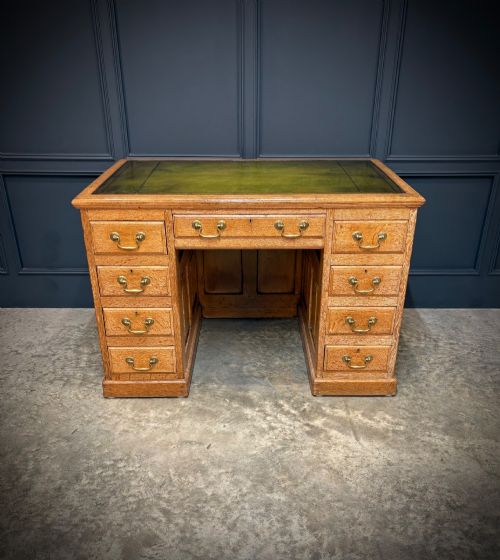
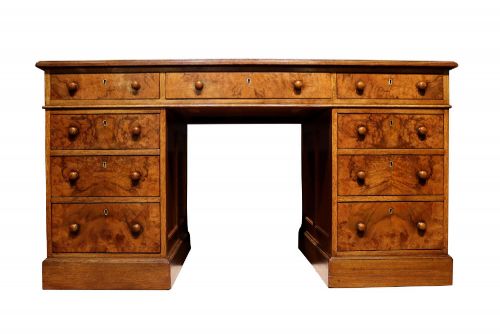
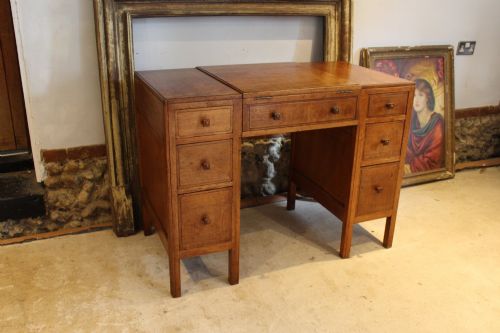
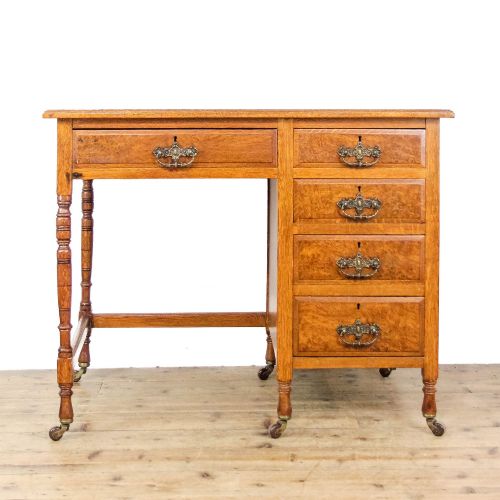
A vintage oak kneehole table offers a sturdy workspace with drawers flanking a central recess, uniting practical utility with period character.
Vintage Oak Kneehole Table
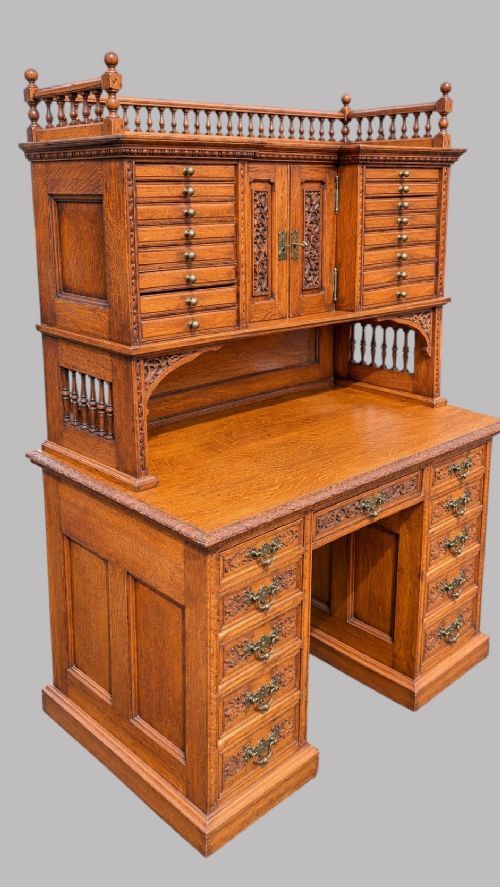
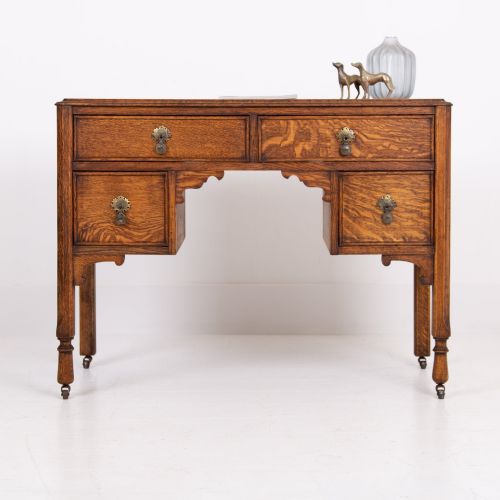
A vintage oak kneehole table functions as a compact workspace or dressing table, featuring a central recess for the legs flanked by banks of drawers. These pieces emerge from periods spanning the Victorian and Edwardian eras up through the nineteen-thirties, with styles ranging from plain country house items to Carolean revival and Arts and Crafts designs.
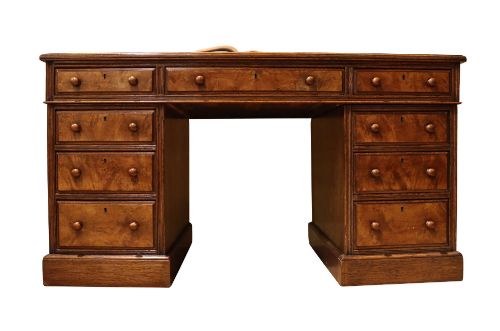
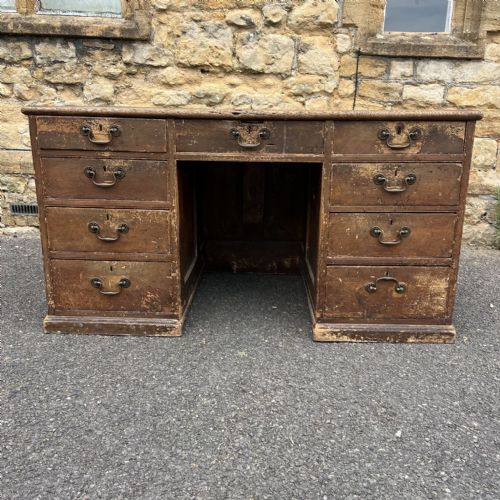
The versions most commonly met on this page include nineteenth-century pedestal desks and early twentieth-century writing desks. Makers utilise timbers such as golden English oak, sometimes enhanced with burr walnut veneers or paired with pine in estate pieces.
How they were made
Cabinet makers constructed these tables primarily from solid oak and oak veneers, often incorporating secondary woods like pine for drawer linings and internal framing. Brass handles, key escutcheons, and occasionally glass or copper details complete the hardware.
Surfaces frequently feature inset tooled leather writing pads, and some dressing tables retain original stencilled decoration or carved ornamentation. Construction relies on traditional joinery techniques suited to heavy pedestal forms.
One estate manager kept records secure in a Scottish Victorian kneehole desk.
What varies in quality
Quality differences rest upon the selection of timber, such as figured burr walnut contrasts against plain oak, and the crispness of carved details or original stencilling. Maker attribution also elevates a piece, particularly when bearing stamps or originating from known workshops.
The integrity of the structural joinery, the presence of original brass hardware, and the condition of inset leather writing surfaces distinguish standard utility furniture from finer examples.
Heal & Sons·Shapland and Petter·Gillow & Co·Étienne Kohlmann·Maple & Co
The Vintage Oak Kneehole Table Glossary
- Kneehole table
- A desk or dressing table featuring a central recessed space for the sitter's legs, flanked by pedestals containing drawers. This configuration provides ample storage while maintaining a compact footprint.
- Pedestal desk
- A heavy freestanding desk consisting of two independent pedestals of drawers supporting a single desktop. They frequently incorporate a central kneehole drawer.
- Burr walnut
- A prized timber veneer obtained from the warted growths on walnut trees, displaying intricate swirling patterns. Cabinet makers applied it to drawer fronts to create decorative contrast against oak carcases.
- Arts and Crafts
- A design movement valuing honest construction, visible hand craftsmanship, and simple forms. Pieces from this tradition often display understated hardware and straightforward timber selection.
Vintage Oak Kneehole Table: Frequently Asked Questions
What is a kneehole table?
A kneehole table is a form of desk or dressing table characterised by a central recess for the user's legs, positioned between two pedestals of drawers.
These pieces provide substantial storage capacity beneath the work surface without requiring an excessively wide footprint.
How do I date an oak desk?
Dating relies on examining construction methods, timber choice, hardware, and stylistic details recorded in the design. Victorian and Edwardian pieces show specific characteristics in their drawer linings and handles.
Comparing the overall proportions and decorative motifs against documented periods helps establish a reliable timeline for each table.
Are these desks suitable for daily work?
These tables function well as modern workspaces, offering sturdy oak construction and convenient drawer storage. Many provide ample surface area for writing or computing.
Care should be taken with antique leather inserts and polished timber surfaces, often requiring protective blotters during heavy daily use.
What is the difference between a desk and a dressing table?
Desks focus on writing surfaces, pedestals, and internal stationery compartments, while dressing tables traditionally incorporate mirrors or specialised cosmetic drawers. Some late Victorian examples share similar kneehole proportions.
Examining the primary surface and internal drawer configurations clarifies the original domestic purpose of the piece.