


Kneehole Desk
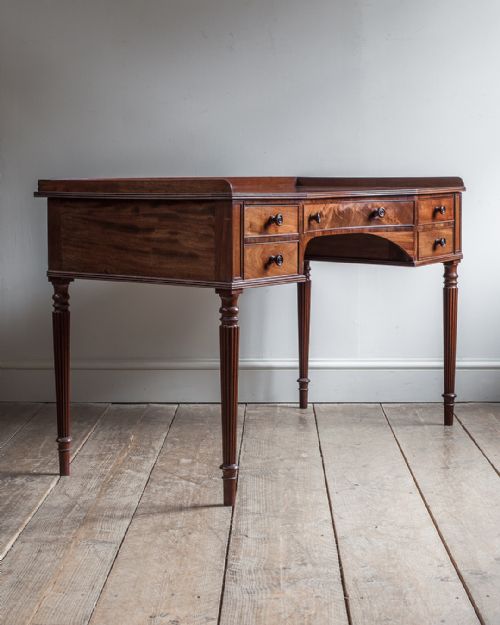
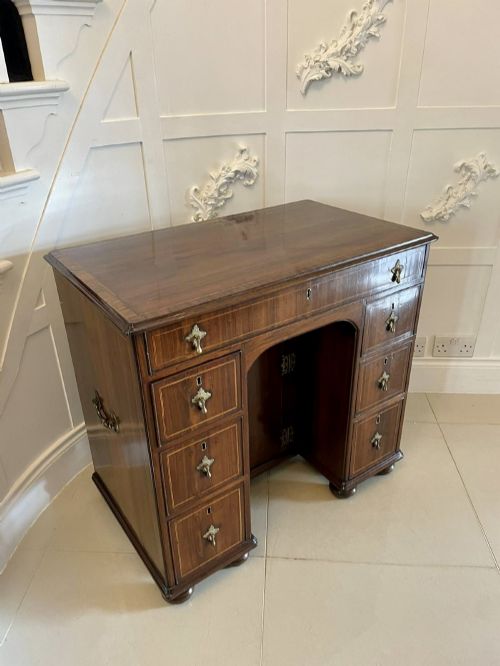
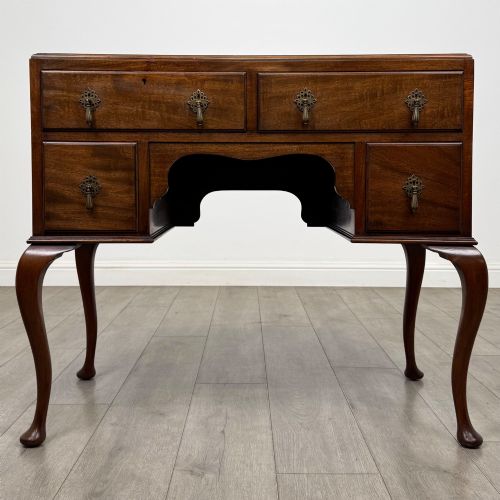
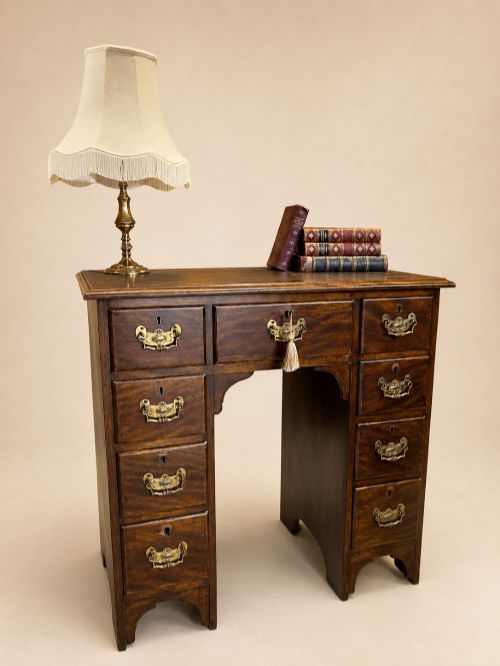
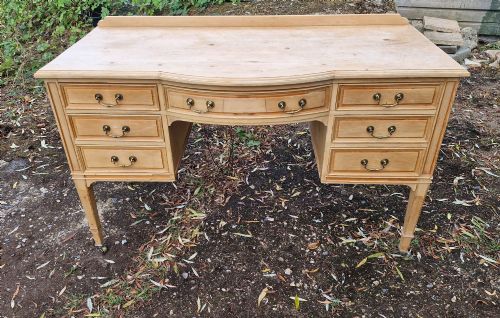
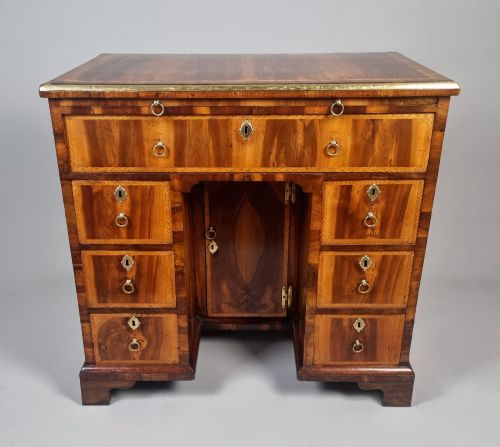
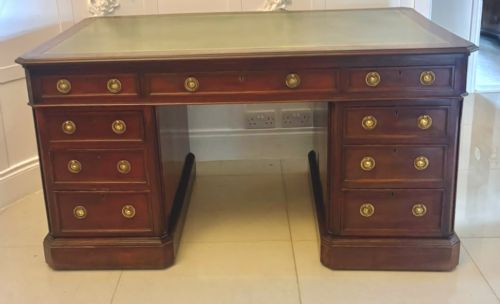
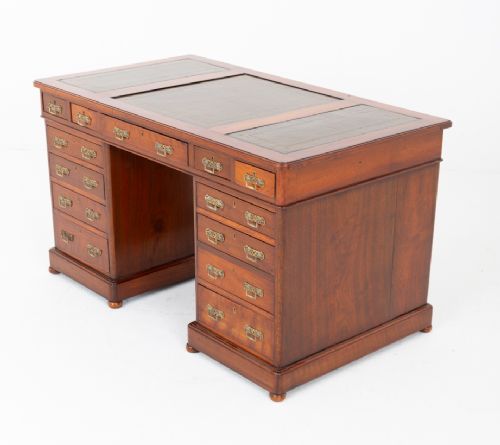
A kneehole desk provides a compact writing space with a central recess flanked by pedestals of drawers, combining utility with elegance.
Understanding the kneehole desk
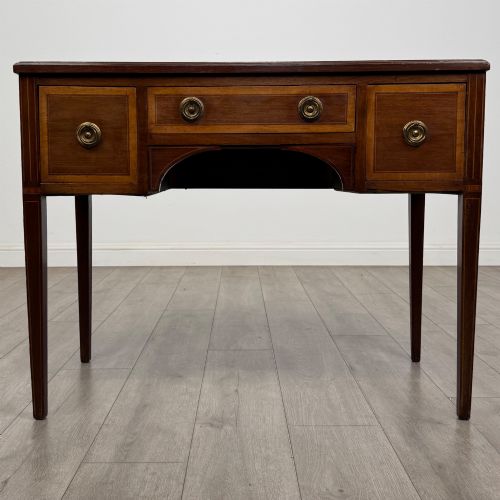
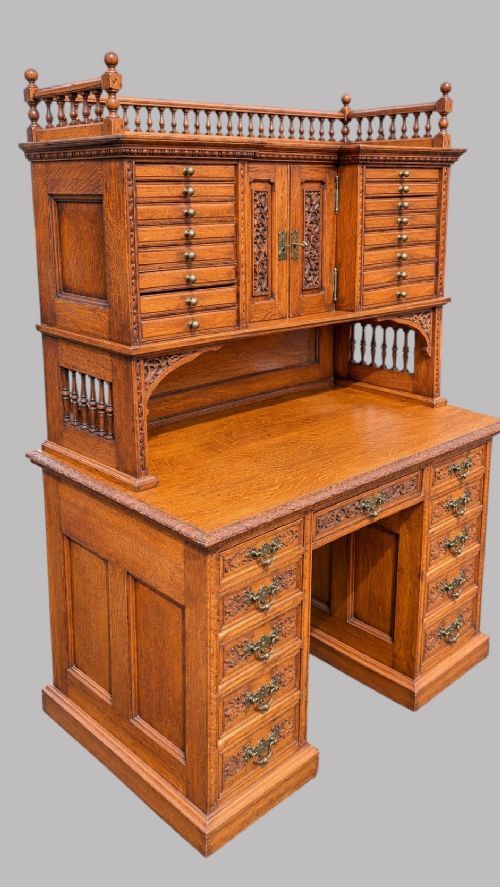
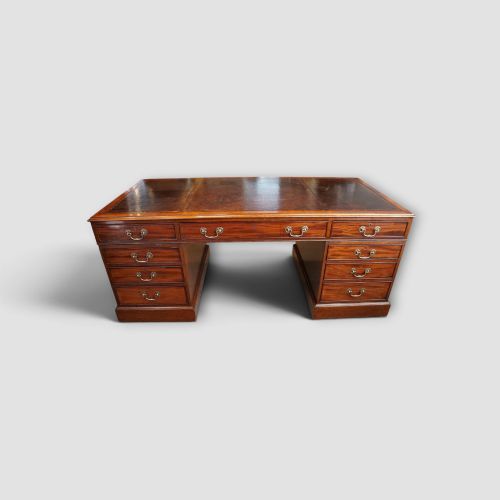
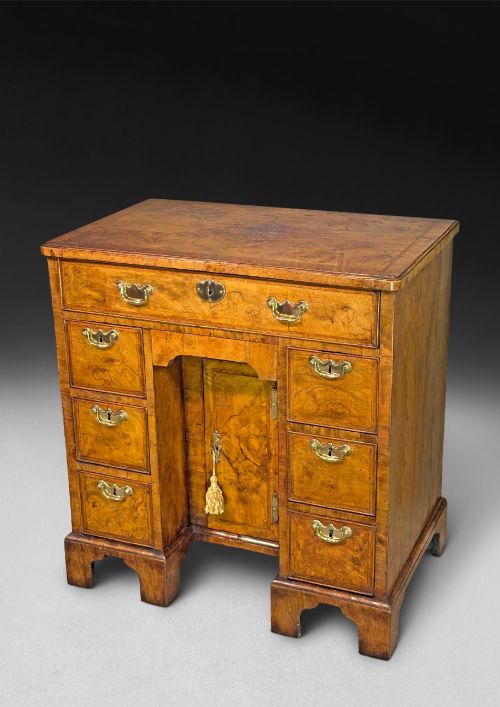
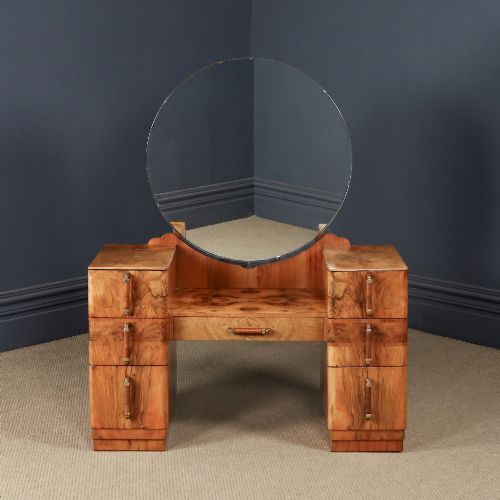
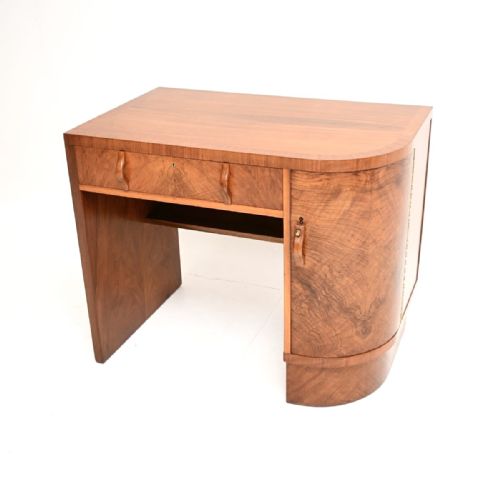
A kneehole desk is a fitted form designed for writing and correspondence, featuring a central recessed space beneath the work surface. The listings show these pieces spanning from the 18th Century through the Victorian era and into the 20th Century, including Edwardian and Art Deco examples.
The most common examples encountered on this page are Victorian mahogany and walnut pedestal writing desks, alongside earlier 18th Century forms in oak, walnut, and mahogany. These items range from compact domestic pieces to larger pedestal variants.
The architectural layout typically incorporates banks of drawers on either side of the central opening, sometimes housing a concealed cupboard or small drawer within the recess itself.
Materials and construction
Timbers such as mahogany, oak, walnut, pine, satinbirch, Hungarian ash, kingwood, and japanned wood form the primary structure of these desks, often enhanced with figured veneers. Writing surfaces are frequently inset with gilt-tooled leather.
Cabinet makers utilised traditional joinery techniques, mounting drawers with brass hardware, handles, and escutcheons, whilst bracket feet or plinths support the base of the pedestals.
Retail Price Guide 2026
Typical UK retail prices for kneehole desk, calculated from the Sellingantiques database of over a million retail prices indexed since 2003. This retail price guide relies exclusively on Sellingantiques data; no external sources or auction records are used, so the figures do not describe the wider market.
Materials recorded in the archive span mahogany, oak, walnut, pine, satinbirch, Hungarian ash, kingwood, japanned wood, and leather.
Factors of quality
Quality rests upon the choice of timber figurations, such as burr walnut or figured mahogany, and the precision of the veneer work across the top and drawer fronts. Original brasses and fitted leather surfaces elevate the standing of a piece.
Construction details like internal drawer linings, dovetailed joints, and the retention of original hardware distinguish workshop output, particularly in examples associated with noted makers.
Heals·Maple and Co·Waring and Gillow
The Kneehole Desk Glossary
- Kneehole desk
- A writing table featuring a central recess beneath the top, flanked by two pedestals of drawers.
- Pedestal desk
- A heavy writing desk supported by two banks of drawers reaching down to the floor.
- Secretaire desk
- A form incorporating a hinged writing flap that drops down to reveal fitted internal compartments and pigeonholes.
- Oyster veneering
- The practice of slicing small branches horizontally to produce circular decorative patterns in timber.
- Gilt-tooled leather
- A writing surface insert decorated with pressed gold leaf patterns around the perimeter.
Frequently Asked Questions
What is a kneehole desk?
A kneehole desk is a specific form of writing furniture designed with a central recessed space for the legs, positioned between two supporting columns of drawers.
This arrangement allows the user to sit squarely in front of the writing surface while keeping stationery and documents close to hand within the pedestals.
How do I identify a Victorian kneehole desk?
Victorian examples frequently utilise timbers such as mahogany, walnut, oak, or Hungarian ash, often constructed as heavy pedestal writing desks with inset leather surfaces.
They tend to display heavier proportions and more robust drawer configurations compared to their 18th Century counterparts.
Where were kneehole desks used?
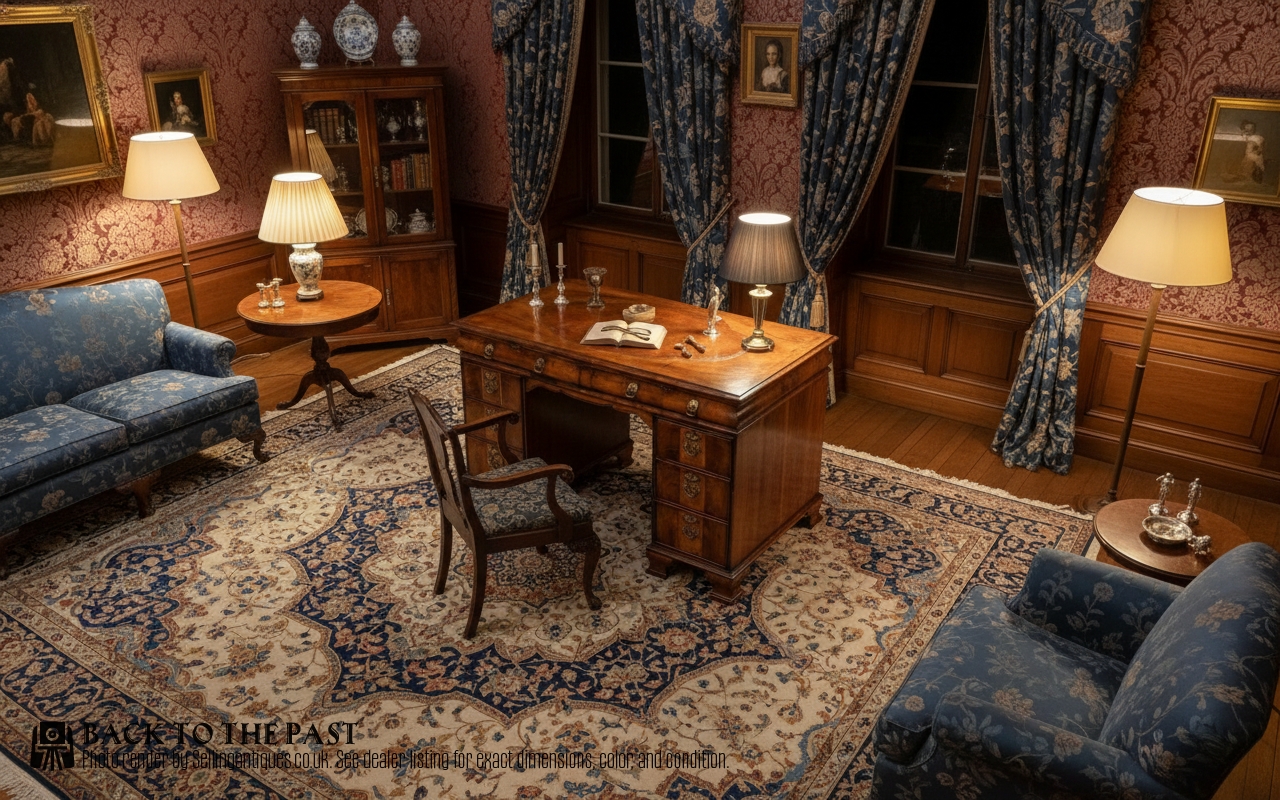
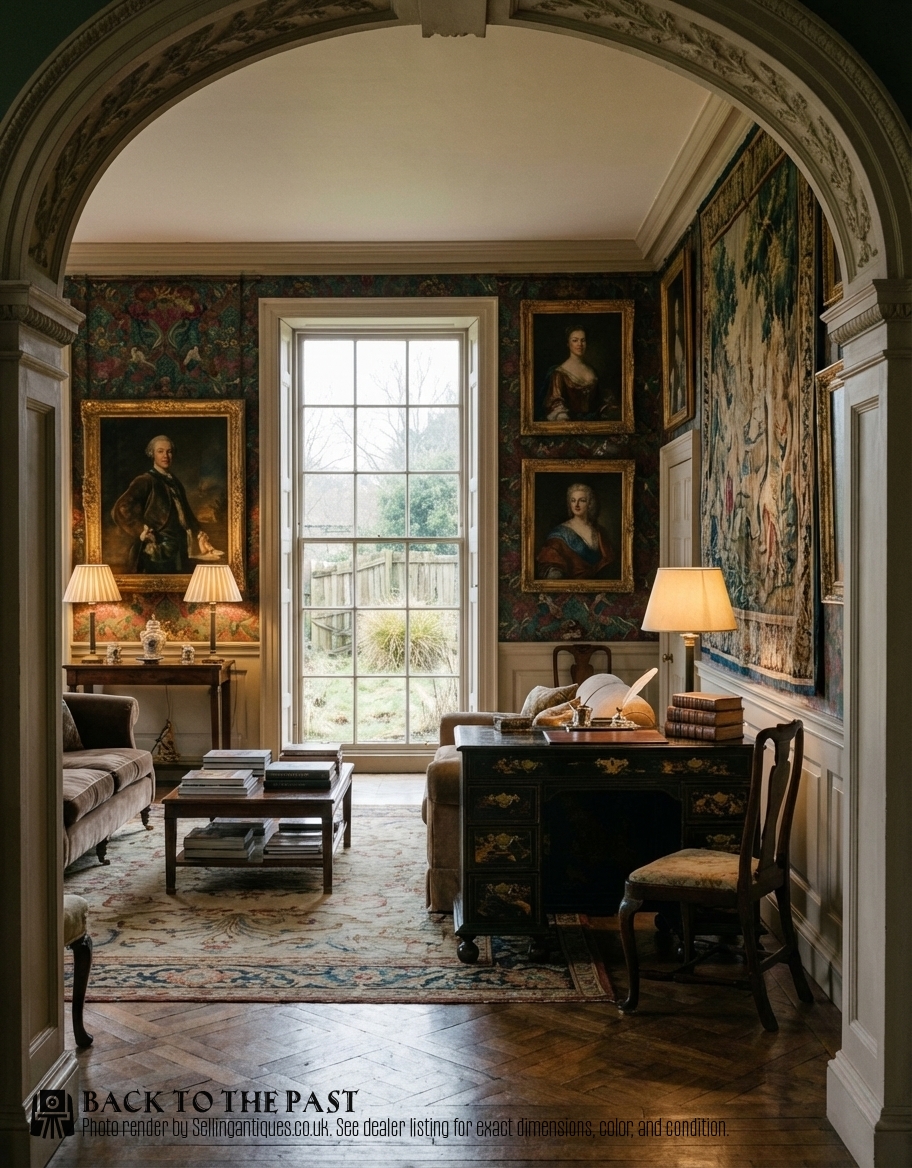
These desks were traditionally placed in studies, home offices, and libraries for private correspondence, estate management, and writing.
Their compact footprint made them suitable for placement against walls or freestanding within the room.
Are all kneehole desks antique?
The selection includes pieces from the 18th Century, the Victorian period, and the 20th Century, including Edwardian and Art Deco interpretations.
Dating relies upon timber selection, construction methods, and hardware styles found on the individual piece.