
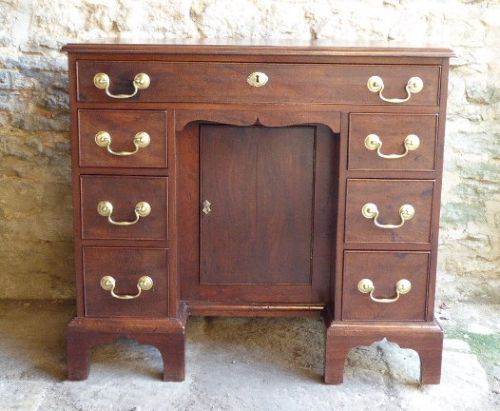
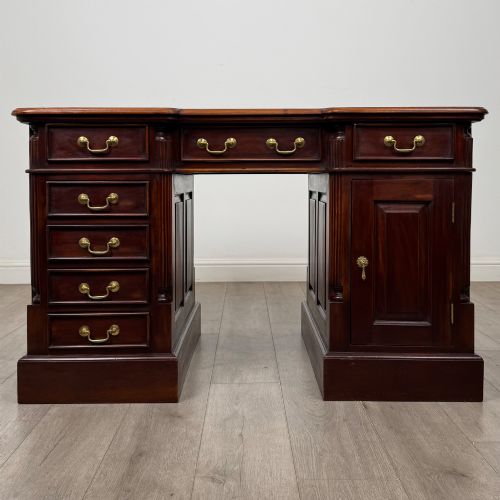
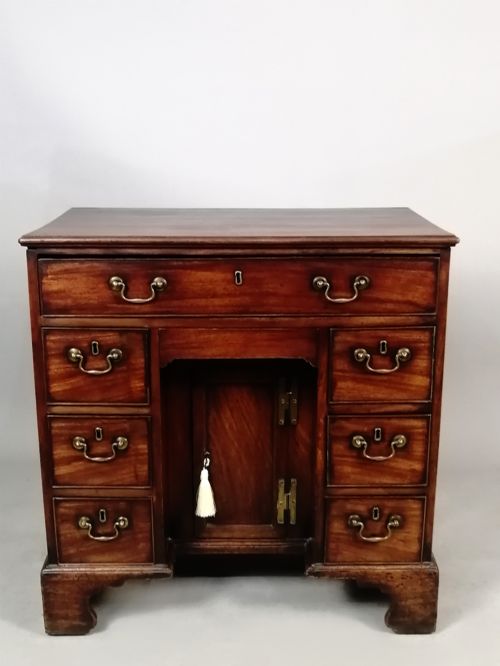
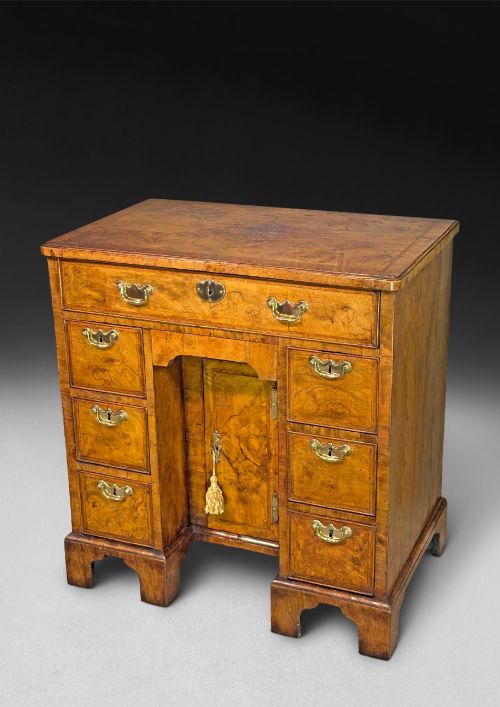
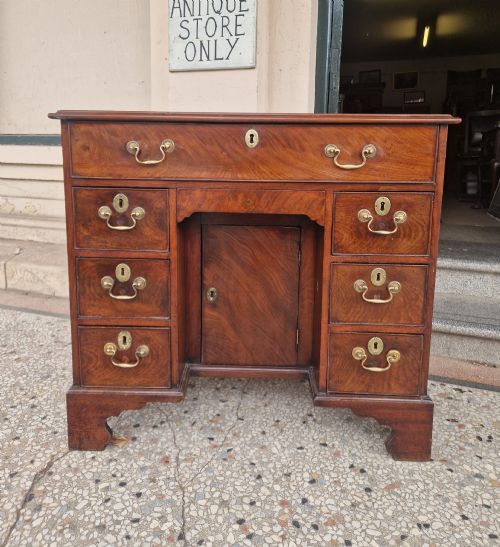
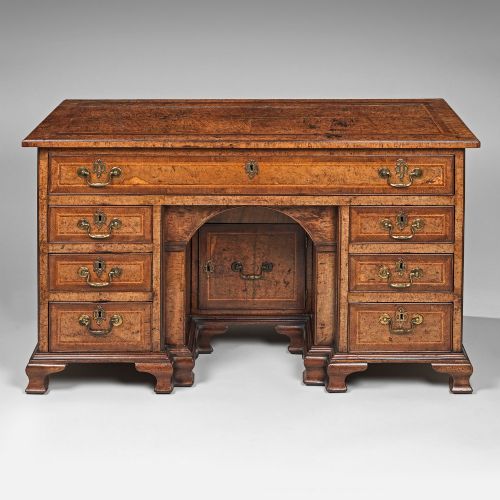
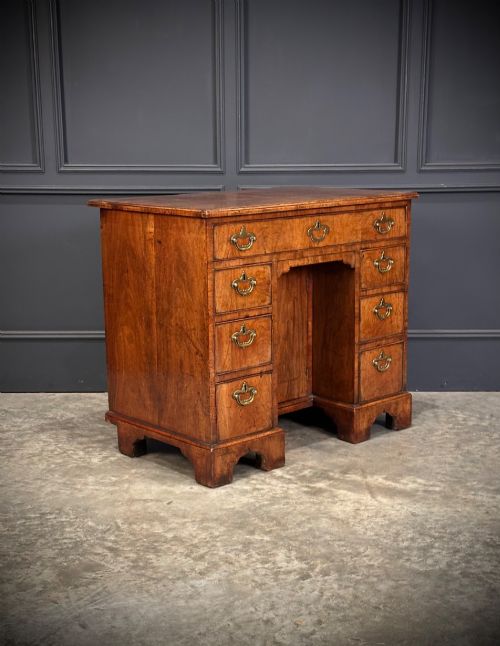
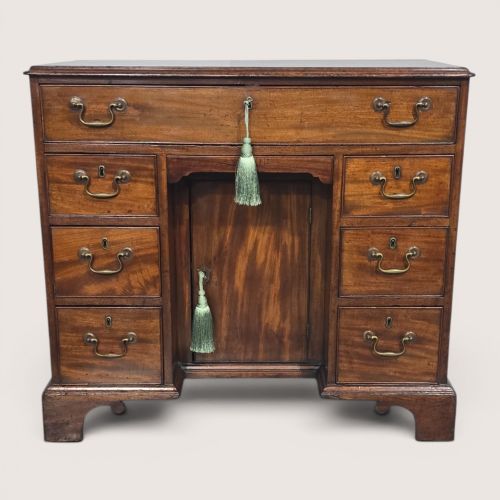
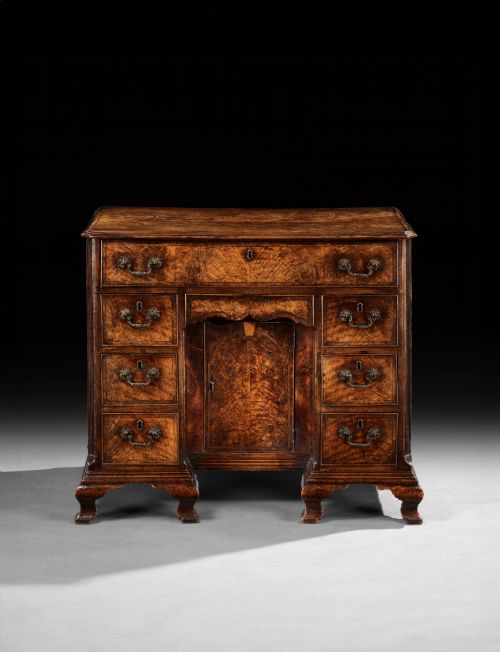
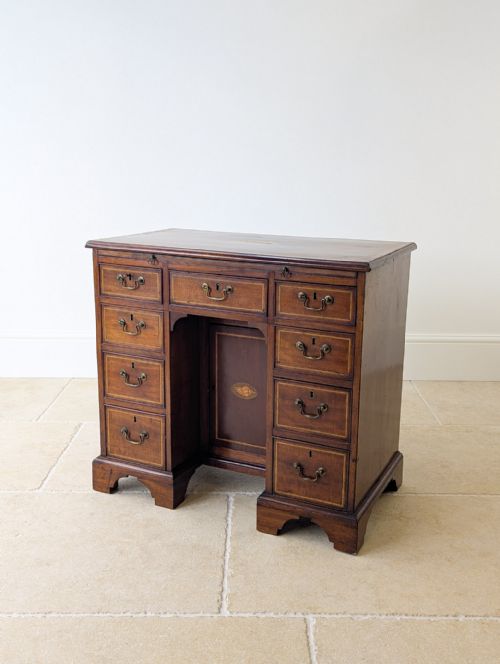
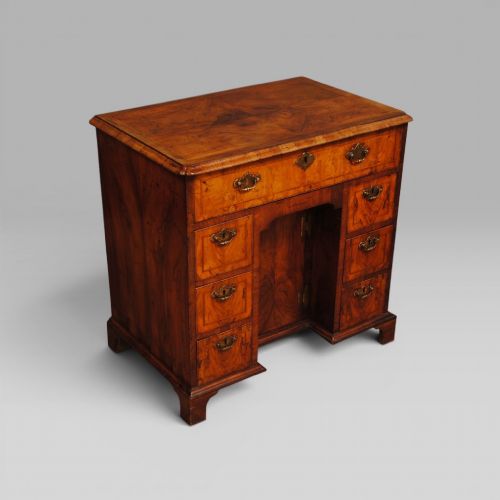


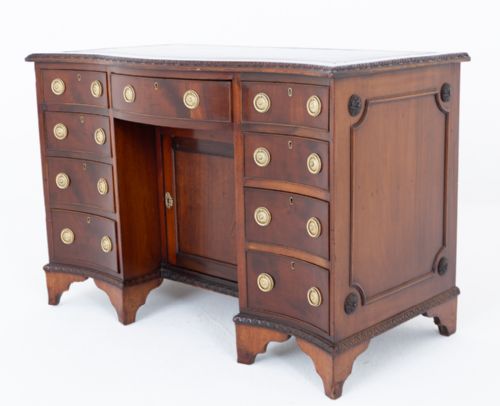

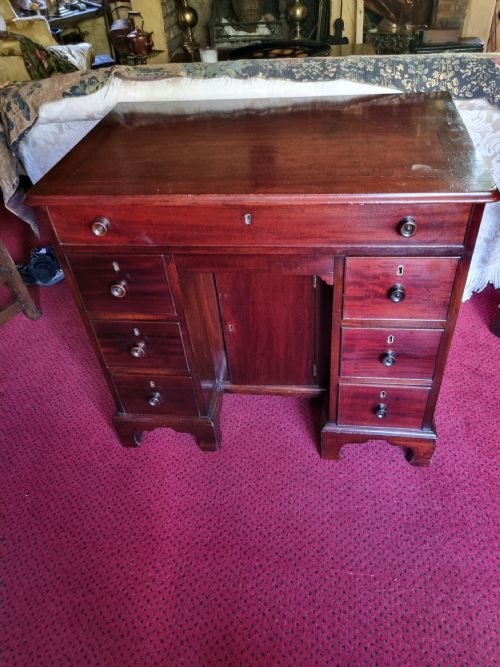
Kneehole Cupboard Desk
These kneehole cupboard desks are compact writing furniture featuring central recessed cupboards, offering neat proportions and concealed storage for the home study.
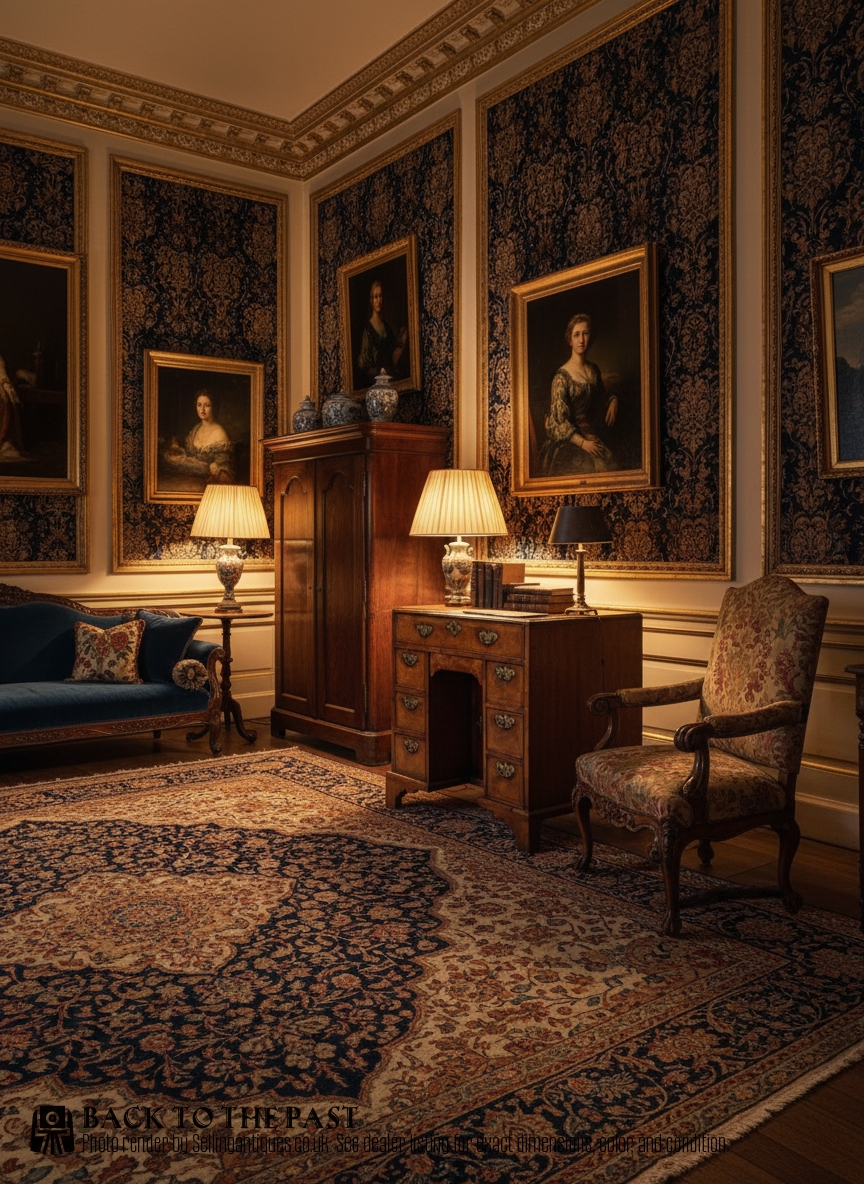
Kneehole Cupboard Desk
A kneehole cupboard desk provides a dedicated writing surface combined with flanking banks of drawers and a central cupboard door concealing a recess. The pieces on this page span the 18th century, the Georgian era, and the Victorian period.
Makers constructed these forms in mahogany, oak, and walnut, frequently incorporating smaller proportions suitable for intimate chambers. Examples range from early walnut bureau formats to later mahogany writing tables.
The dominant survivals display Georgian and Victorian workmanship, utilising timber veneers and solid secondary woods such as pine. Buyers frequently encounter pieces retaining their original brass handles and fitted interior compartments.
Materials and construction
Cabinet makers built these desks using dense hardwoods like mahogany, walnut, and oak, often applying figured veneers such as burr walnut or fiddleback walnut to the primary surfaces. Secondary timbers like pine appear on drawer linings and internal divisions.
Construction techniques relied on dovetailed drawer boxes and panelled doors, set within sturdy carcases designed to support daily writing tasks. Brass hardware, including drop handles and escutcheons, fastened securely to the drawer fronts.
Kneehole Cupboard Desk Retail Price Guide 2026
Typical asking prices for kneehole cupboard desk among the pieces listed under this phrase on Sellingantiques today, from the lower quarter to the upper quarter. They describe what is for sale here now, not the wider market.
Listings feature mahogany, walnut, and oak examples spanning from the early 18th century through to the Victorian era.
Judging quality
Quality rests upon the choice of timber figure, the crispness of the secondary mouldings, and the integrity of the original carcase construction. Desks displaying finely figured mahogany or rich burr walnut veneers demonstrate superior craftsmanship.
The preservation of original brass drawer pulls, functioning locks, and undisturbed interior blocking elevates the standing of a piece. Subtle details, such as tidy dovetailing and uniform timber ageing, distinguish finer workshop outputs from standard commercial production.
Johnstone & Jeanes
The Kneehole Cupboard Desk Glossary
- Kneehole
- A recessed space beneath the desk top designed to accommodate the sitter's legs. This central cavity often conceals a small cupboard door.
- Fiddleback
- A decorative figure found in timber, particularly walnut, exhibiting wavy cross-grain lines resembling the back of a violin. Cabinet makers prized this grain for principal display surfaces.
- Vener
- A thin layer of choice wood applied over a stable secondary timber carcase. This technique allowed workshops to display striking grain patterns economically.
- Escutcheon
- A protective plate surrounding a keyhole. These brass fittings prevent the surrounding wood from wearing away through repeated use of the key.
- Dovetail
- A traditional interlocking joint used to join drawer corners. Neat, closely spaced hand-cut dovetails indicate careful workshop assembly.
Kneehole Cupboard Desk: Frequently Asked Questions
What is a kneehole cupboard desk?
A kneehole cupboard desk is a compact writing table featuring a central recessed cupboard enclosed by two banks of drawers. This layout provides a formal writing surface while keeping stationery and papers neatly stored out of sight.
First appearing in quantity during the late 17th and 18th centuries, these pieces served as writing tables or dressing surfaces in private chambers. Their tidy proportions made them popular in smaller rooms where standard writing tables proved too large.
How do I date an antique kneehole desk?
Dating relies on examining the timber species, construction methods, and hardware styles. Pieces from the early 18th century frequently employ walnut veneers and herringbone banding, whereas later 18th-century examples turn predominantly to solid or veneered mahogany.
Secondary woods inside the drawers also offer clues, with oak and pine appearing in distinct chronological patterns. Hand-cut dovetails and original brass drop handles further help anchor a piece to a specific decade or reign.
Where were kneehole desks used?
These desks originally stood in private bedchambers, withdrawing rooms, or small libraries. Their dual function as writing tables and miniature cabinets made them versatile furniture for personal correspondence and account keeping.
Today, they suit modern home studies or sitting rooms where floor space is limited. Their finished backs on certain examples allow them to sit away from the wall.
What woods were used for kneehole desks?
Walnut dominated the earliest examples from the late 17th and early 18th centuries, often featuring decorative burr or fiddleback figures. Cabinet makers transitioned toward mahogany as the primary timber through the Georgian period.
Oak and pine appear frequently as secondary woods for drawer linings, internal partitions, and carcase backs. Occasional pieces utilise satinwood or elm for distinct regional or stylistic variations.