

Kingwood Marquetry Side Table
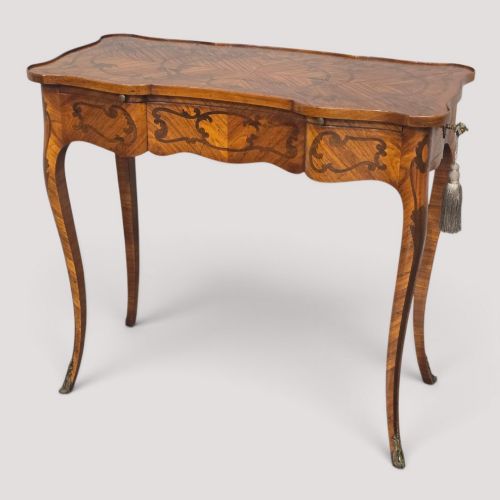
When you search for a kingwood marquetry side table, you find pieces that bring French cabinet-making traditions into domestic spaces through patterned veneers and bronze mounts.
Kingwood Marquetry Side Table
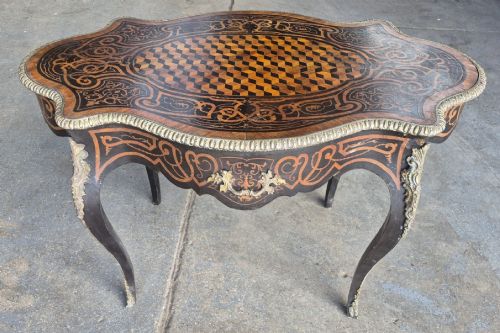
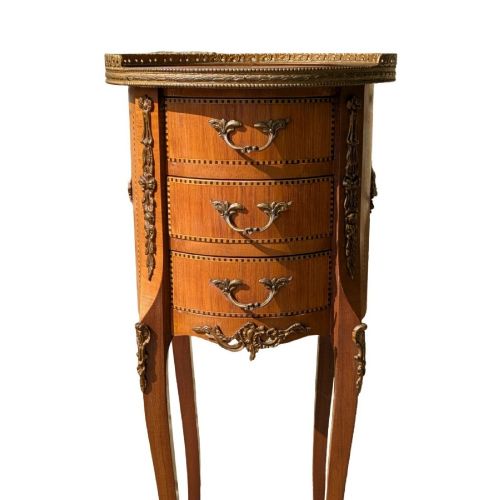
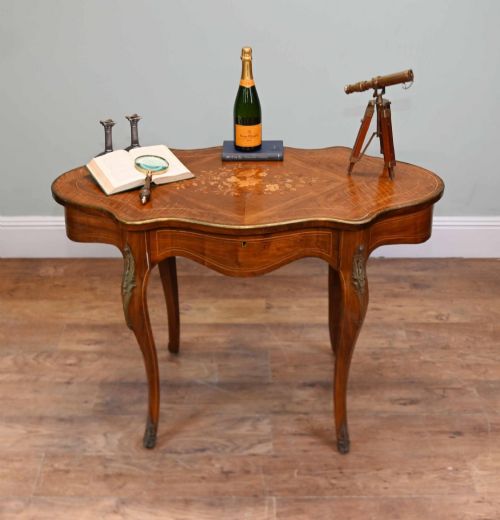
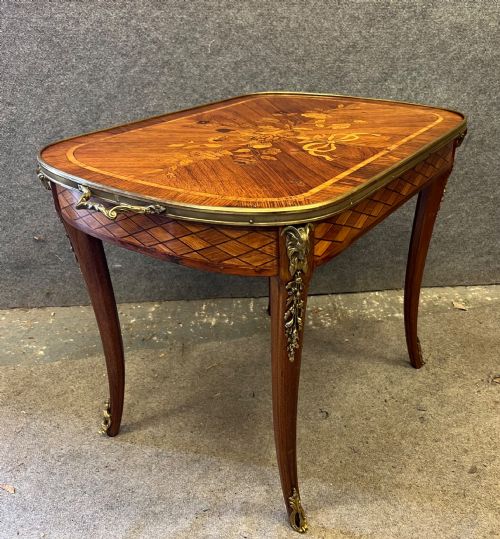
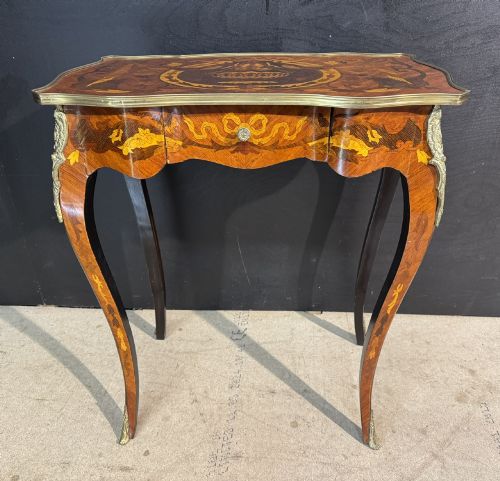
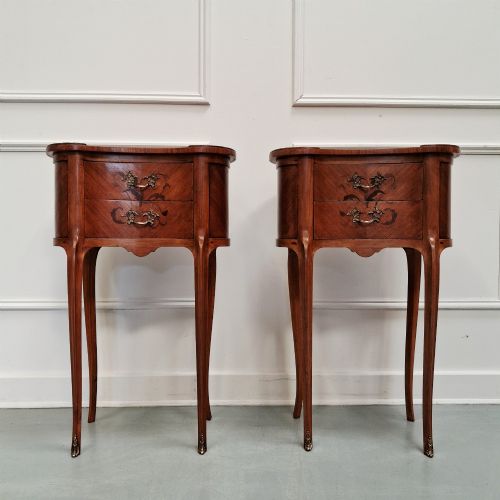
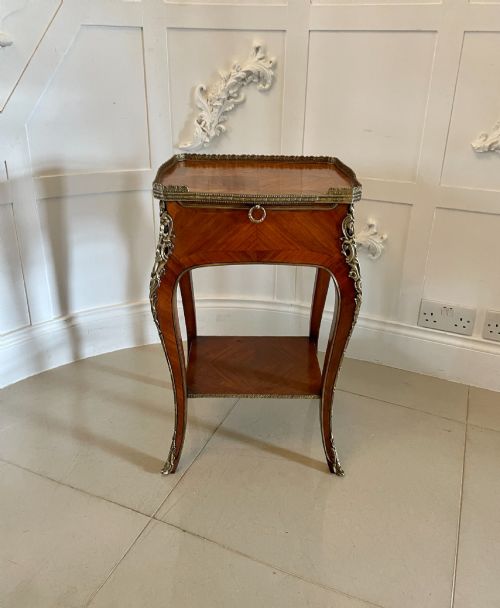
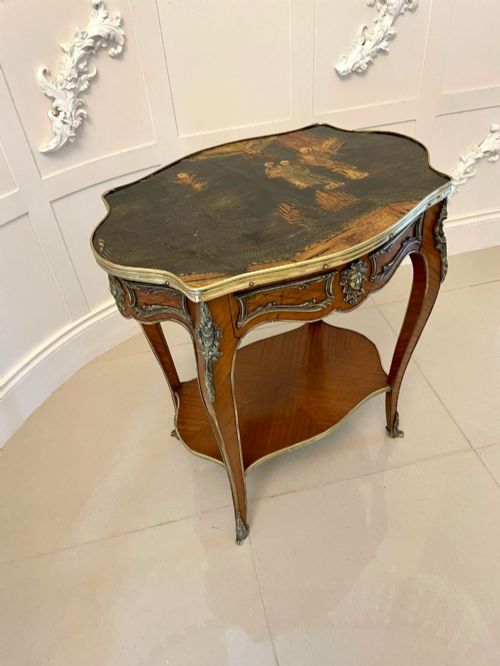
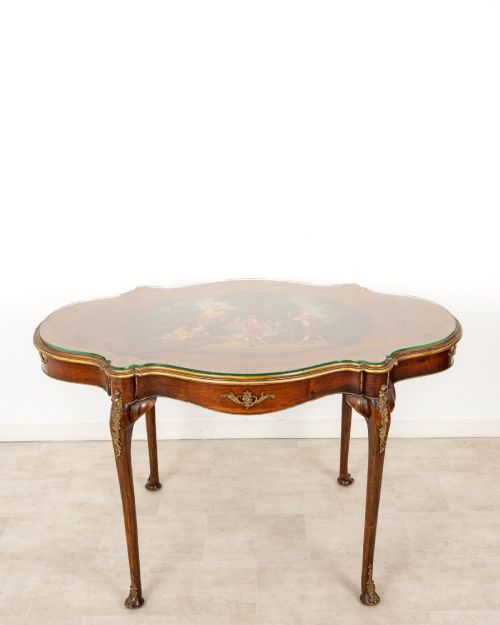
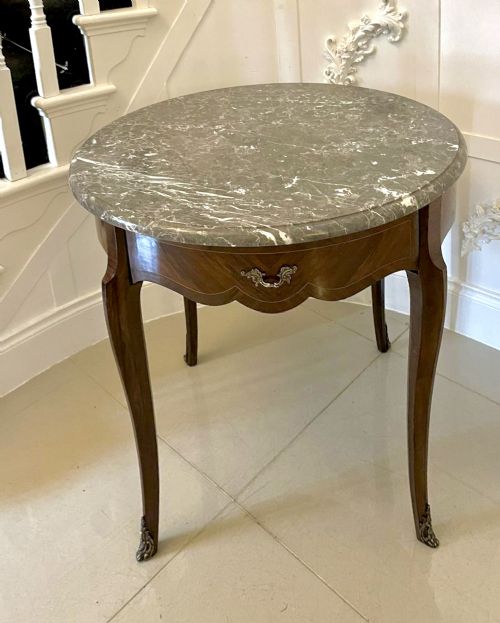
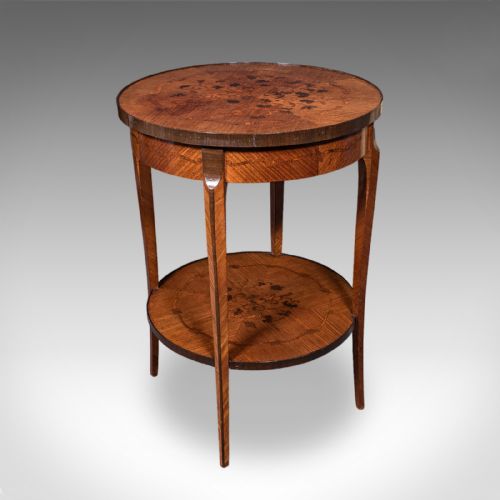
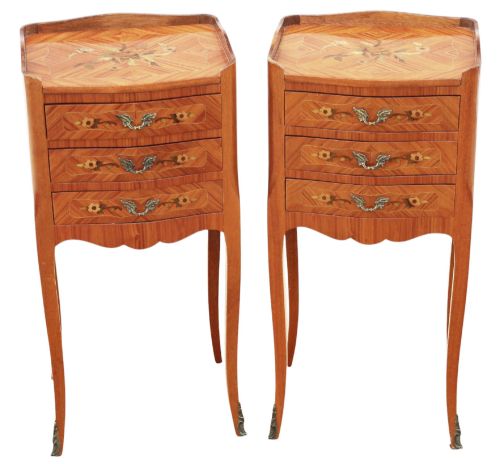
A kingwood marquetry side table encompasses a range of freestanding occasional furniture, centre tables, writing desks, and pairs of bedside cabinets designed in French revival styles. These pieces draw primarily upon Louis XV and Louis XVI aesthetics, spanning the nineteenth century through to the early twentieth century.
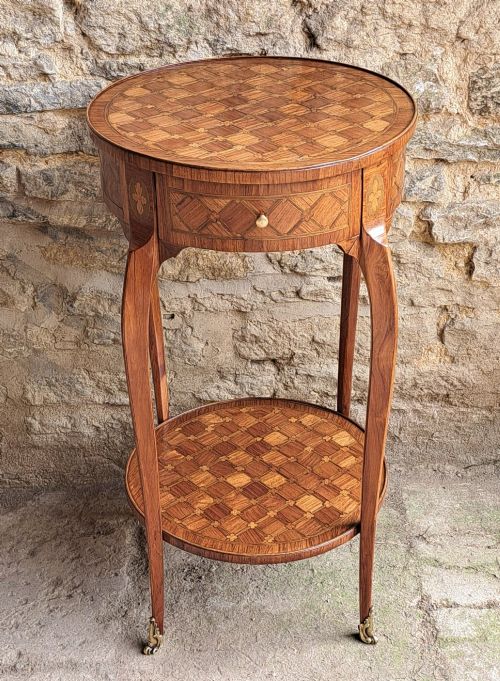
The material vocabulary centres on kingwood veneer laid in floral or geometric marquetry patterns, complemented by walnut, rosewood, and tulipwood accents. Surviving examples demonstrate diverse proportions, from serpentine and kidney shapes to two-tier étagères and compact lamp tables.
Materials and construction
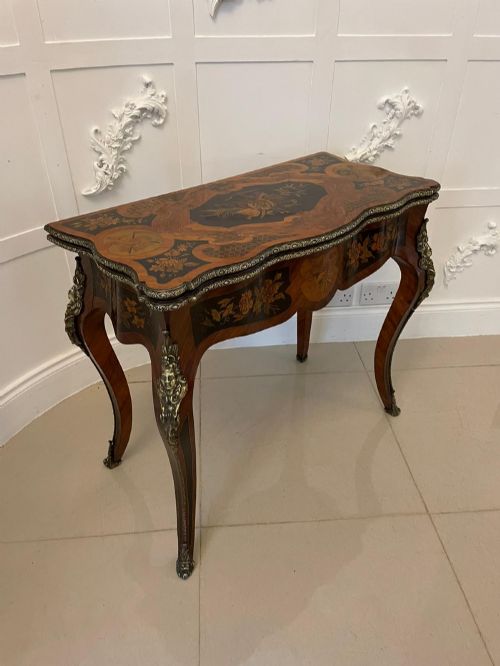
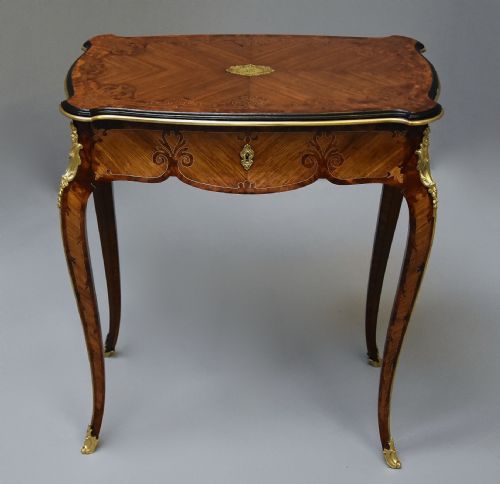
Cabinet-makers laid fine veneers of kingwood and contrasting timbers over supportive carcases, cutting delicate floral or pictorial designs by hand into the surface. This marquetry work required meticulous fitting of individual wood pieces to achieve seamless transitions across tabletops and drawer fronts.
Mounts in ormolu, gilt bronze, and brass were cast and chased separately before being fixed to angles, aprons, and legs to accentuate the contours of the woodwork. Marble tops, frequently edged with moulded brass or bronze framing, provided durable surfaces on many occasional and bedside formats.
Kingwood Marquetry Side Table Retail Price Guide 2026
Typical asking prices for kingwood marquetry side table among the pieces listed under this phrase on Sellingantiques today, from the lower quarter to the upper quarter. They describe what is for sale here now, not the wider market.
Listings feature eighteenth-century origins alongside nineteenth-century revival pieces, utilising kingwood, ormolu, marble, and rosewood across side, centre, and bedside formats.
Defining quality
The standard of a kingwood marquetry side table rests upon the precision of the veneer cutting and the fluidity of the marquetry composition. Superior examples display botanical detail with varied grain directions and natural shading achieved through heat-searing.
The execution of the metal mounts similarly differentiates output, with sharper chasing and heavier gilding marking the work of prominent makers and exhibition pieces. Structural integration matters equally, where serpentine forms flow without distortion and joints maintain stability across changing environments.
Joseph Emmanuel Zwiener·François Linke·Millet·Collingson and Lock
The Kingwood Marquetry Side Table Glossary
- Marquetry
- Decorative veneer work forming pictures or patterns using various coloured woods. Craftsmen assemble these thin slices to create intricate floral arrangements across table surfaces.
- Ormolu
- Gilt bronze mounts applied to furniture edges, feet, and aprons for decorative effect. The metal is cast and chased to produce crisp relief details.
- Étagère
- An open tiered stand utilised for display or storage. These multi-level pieces offer functional surfaces within compact footprints.
- Bureau plat
- A freestanding writing desk featuring a finished reverse and often fitted with drawers. Such tables typically stand centrally within a room rather than against a wall.
- Vernis Martin
- A simulated Japanese lacquer technique developed in France, utilised on select panels and cabinets. This finish provides a glossy, translucent surface layer.
Kingwood Marquetry Side Table: Frequently Asked Questions
Where were these tables made?
The majority of these pieces originate from French workshops and Parisian cabinet-makers working during the nineteenth and early twentieth centuries.
Many adopt the historical styles of Louis XV and Louis XVI, reflecting continuing demand for revival designs across domestic and exhibition contexts.
How do I care for kingwood veneer?
Keep the timber away from direct sunlight and steady temperature fluctuations to prevent the veneer from drying or lifting.
Apply a microcrystalline wax occasionally and buff gently with a soft cloth to maintain the natural sheen of the wood.
Can I use a side table as a desk?
Certain forms within this category, specifically writing tables and bureau plats, were constructed for correspondence and paperwork.
Smaller occasional and lamp tables offer limited surface area and lack knee clearance, making them suitable for display rather than extended writing.
What is the difference between marquetry and parquetry?
Marquetry employs varied wood veneers to build pictorial or floral motifs, requiring curved lines and organic shapes.
Parquetry uses geometric shapes like cubes, triangles, or diamonds to create repeating abstract patterns across the surface.