

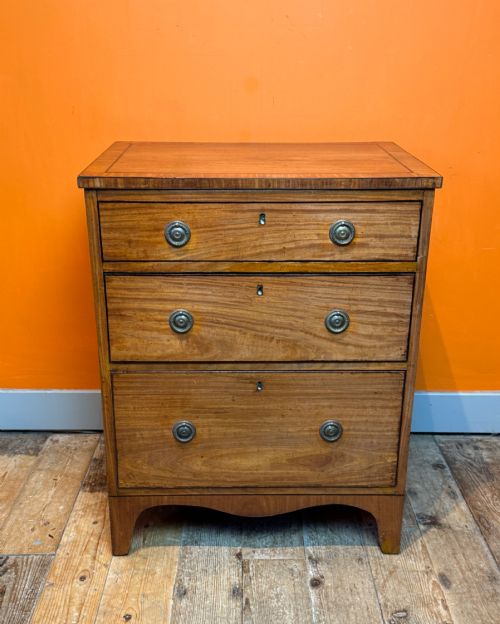
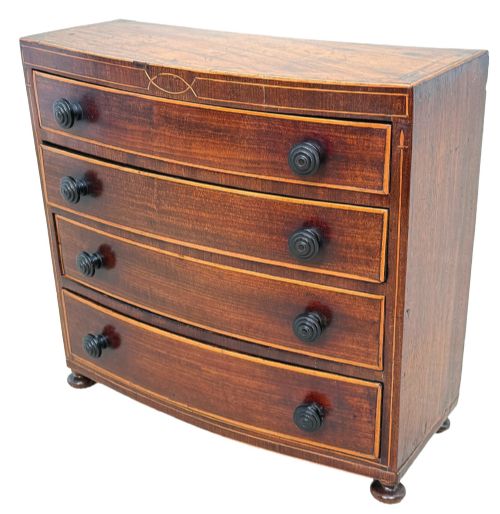
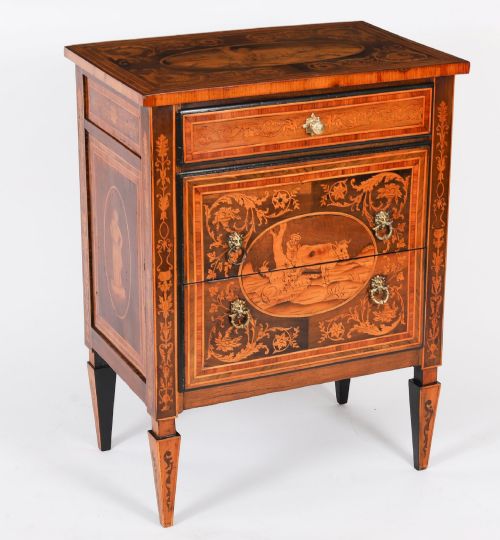
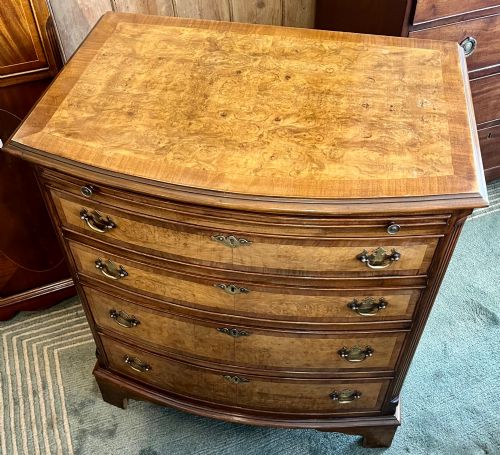

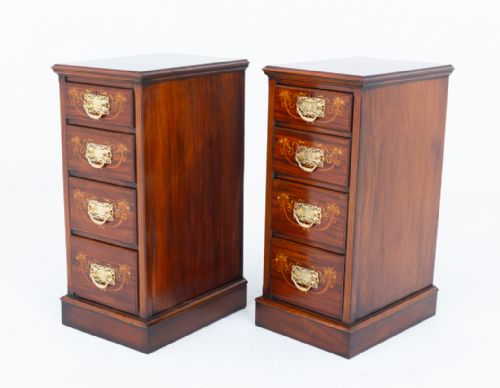


Inlaid Small Chest Drawers
These inlaid small chest drawers bring compact storage and fine decorative detail into any room.
Inlaid Small Chest Drawers
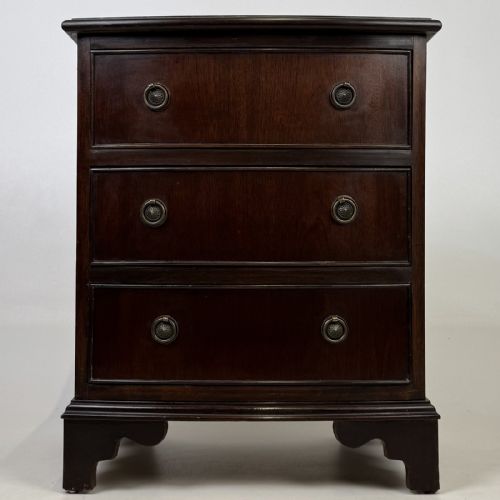
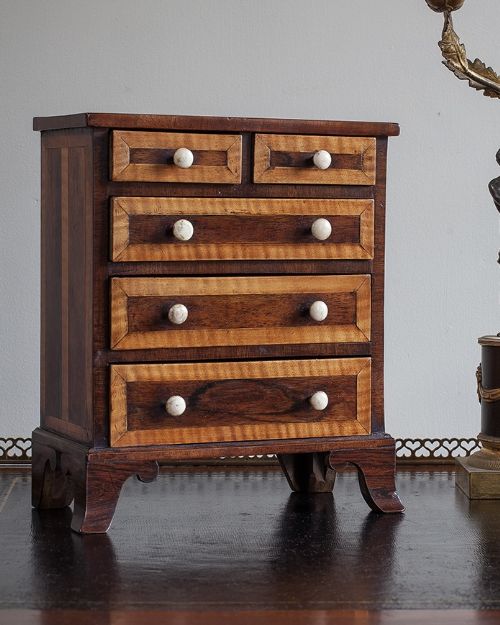
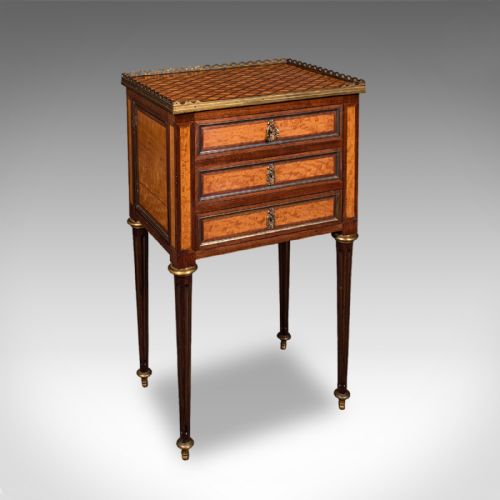
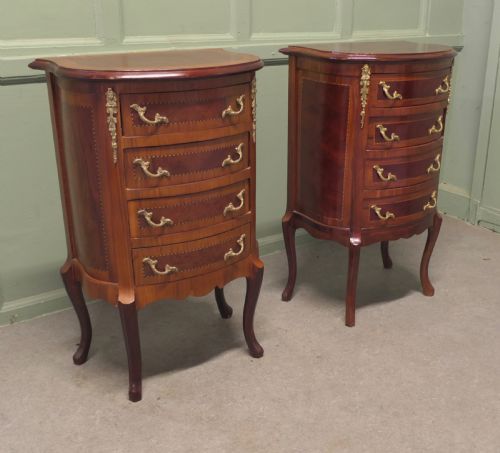
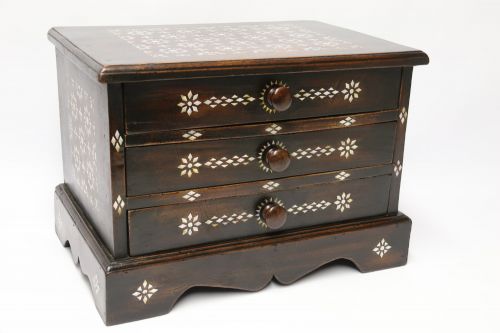
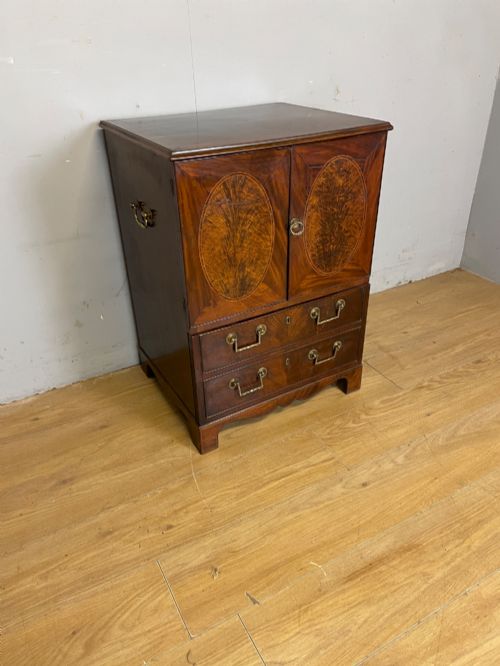
When searching for inlaid small chest drawers, collectors and interior designers look for compact case furniture that combines practical storage with decorative surface work. The pieces appearing in this category span several periods including Georgian, Victorian, and Edwardian, alongside revival styles.
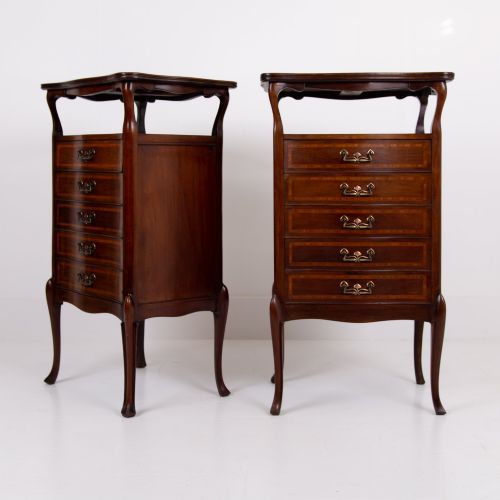
The physical forms include miniature chests, bedside cabinets, commodes, and collector cabinets with multiple small drawers. Mahogany and walnut frequently form the primary structure, accented with contrasting timbers.
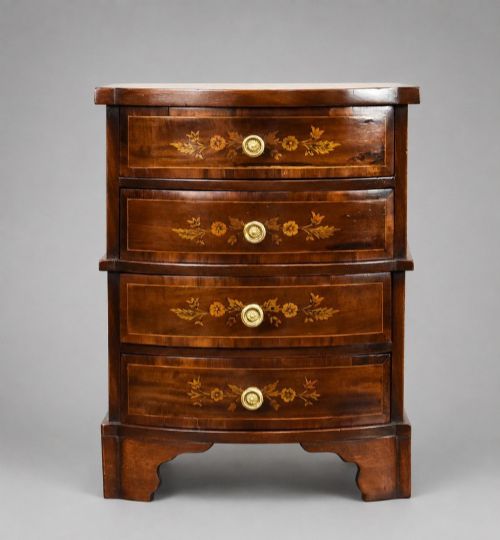
Examples range from 18th-century pieces with boxwood stringing to Edwardian satinwood models and French bombe commodes featuring marble tops. Miniature versions serve as decorative tabletop accents or specialised specimen storage.
Materials and Construction
Cabinet makers built these pieces using solid hardwoods like mahogany, walnut, and oak for the primary carcase and drawer linings, applying finer veneers to the exterior surfaces. Boxwood, satinwood, and ebony served for contrasting inlay work and delicate stringing lines.
Surface decoration relied on precision woodwork techniques such as marquetry, where coloured veneers formed pictorial or geometric motifs, and parquetry for geometric patterns. Brass handles and escutcheons provided functional hardware accents.
Internal construction often featured hand-cut dovetails on the drawer joints and secondary timbers like oak or pine for internal partitions and drawer bases.
Inlaid Small Chest Drawers Retail Price Guide 2026
Typical asking prices for inlaid small chest drawers among the pieces listed under this phrase on Sellingantiques today, from the lower quarter to the upper quarter. They describe what is for sale here now, not the wider market.
Some miniature chests were originally made by apprentice woodworkers demonstrating their mastery to joinery guilds.
Assessing Quality
The standard of a piece rests heavily on the crispness of the cabinet work and the fidelity of the timber selection. Flame mahogany or figured walnut with strong natural grain patterns elevates the visual weight of smaller furniture.
The precision of the inlay work distinguishes workshop output, where tight joints between contrasting woods show the maker's skill. Original hardware, intact timber patination, and structural integrity further separate standard production items from finer studio or period pieces.
Edwards and Roberts
The Inlaid Small Chest Drawers Glossary
- Inlay
- A decorative technique where pieces of contrasting wood, metal, or shell are fitted into depressions carved into the primary surface. This method creates flat, geometric, or pictorial ornamentation across drawer fronts and tops.
- Stringing
- Thin, narrow strips of contrasting timber embedded into the surface of furniture to create linear outlines and borders. It defines the edges of drawer fronts and tabletops on Georgian and Edwardian pieces.
- Marquetry
- Elaborate veneer work arranged in patterns or pictures using various wood types and natural materials. It covers surfaces with complex floral or architectural scenes.
- Caddy top
- A raised, moulded tabletop with rounded or shaped edges popular on 18th-century and revival chests. This profile adds depth and architectural presence to smaller case pieces.
- Commode
- A low French-style chest of drawers or cabinet fitted with decorative mounts or marble tops. These pieces often feature serpentine or bombe profiles.
Inlaid Small Chest Drawers: Frequently Asked Questions
What are inlaid small chest drawers used for?
These compact pieces serve multiple domestic functions, from bedside storage to housing small collections, documents, or jewellery. Their reduced scale allows them to fit into tighter spaces where standard furniture overwhelms the room.
Beyond utility, they act as focal decorative items that showcase period woodworking skills and decorative veneers.
How do I identify a Georgian period chest?
Georgian pieces generally exhibit heavier timber construction, hand-cut dovetails in the drawer linings, and subtle stringing rather than dense modern marquetry. The proportions tend to follow classical architectural rules with understated bracket feet or plinth bases.
Checking the secondary timbers, such as oak or pine inside the drawers, helps confirm the period manufacturing methods.
Where should I place a miniature chest?
Miniature chests suit tabletops, sideboards, or large desks where their detailed proportions remain visible at eye level. They function effectively in studies or hallways as secure storage for small everyday items.
Keep them away from direct heat sources and strong sunlight to protect delicate veneers and old polishing finishes.
What is the difference between a commode and a standard chest?
A commode typically refers to a decorative cabinet or chest of continental European origin, frequently fitted with a marble top and curved bombe sides. Standard British chests generally feature straight fronts and simpler timber tops.
Commodes also tend to emphasise ornamental hardware and complex veneer patterns over pure utilitarian storage.