





Khamseh Tribal Carpet
A khamseh tribal carpet brings the bold designs of South-West Persia into a room through rich wool and distinct nomadic motifs.
Khamseh Tribal Carpet
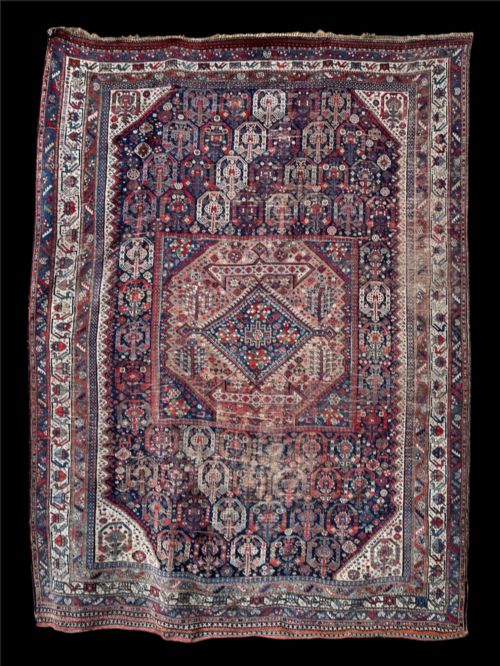
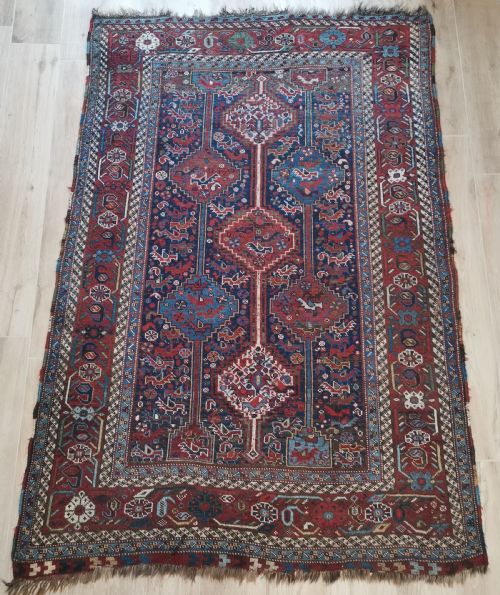
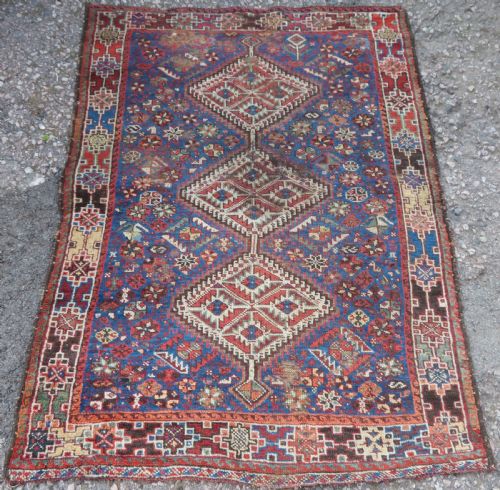
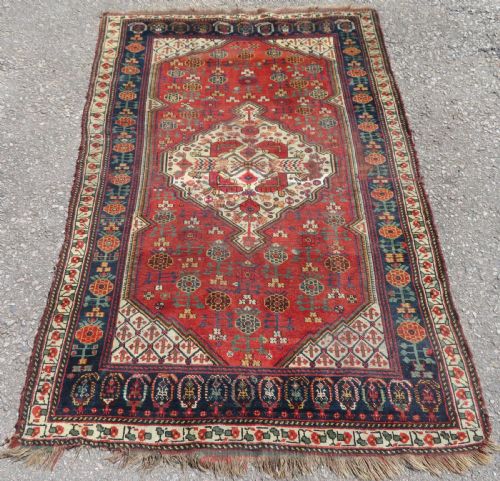
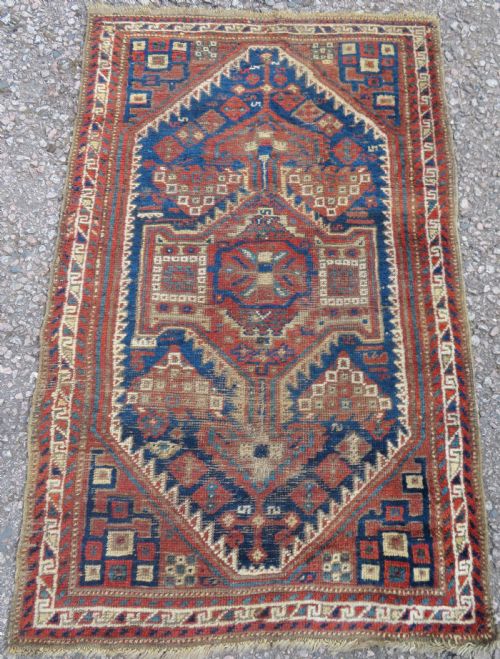
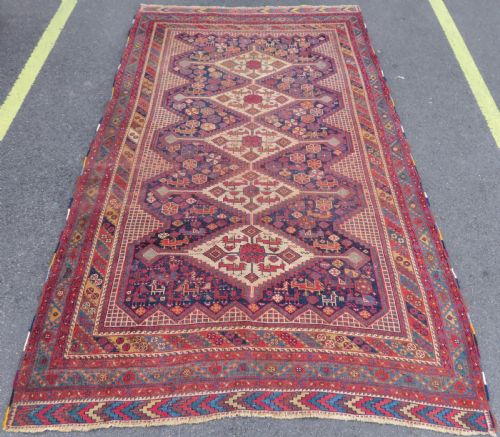
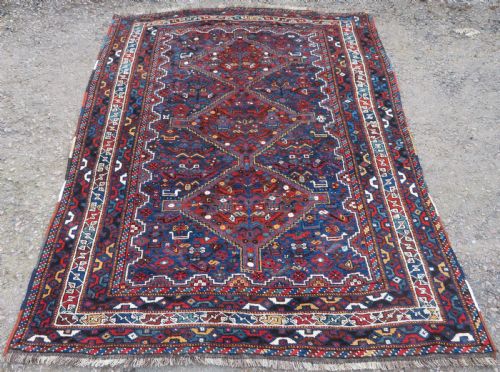
A khamseh tribal carpet represents the weaving traditions of the confederation of tribes in South-West Persia, including the Arab, Baharlu, Basseri, and Shekarlu groups. These floor coverings range from smaller area rugs to large main carpets andelleh formats, produced across the nineteenth and early twentieth centuries.
The aesthetic draws heavily on South Persian nomadic life, incorporating distinctive motifs such as birds, pecking chickens, trees of life, and peacock patterns. Examples often connect visually to neighbouring traditions like Qashqai and Luri weaving, reflecting shared regional iconography.
The pieces available here span several decades from the late nineteenth century into the early twentieth century, capturing the traditional output of these confederated tribes before modern production methods took hold.
What Varies in Quality
Condition plays a role, though many surviving examples show the heavy wear expected of genuine nomadic floor coverings. The clarity of the natural dye palette and the integrity of the borders also distinguish standard production from superior examples.
Khamseh Tribal Carpet Retail Price Guide 2026
Typical asking prices for khamseh tribal carpet among the pieces listed under this phrase on Sellingantiques today, from the lower quarter to the upper quarter. They describe what is for sale here now, not the wider market.
Keep an eye out for the charmingly rendered pecking chicken motifs hidden among the geometric borders.
The Khamseh Tribal Carpet Glossary
- Confederation
- A union of distinct tribes and sub-tribes cooperating under shared leadership. In this context, it refers to the alliance of diverse groups in Fars Province that produced these carpets.
- Kelleh
- A long, narrow carpet format traditionally used in Persian domestic spaces. These pieces are typically longer than they are broad.
- Herati design
- A repeating pattern featuring a central floral motif enclosed by leaves, often seen in classical Persian weaving. It appears in various forms across South-West Persian carpets.
- Tree of Life
- A symbolic motif depicting a rising tree or branch system representing growth and eternity. It frequently occupies the central field of tribal rugs.
- Natural dyes
- Colourants derived from plant, insect, and mineral sources rather than synthetic chemicals. They produce the subtle tonal variations characteristic of older textiles.
Khamseh Tribal Carpet: Frequently Asked Questions
What is a khamseh tribal carpet?
A khamseh tribal carpet is a hand-woven textile produced by the confederated tribes of South-West Persia. These pieces reflect nomadic heritage through wool construction and traditional regional motifs.
They serve as both functional floor coverings and historical examples of tribal artistry from the nineteenth and early twentieth centuries.
How do I identify a tribal carpet?
Identification relies on observing the combination of materials, structure, and design elements like geometric borders and stylized animal motifs. Look for hand-spun wool and natural dye palettes typical of South Persian nomadic output.
Sub-tribe attributions and specific design quirks often help narrow down the origin within the region.
How were these carpets used?
Nomadic and village weavers produced these textiles primarily for daily floor use within tents and homes. Larger formats functioned as main carpets for reception spaces or clan gatherings.
Their durable wool construction allowed them to withstand heavy foot traffic while providing insulation against earthen floors.
How should I care for an antique rug?
Protect the textile by placing a quality underlay beneath it to prevent slipping and reduce friction on the fibres. Vacuum gently with the suction attachment rather than a rotating brush.
Keep the piece away from direct, prolonged sunlight to preserve the natural dye colours over time.