
Kerosene Oil Lamp
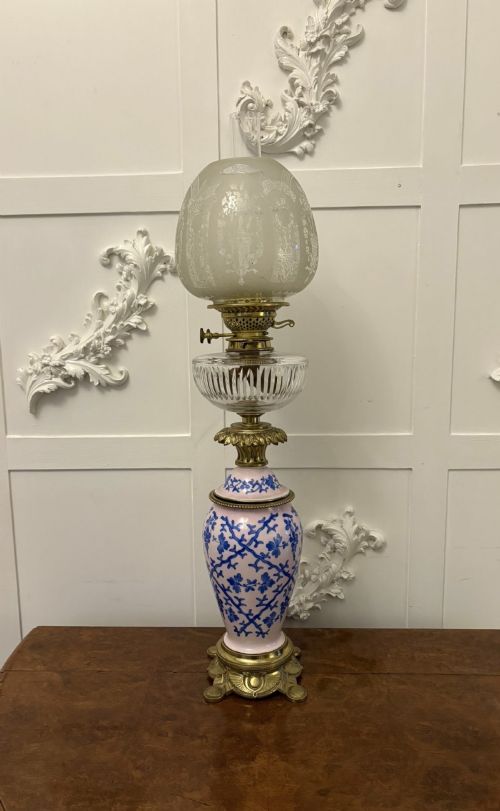
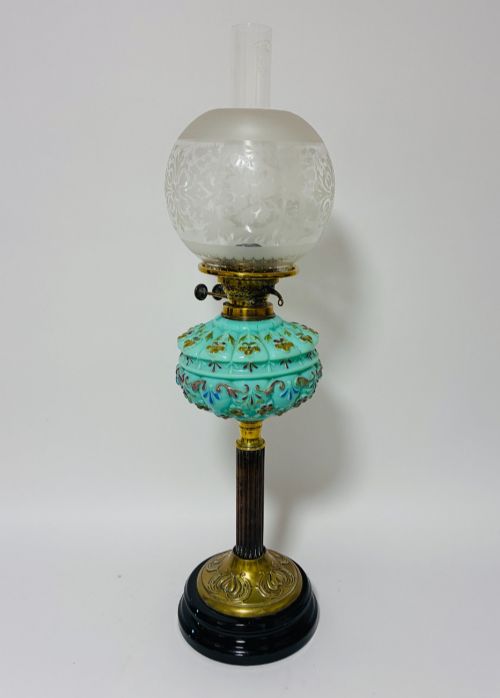
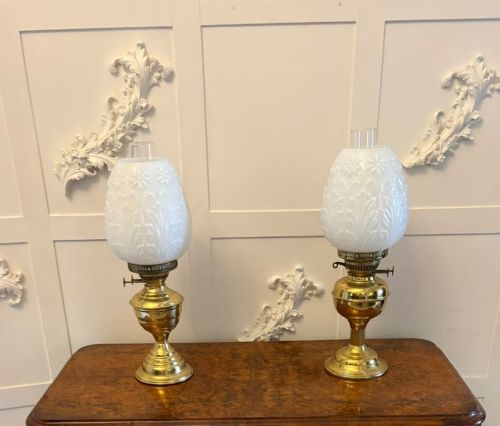
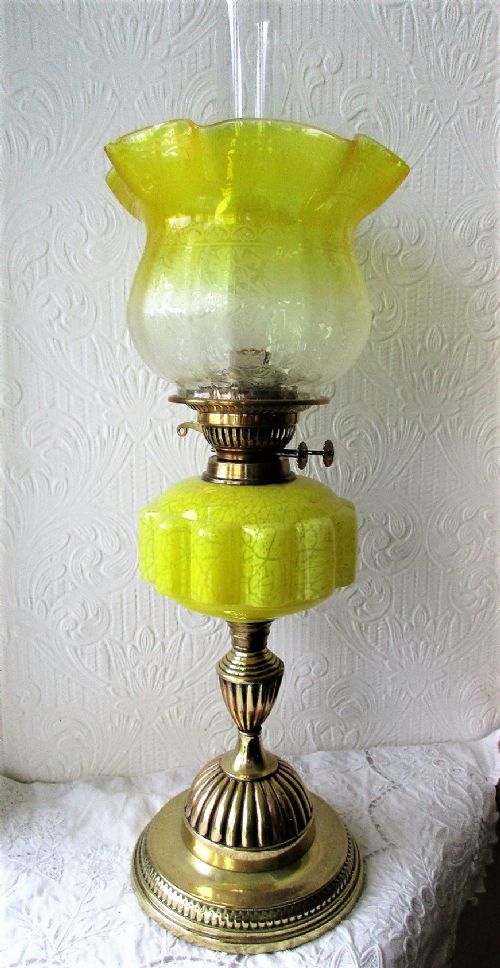
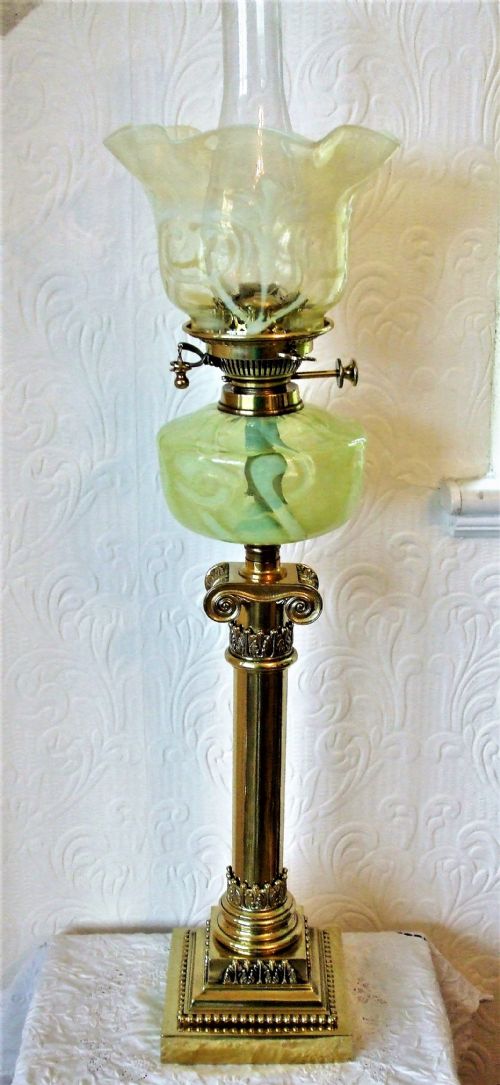
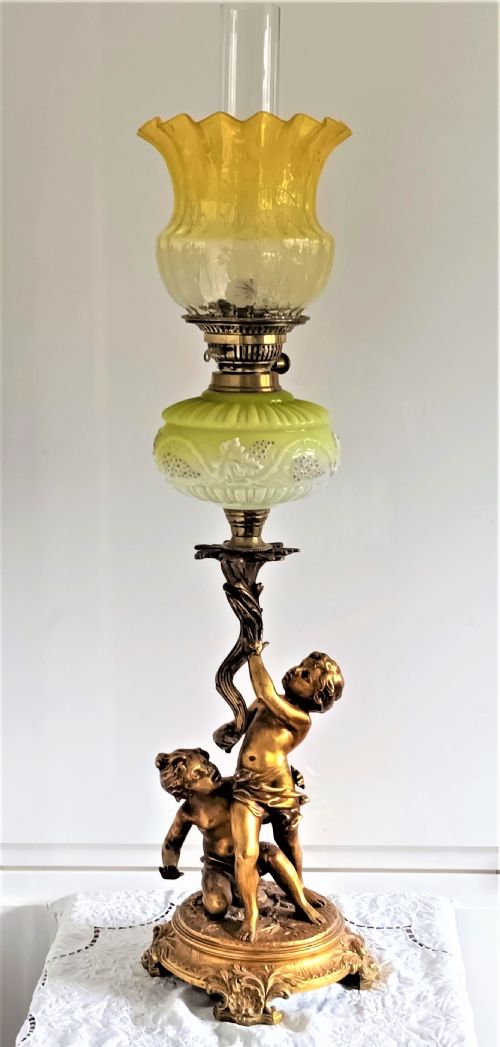
These kerosene oil lamps bring warm period illumination to a room, combining substantial metal or ceramic columns with decorative glass fonts and shades.
Kerosene Oil Lamp
A kerosene oil lamp is a domestic lighting fixture designed to burn paraffin fuel through a wick, housed within a metal burner assembly mounted upon a decorative base. When exploring these listings, buyers encounter numerous Victorian and Edwardian examples dating from the mid-nineteenth century through to the early twentieth century.
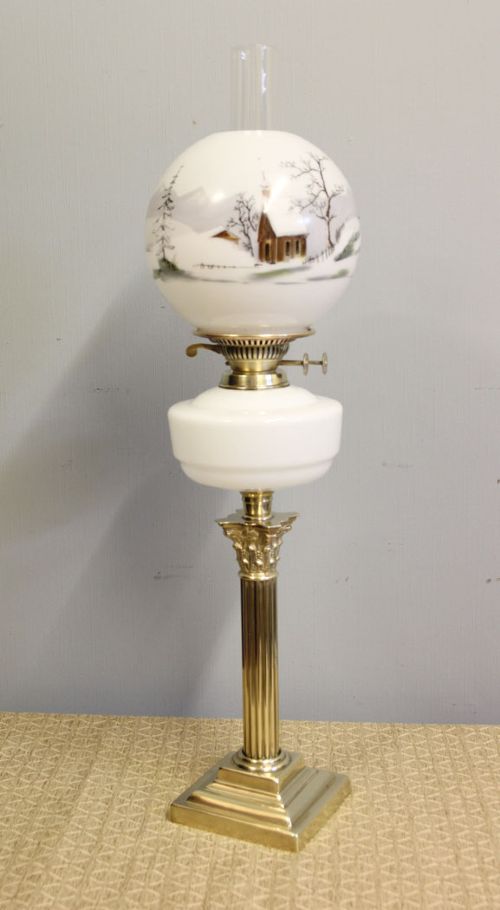
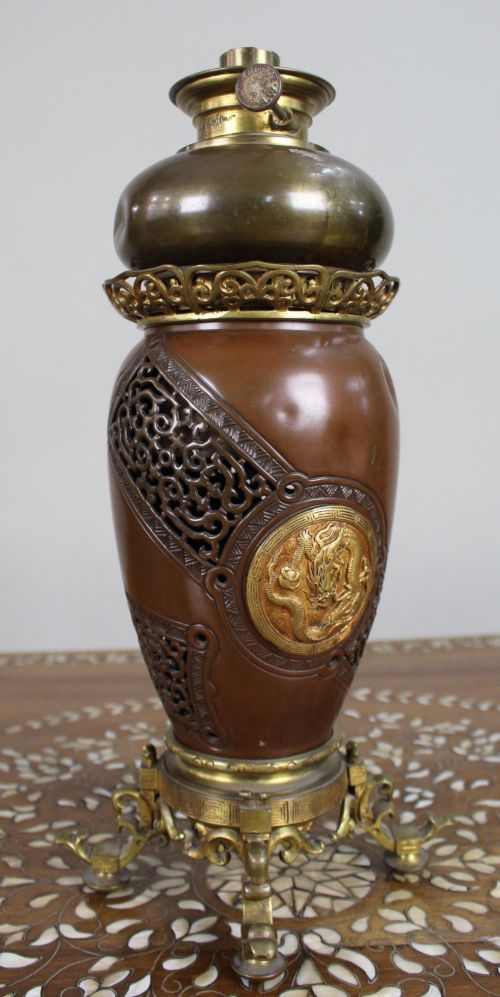
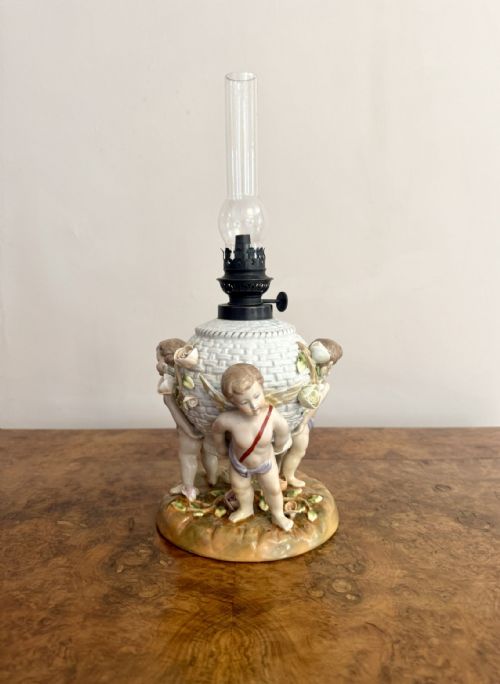
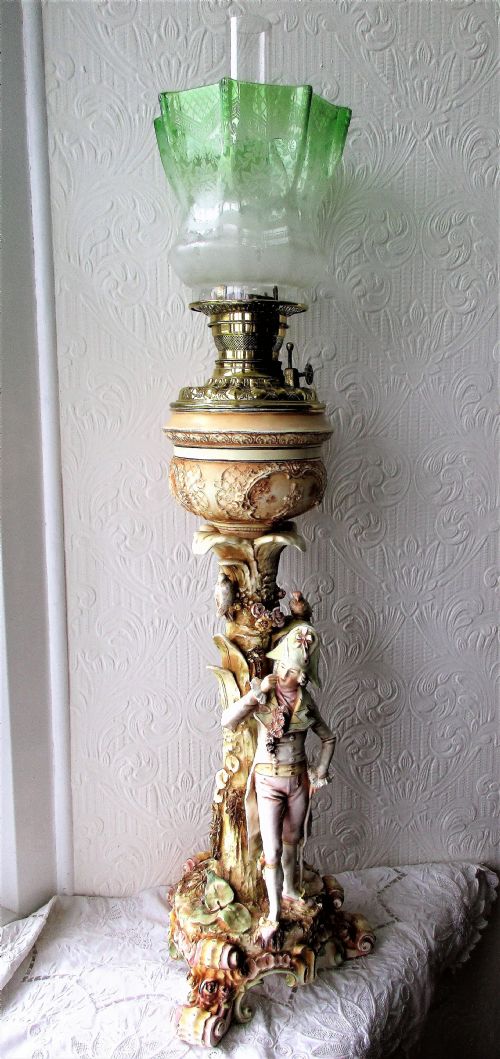
The most common formats on this page include brass column table lamps, figural porcelain bodies, and ceramic reservoirs paired with hand-blown or etched glass shades. Pieces span various aesthetic movements, including Victorian Neo-Classical, Rococo Revival, Art Nouveau, and Japanese Meiji designs.
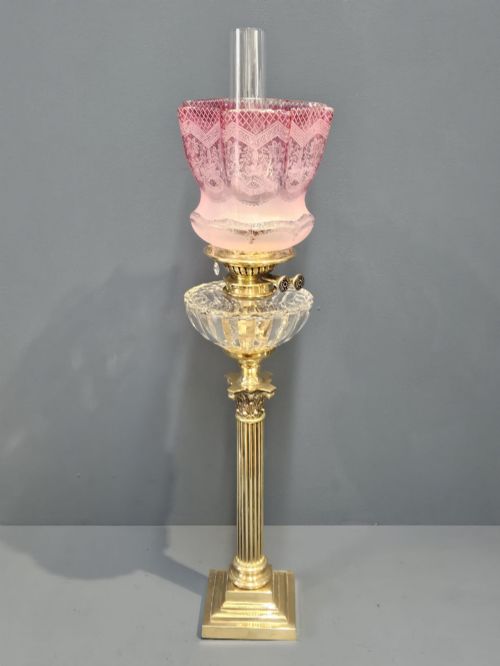
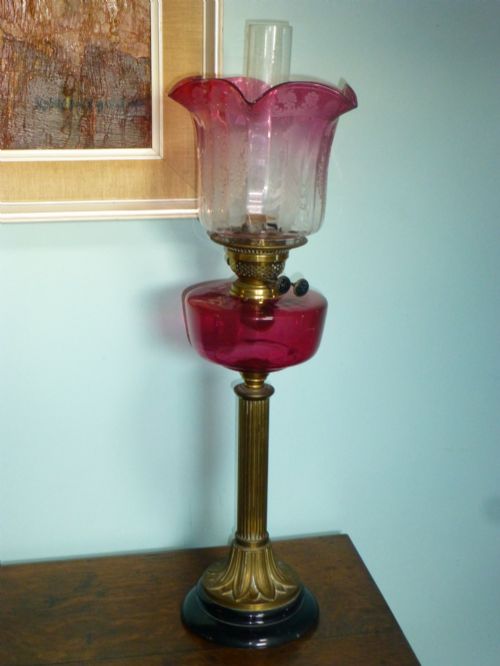
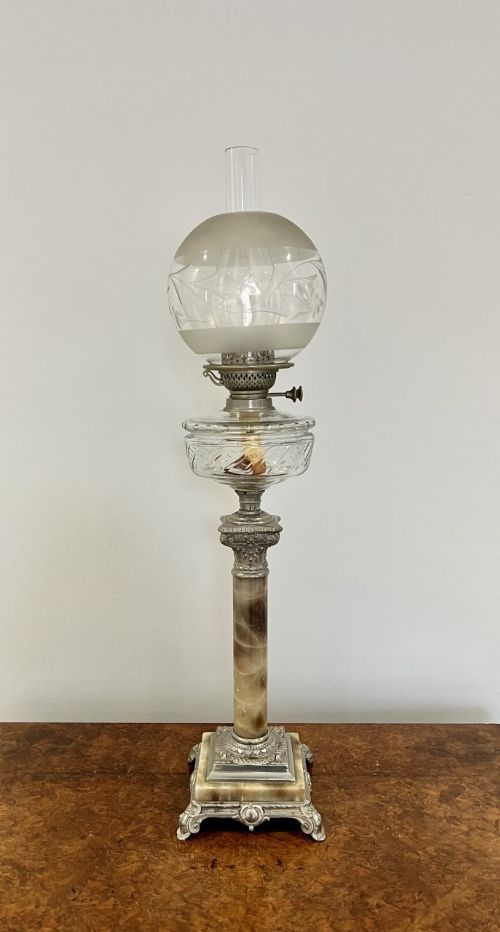
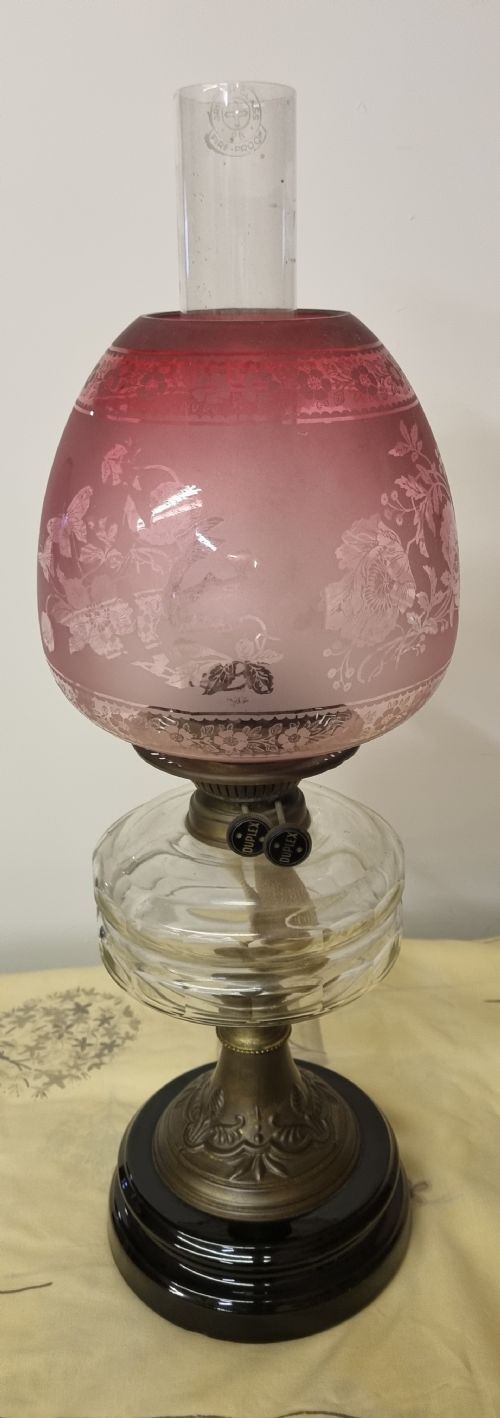
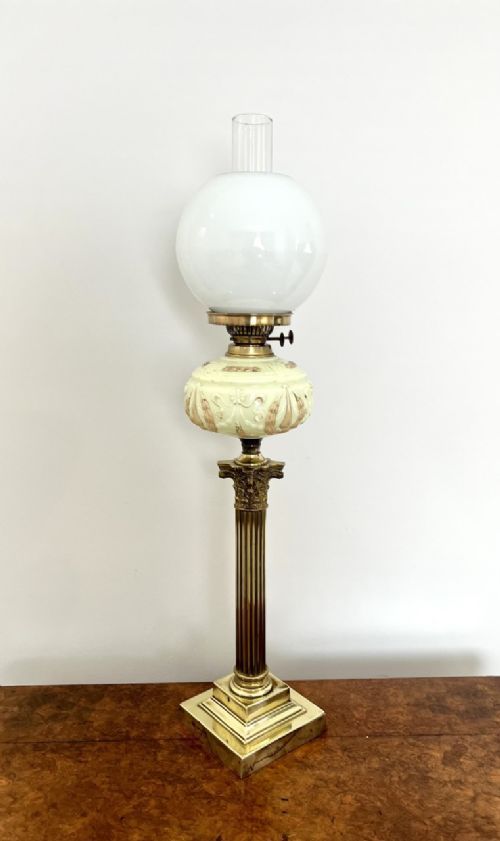
Tall Corinthian and Ionic column designs feature prominently alongside globular font styles, frequently retaining their original contrasting cranberry, opaline, or clear glass shades. These functional lighting pieces served as primary household illumination before the widespread adoption of electric lighting.
Materials and construction
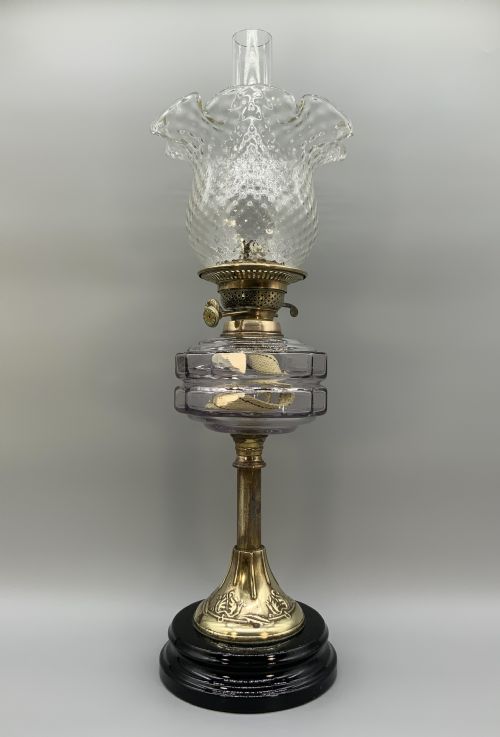
Makers utilised solid brass, bronze, and silver plating for the structural columns and burner mounts, providing a sturdy foundation for the heavy fuel reservoirs. These metal components were frequently cast and chased with classical architectural details or floral motifs.
Reservoirs and shades were formed from blown, cased, or pressed glass, including vibrant cranberry glass, opaline glass, and hand-painted porcelain. Factories such as Sitzendorf supplied specialised ceramic figural bases, while firms like Hinks engineered patented double-burner mechanisms.
Listings feature brass, ceramic, and various glass materials including cranberry and opaline.
Evaluating quality and execution
Superior examples display crisp casting definition in the brass columns, intricate hand-painting on the porcelain or glass fonts, and heavy, stable mounting bases. The presence of matched or original period shades significantly elevates the integrity of an individual piece.
The sophistication of the burner mechanism also indicates grade, with twin-burning duplex systems and signed manufacturing stamps representing higher production standards. Finely etched or hand-blown glass shades with unblemished colour gradients separate standard utilitarian lamps from exceptional decorative commissions.
Hinks of Birmingham·Sitzendorf·Wild and Wessel·Goldsmiths and Silversmiths Company
The Kerosene Oil Lamp Glossary
- Duplex burner
- A double-wick burner mechanism designed to produce a brighter flame than standard single-wick models. It requires a wider gallery and specific double-width flat wicks.
- Corinthian column
- An architectural column style featuring ornate acanthus leaf capitals, frequently emulated in the brass stems of nineteenth-century table lamps. This classical form was especially popular during the Victorian period.
- Opaline glass
- An opaque, milky-white glass popular for Victorian and Edwardian lampshades. It diffuses the flame's glare while casting a soft ambient glow across a room.
Kerosene Oil Lamp: Frequently Asked Questions
Can these lamps be converted to electricity?
Many collectors prefer to keep these lighting fixtures in their original condition without electrical conversion. Preserving the internal burner and fuel chamber maintains the historical integrity and design balance of the piece.
If conversion is desired, choose a method that avoids drilling or damaging original metal components. Reversible wiring allows the lamp to retain its potential for restoration.
How do I clean old glass shades and brass?
Wash glass shades in lukewarm water with mild soap, avoiding harsh abrasives that might damage hand-painted details. Cranberry and opaline glass require gentle handling to preserve their surface finish.
Polish brass and bronze components sparingly with a non-abrasive metal cleaner to maintain an appropriate period lustre. Avoid removing desirable patination built up over decades.
How can I tell a Victorian lamp from an Edwardian one?
Victorian models often feature exuberant decorative styles such as Rococo Revival curves or heavy Neo-Classical brass columns paired with rich cranberry glass. Figurative porcelain bodies and ornate hand-painted floral motifs also typify this earlier era.
Edwardian examples tend towards sleeker lines, simpler brass turnings, and opaline or pastel glass shades. The transition into the twentieth century brought more restrained forms alongside emerging Art Nouveau influence.