
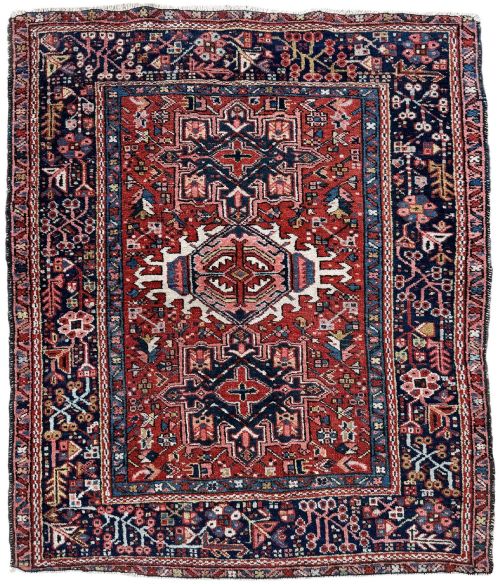
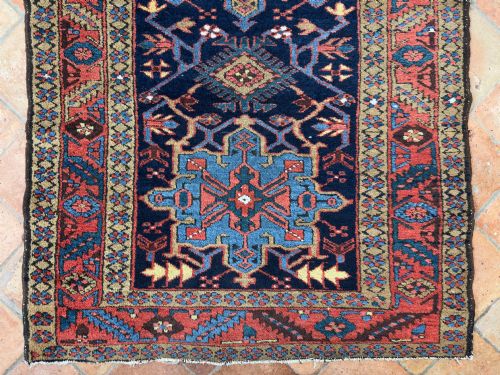
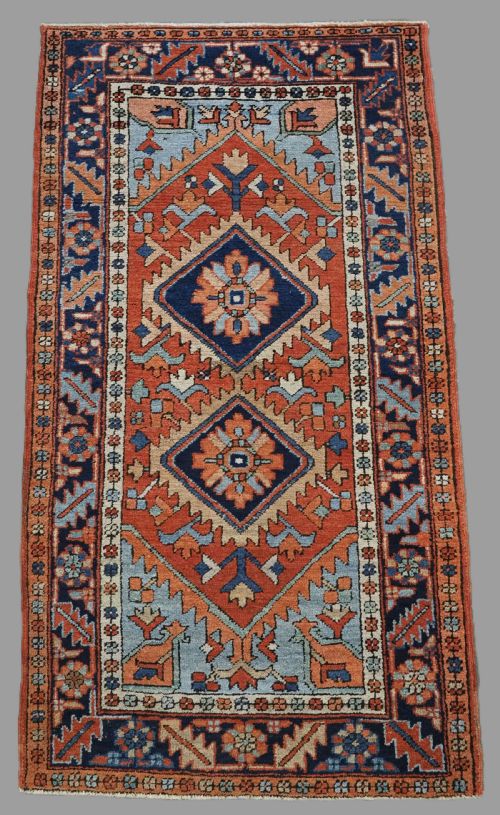


Karaja Runner Carpet
These karaja runner carpet pieces offer robust tribal geometry and rich regional colour, grounding narrow hallways with enduring Northwest Persian character.
Karaja Runner Carpet
A karaja runner carpet is a distinctive Northwest Persian tribal floor covering designed with elongated proportions suited to narrow hallways and corridors. Buyers seeking this phrase encounter traditional runner rugs, long rugs, and narrow gallery formats originating from the Heriz region.
The pieces seen here span from the late nineteenth century through to the early twentieth century, encompassing periods such as eighteen seventy, eighteen eighty, eighteen ninety, nineteen hundred, nineteen ten, and nineteen twenty. They bridge the aesthetic between village weaving traditions and structured Persian workshop output.
How they were made
These carpets are constructed using wool pile knotted onto a foundation of cotton, providing the dense and resilient structure necessary for heavy traffic areas. The reliance on natural materials ensures that the pile responds well to traditional hand-washing and ages with a characteristic soft patina.
Weavers in the region employed traditional Northwest Persian techniques, utilising saturated natural dyes to create geometric medallions and repeating motifs. The interaction between the wool pile and cotton warps yields the characteristic sturdy handle found in these nineteenth and early twentieth century runners.
Listings span several decades from the nineteenth century into the early twentieth century, utilising wool pile on cotton foundations.
What varies in quality
The distinction between tiers rests upon the precision of the tribal geometry and the depth of the regional colour palette. Finer examples display crisp, well-balanced medallions and harmonious saturation that retain visual clarity across the long runner format.
Structural integrity also separates the output, with superior pieces maintaining even pile depth and robust selvedges across the entire length. The handling of traditional Persian motifs distinguishes standard village production from more resolved collector examples.
The Karaja Runner Carpet Glossary
- Karaja
- A style of rug and runner originating from the Northwest Persian region near Heriz, known for geometric designs and tribal motifs. These pieces often feature prominent central medallions.
- Runner
- An elongated narrow carpet format specifically proportioned for hallways, corridors, and galleries. This shape showcases repeating patterns along a linear axis.
- Wool
- The primary pile material utilised in these antique carpets, valued for its natural resilience and capacity to hold rich dye colours. It provides the soft yet durable surface texture.
- Cotton
- The fibre used for the foundation warps and wefts in these regional carpets, offering dimensional stability. It allows the runner to lie flat along narrow floors.
Karaja Runner Carpet: Frequently Asked Questions
Where were they made?
These pieces originate from the Northwest Persian region, specifically associated with the Heriz and Karaja weaving districts.
The local weavers produced distinct tribal designs that blended village traditions with structured geometric layouts.
How do I measure a hallway?
Measure the clear floor space between skirting boards or walls, leaving a uniform margin of exposed wood or tile on all sides.
Account for door clearance and ensure the narrow runner length terminates before obstructing thresholds.
Are they durable enough for daily use?
The dense wool pile and cotton foundation are historically engineered to withstand heavy foot traffic in corridors and hallways.
Regular rotation and proper underlay distribute wear evenly across the length of the carpet.
How do I date these antique runners?
Dating relies on assessing the natural dye palette, the handling of the wool, and structural characteristics typical of nineteenth and early twentieth century production.
Comparisons with documented regional archive pieces help narrow the manufacturing window.