




Traditional Hall Runner Rug
A traditional hall runner rug brings linear character and enduring warmth to long corridors, bridging rooms with historical depth.
Traditional Hall Runner Rug
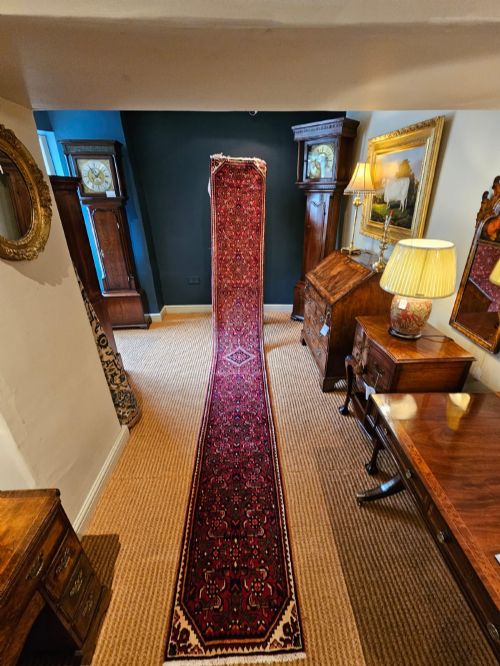
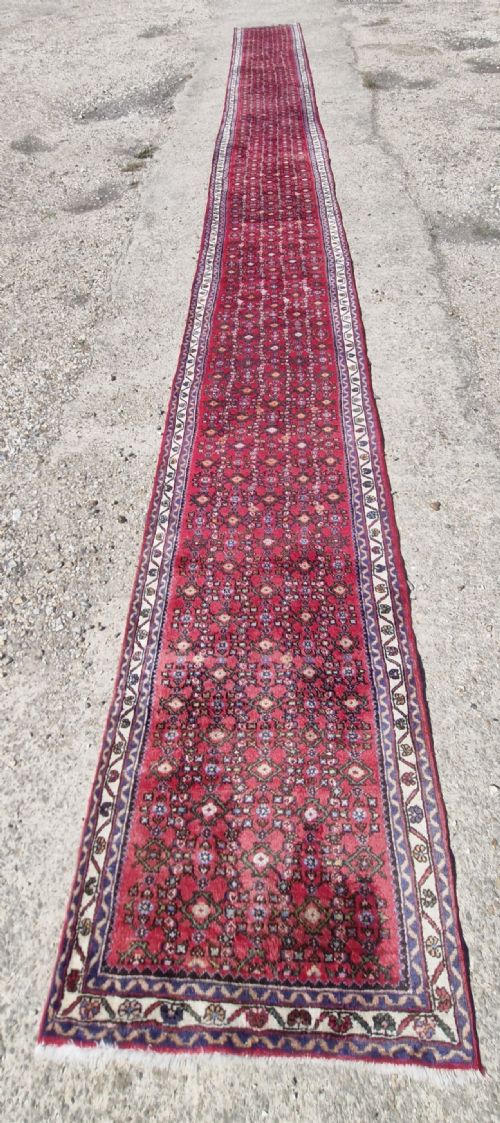
A traditional hall runner rug is an elongated textile designed specifically for corridors, stairwells, and narrow transition spaces within a home. These pieces stretch significantly in length while maintaining a narrow width to fit restricted floor plans without overwhelming the passage.
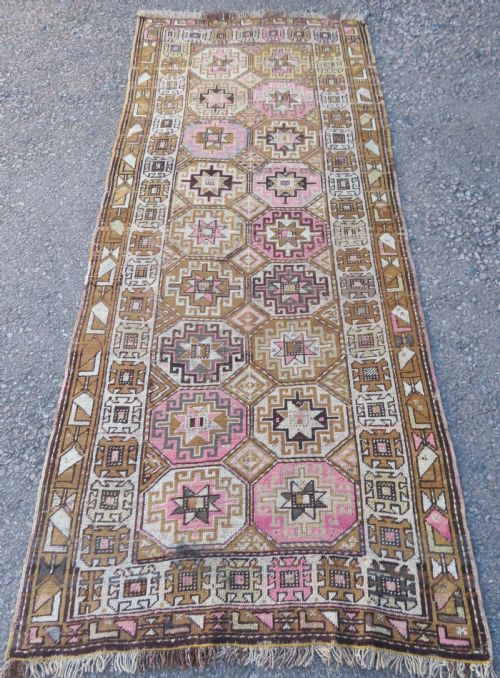
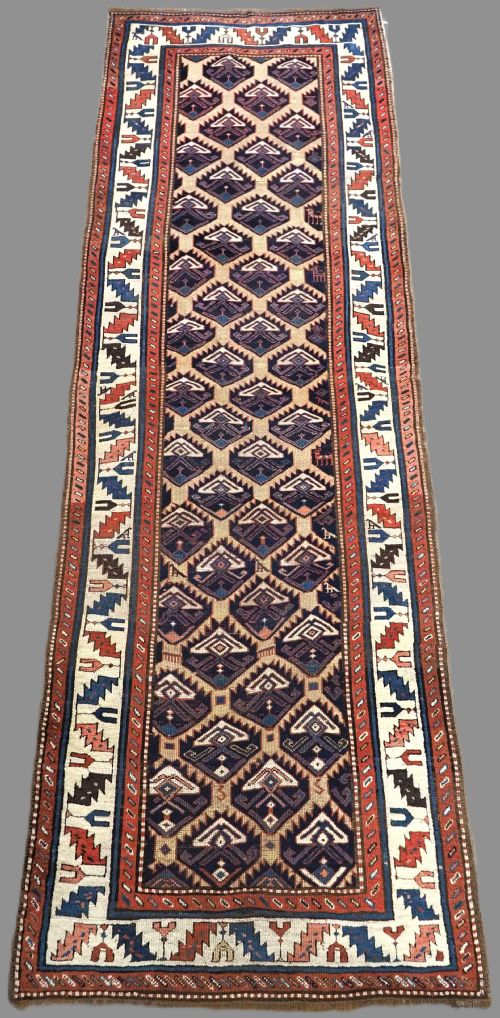
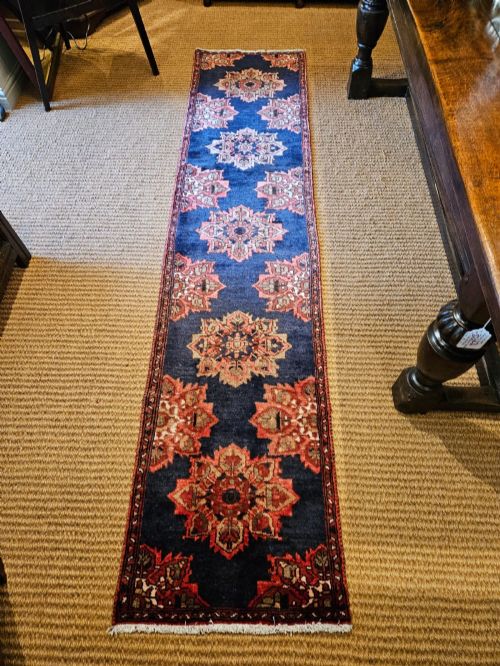
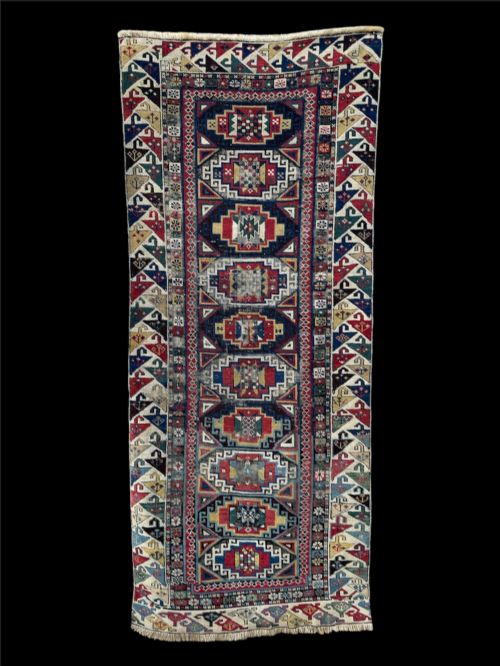
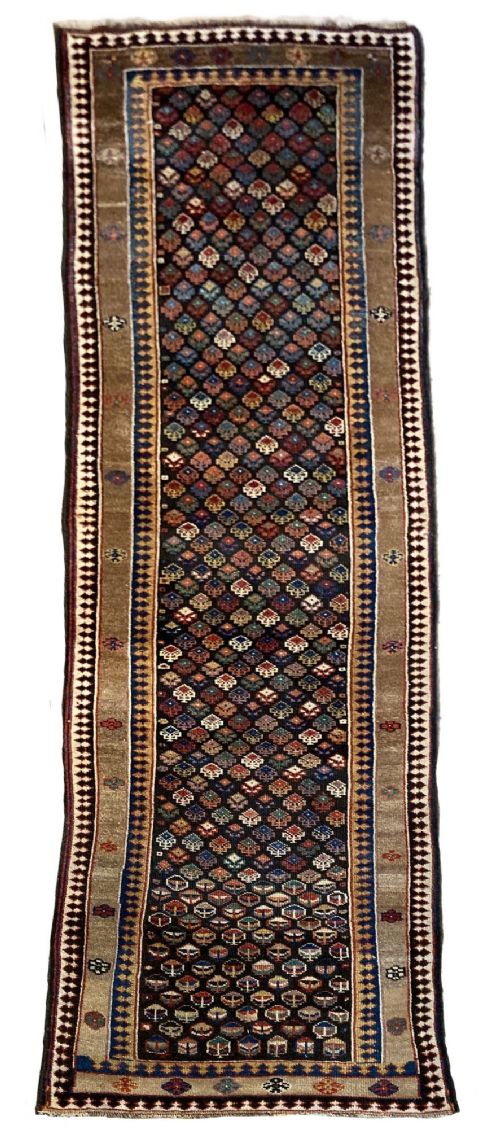
The selections available span from the late nineteenth century through to the mid-twentieth century, encompassing regional weaving traditions such as Persian Heriz, Kurdish, and Caucasian village formats. Buyers often encounter pieces originating from Anatolia, Persia, and the Caucasus, each displaying distinct geometric or medallion configurations.
Village and tribal workshops produced these runners to withstand heavy foot traffic while providing insulation over wooden or stone floors. Their format naturally guides movement through a building, functioning as both a practical floor covering and a focal point for interior design.
Materials and construction
Makers utilised resilient natural fibres, predominantly relying on hand-spun wool for the pile to ensure longevity under regular use. Cotton frequently serves as the foundation warp and weft structure, providing dimensional stability along the long axis.
Natural dyes sourced from plants and minerals give these textiles their characteristic depth of colour, which mellows gracefully over decades. Hand-knotting techniques secure the pile firmly to the foundational grid, creating a dense textile capable of enduring continuous passage.
Listings feature runner rugs spanning from the 1880s through to the 1960s, constructed predominantly from wool, cotton, and natural dyes.
Quality variations in runners
The refinement of the knot density and the precision of the geometric or floral layout distinguish finer examples from standard village productions. Tighter knotting allows for sharper delineation of intricate motifs along narrow formats.
The integrity of the wool foundation and the stability of the selvedges dictate the structural endurance of the piece. Superior specimens retain balanced proportions and even wear across their entire length, preserving the original geometry laid down by the weaver.
The Traditional Hall Runner Rug Glossary
- Runner
- A long, narrow carpet format specifically proportioned for hallways, corridors, and staircases. This shape directs foot traffic and defines linear spaces.
- Warp
- The vertical threads stretched tightly on the loom that form the structural skeleton of the rug. The exposed fringe at either end of a runner consists of these extended warp threads.
- Weft
- The horizontal threads passed across the warp threads after each row of knots to bind the structure together. It keeps the rows compact and maintains the width of the textile.
- Pile
- The upright surface of the rug formed by the cut ends of knotted wool or hair fibres. This tactile layer provides cushioning and displays the decorative pattern.
- Natural Dyes
- Colourants extracted from organic sources such as plants, insects, and minerals prior to the widespread adoption of synthetic alternatives. These dyes produce complex, harmonious tones that age with subtle variation.
Traditional Hall Runner Rug: Frequently Asked Questions
How do I choose the right length for a hallway?
Measure your corridor while leaving a consistent margin of exposed floorboards or stone around the perimeter of the textile. This frames the path properly without crowding the skirting boards.
Account for doors opening into the space to ensure the runner rests clear of their swing path.
Can these runners handle heavy corridor traffic?
Traditional village and tribal runners were constructed using dense hand-spun wool and sturdy cotton foundations precisely to endure heavy daily use. Their tight knotting distributes weight evenly and resists packing down.
Placing an appropriate underlay beneath the textile prevents slippage and absorbs impact, further protecting the structure from wear.
How do I clean an antique wool runner?
Regular gentle vacuuming without a rotating brush roll removes surface grit before it can settle deep into the wool pile. Professional cleaning by a specialist familiar with antique textiles is essential for deeper washing.
Avoid excessive moisture and harsh chemical detergents, which can destabilise natural dyes and weaken historical fibres.
How do I distinguish regional styles?
Caucasian runners typically feature bold geometric medallions, stark lattice frameworks, and crisp primary palettes. Persian productions, such as Heriz or Hamadan examples, frequently incorporate stylised floral motifs and centred pole medallions.
Studying the specific border arrangements and knot structures helps attribute a piece to its particular weaving origin.