



Narrow Persian Carpet
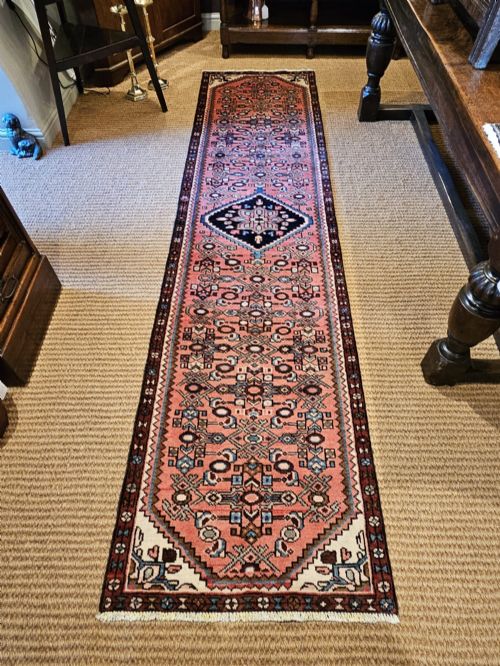
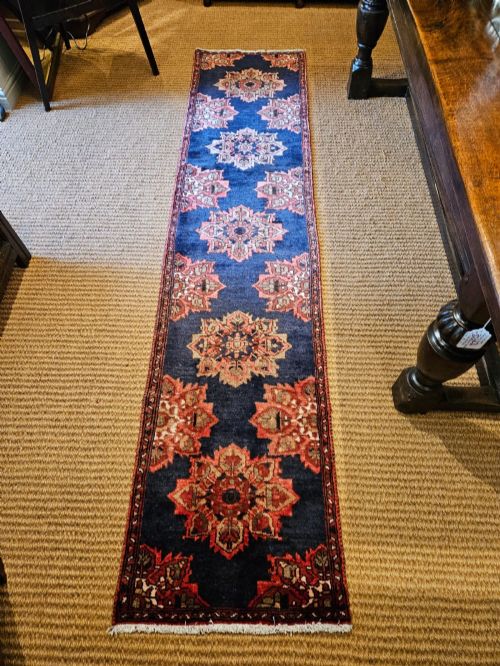
A narrow persian carpet brings elongated geometry and rich village weaving to long hallways and narrow landings.
Narrow Persian Carpet
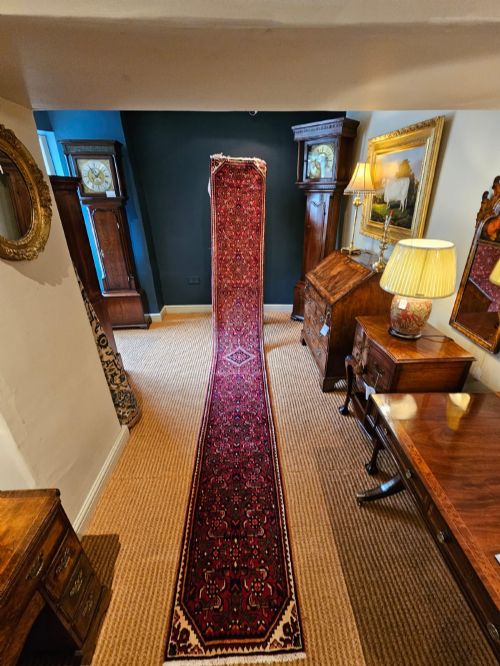
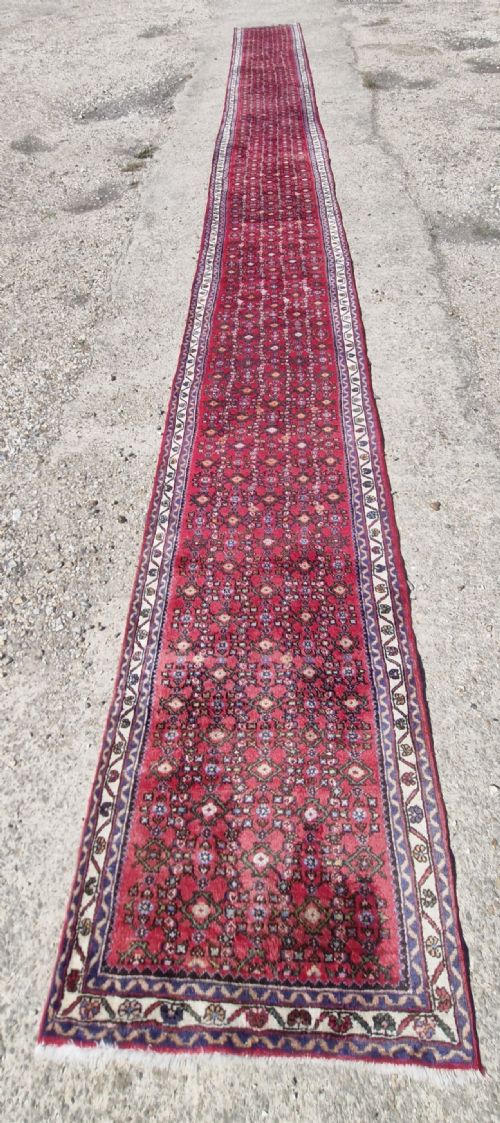
A narrow persian carpet is typically encountered as a long hallway runner or gallery rug designed to span extended corridors and domestic thoroughfares. These pieces originate predominantly from the nineteenth and early twentieth centuries, spanning periods from eighteen seventy through to nineteen thirty.
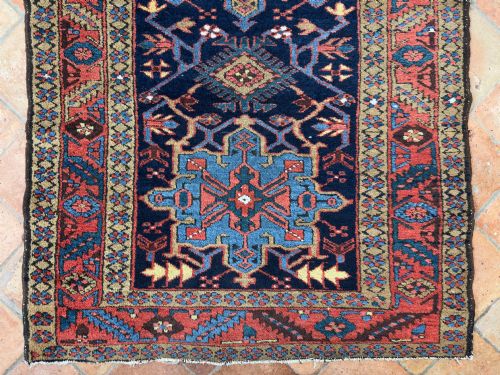
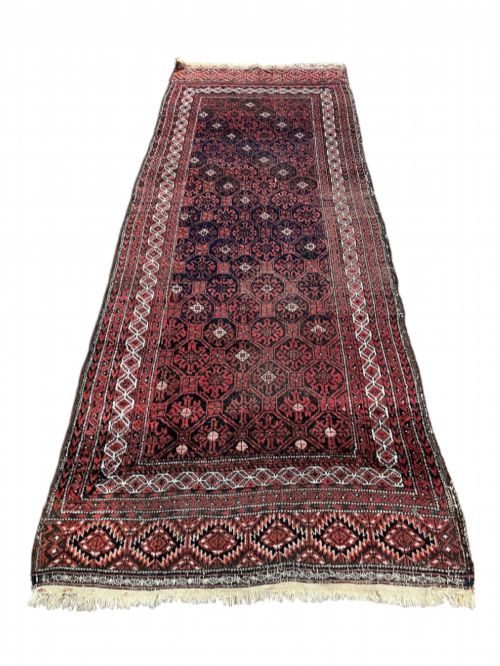
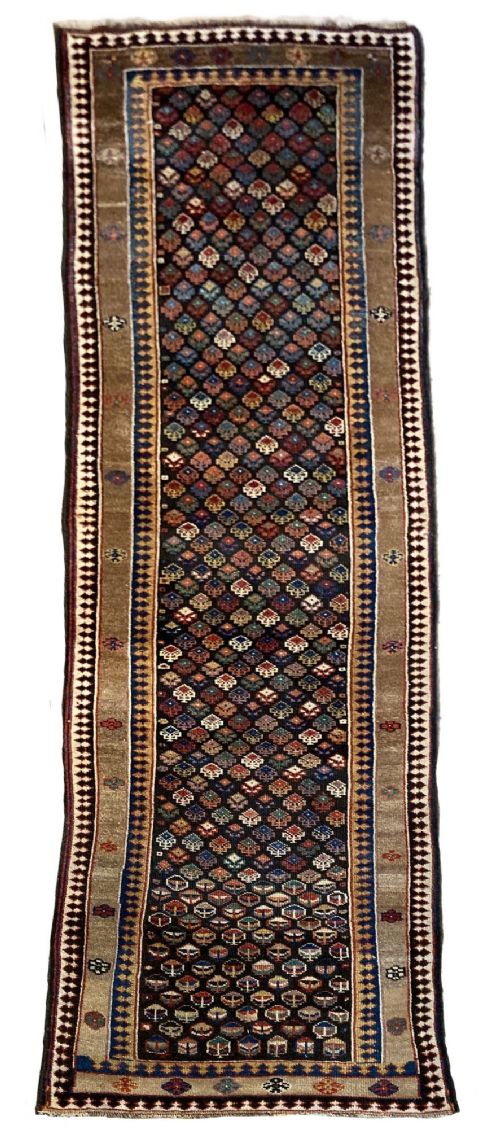
The selections on this page showcase traditional tribal and village weaving styles, including distinct regional forms from Heriz, Hamadan, Kurdish, and Baluch traditions. Their proportions are purposefully elongated, often measuring several metres in length while maintaining narrow widths well suited to historical floor plans.
Materials and construction
Construction relies primarily on sturdy wool pile knotted onto cotton foundations, with occasional examples utilising hand-spun wool or camel hair for natural colour variation and texture. The density of the knotting and the quality of the wool determine the durability required for high-traffic hallway placement.
Dyes derived from natural sources provide the mellow palettes seen across these woven floor coverings, developing rich patinas over decades of domestic use.
Listings feature pieces spanning from eighteen seventy through to nineteen thirty, utilising wool, cotton, and camel hair across diverse regional styles.
Assessing quality and proportion
Quality in a narrow persian carpet rests upon the precision of the tribal geometry, the crispness of the drawing in motifs such as birds perched on trees, and the consistency of the weave along extended lengths. Finer knot counts allow for sharper rendition of traditional motifs.
Proportion also dictates desirability, particularly where pieces maintain exceptionally narrow widths across significant lengths without losing structural straightness.
Heriz workshop·Hamadan village·Bidjar production
The Narrow Persian Carpet Glossary
- Runner
- A long, narrow carpet specifically suited for hallways, corridors, and stairs. These pieces feature elongated proportions designed to fit confined floor spaces.
- Pile
- The upright yarn of a carpet that forms the usable surface. In these woven pieces, wool pile provides both warmth and durability.
- Kilim
- A flat-woven carpet or runner produced without a raised pile. These items are lighter and lack the dense plushness of knotted rugs.
- Foundation
- The underlying structure of warp and weft threads that supports the knotted wool pile. Cotton is frequently utilised for this structural grid.
- Natural dye
- Colouring matter derived from plants, roots, and minerals rather than synthetic compounds. These substances yield mellow, shifting tones over time.
Narrow Persian Carpet: Frequently Asked Questions
Where should I place a narrow persian carpet?
These elongated floor coverings suit narrow corridors, long hallways, and transitional landings where traditional proportions complement architectural flow.
Their substantial length protects high-traffic floorboards while introducing traditional pattern and colour to otherwise neglected passage spaces.
How do I identify the age of these runners?
Dating relies on stylistic markers, structural materials, and natural dye palettes typical of nineteenth and early twentieth-century village production.
Examining the wear patterns, wool quality, and knot structure helps contextualise the period of manufacture between eighteen seventy and nineteen thirty.
Are these runners made from pure wool?
Many examples utilise pure wool pile knotted onto sturdy cotton foundations to ensure structural stability along extended lengths.
Certain pieces also incorporate hand-spun wool or camel hair, adding unique tactile qualities and subtle tonal shifts to the surface.
How do regional styles differ?
Regions such as Heriz, Hamadan, and Kurdistan produce distinct geometric medallions, boteh motifs, and repeating field patterns.
Kurdish and Baluch tribal pieces often display whimsical elements like birds perched on trees, whereas Heriz runners favour bolder, architectural layouts.