

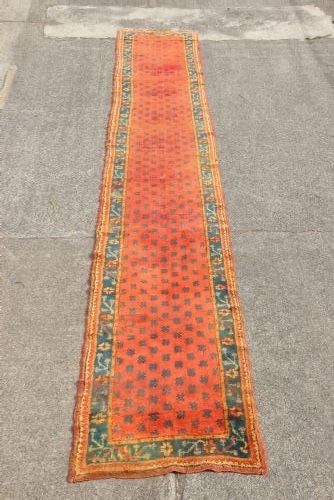
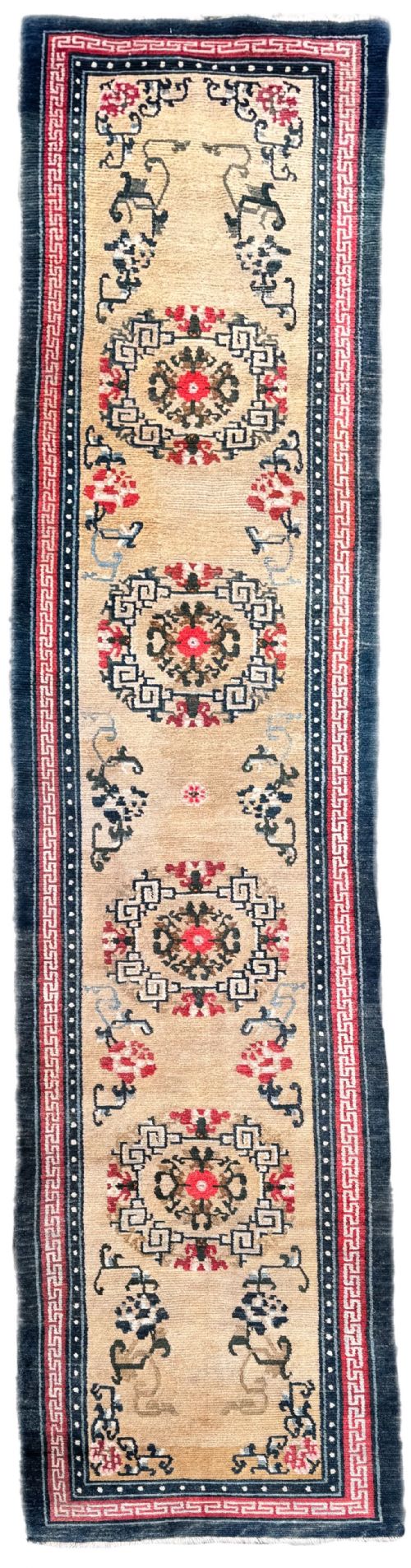
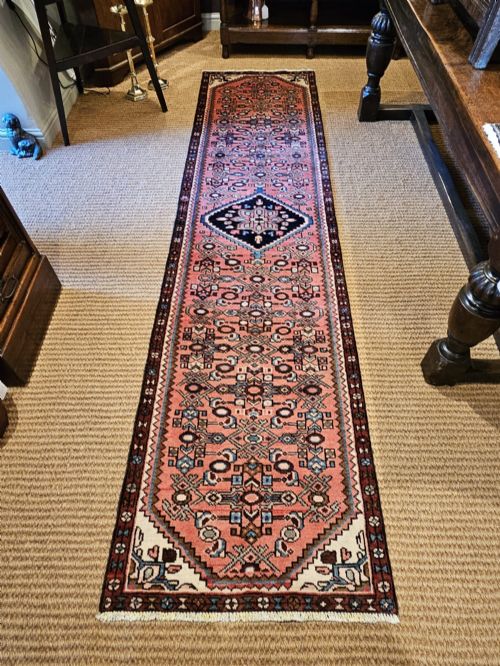
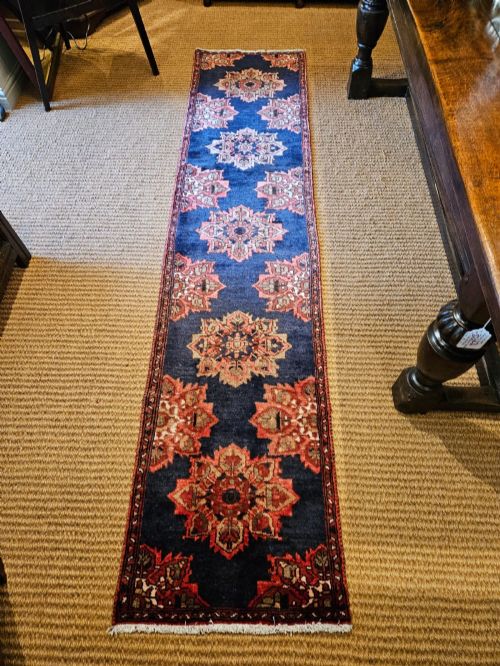
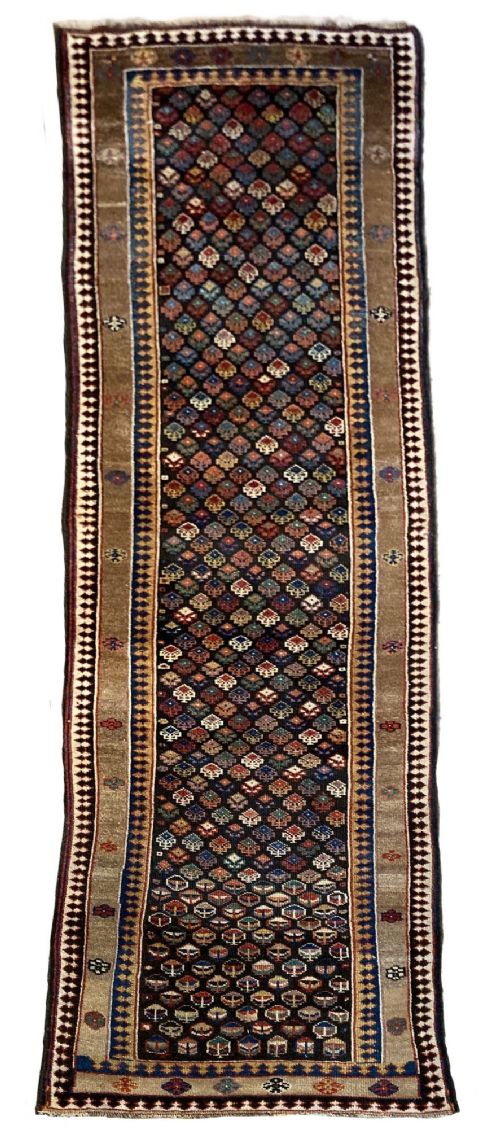


Narrow Hallway Rug Runner
A narrow hallway rug runner brings long stretches of patterned wool and camel hair to domestic corridors, combining practical floor protection with tribal design.
Narrow Hallway Rug Runner
A narrow hallway rug runner provides linear floor coverage tailored for corridors, landings and long passages in a home. The pieces gathered here draw on regional weaving traditions from Persian, Turkish, Kurdish, Moroccan and Tibetan workshops dating from the late nineteenth century through the early decades of the twentieth century.
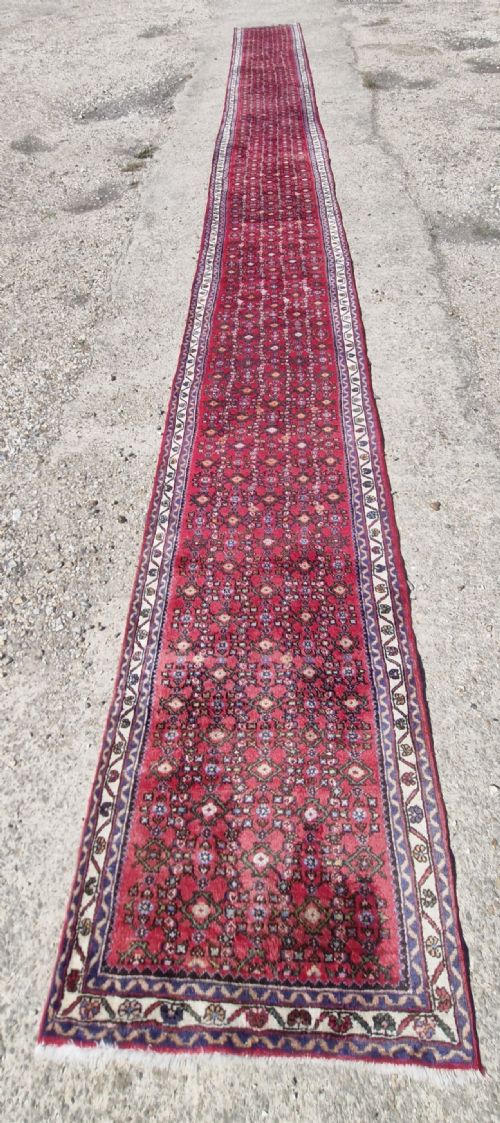
Most examples span considerable lengths relative to their width, often reaching several metres while maintaining slim proportions suited to constrained spaces. The selection includes specific regional styles such as Heriz, Hamadan, Baluch, Oushak, and Berber, each displaying distinct geometric or floral layouts.
Makers shaped these textiles using durable materials designed to withstand heavy foot traffic in domestic environments. Buyers encounter both piled carpets and flat-woven kilims, providing diverse textures for long floor spaces.
Materials and construction methods
Weavers relied primarily on wool, hand-spun wool, cotton, and camel hair to build the dense foundations and pile of these runners. Natural fibres provided the tensile strength needed for long, narrow formats subjected to constant walking.
Dyes derived from local plants and minerals imparted deep tones of olive green, navy blue, and rich earth colours that settled into the wool over decades of use. Skilled hands knotted or flat-wove the textiles tightly onto cotton or wool warp threads, ensuring structural integrity.
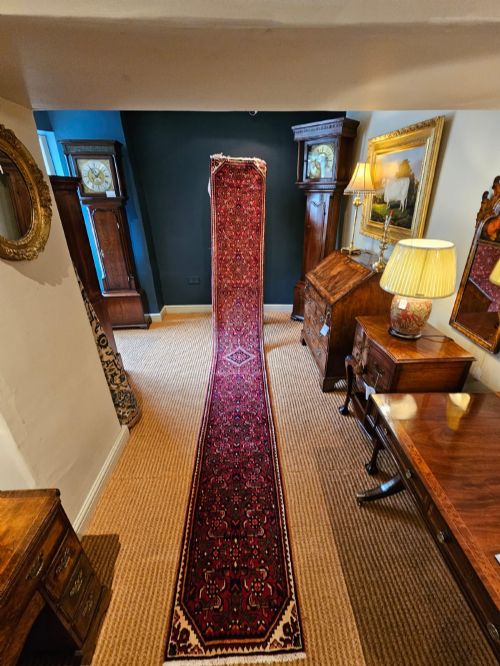
One remarkably persistent household managed to secure a thirty-two-foot hallway passage for their feet.
Distinctions in craftsmanship and condition
Quality rests upon the tightness of the knotting, the regularity of the narrow proportions, and the resilience of the original wool or camel hair fibres. Finer pieces maintain straight edges and crisp geometric or floral motifs along extensive lengths without distortion.
Wear patterns, edge binding condition, and the stability of the foundation threads dictate the structural longevity of older runners. Examples retaining original side cordings and even pile height command greater appreciation among collectors.
The Narrow Hallway Rug Runner Glossary
- Runner
- A long, narrow carpet designed specifically for hallways, corridors, and staircases. These pieces measure significantly longer than they are wide.
- Kilim
- A flat-woven carpet or runner produced without a pile by tightly interweaving warp and weft strands. This technique creates a smooth, reversible textile with sharp geometric patterns.
- Warp
- The vertical foundation threads stretched lengthwise on a loom before weaving begins. Weft threads pass horizontally through these structural elements.
- Pile
- The upright yarn loops or cut ends that form the soft surface of a carpet. Density of the pile influences both texture and durability.
Narrow Hallway Rug Runner: Frequently Asked Questions
How do I measure for a narrow hallway rug runner?
Measure the clear floor space of your corridor, leaving an even margin of exposed floorboards or stone around the perimeter. Account for door clearance so that doors swing freely over the thickness of the wool pile.
Take length measurements from one end of the active walking path to the other, noting any architectural obstructions like radiators or stairs. Long formats can be visually balanced by centring them between walls.
Where should I place a long runner in the home?
These textiles suit high-traffic thoroughfares such as entrance halls, long corridors, and landing passages where linear floor coverings soften footsteps. They protect underlying wooden floors from daily wear while introducing warmth and colour.
Avoid placing traditional wool runners in damp areas like unheated porches where moisture can damage natural fibres and cotton foundations.
How do I care for an antique wool runner?
Vacuum the piece gently using suction only, avoiding rotating brush attachments that pull at hand-knotted wool pile. Lift the runner periodically to sweep beneath it and prevent grit accumulation.
Professional specialist cleaning is recommended for antique textiles to preserve natural dyes and prevent shrinkage of the wool and cotton foundations.
How do I distinguish regional Persian runner styles?
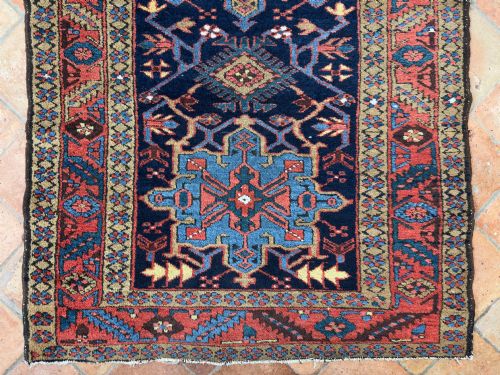
Heriz runners typically display bold geometric medallions and robust corner brackets woven with sturdy wool. Hamadan pieces often feature repeating Herati patterns or distinct central pole medallions in indigo and madder tones.
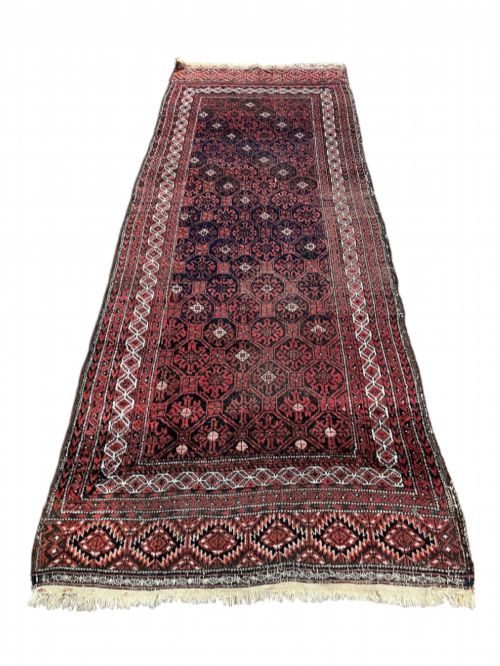
Kurdish and Baluch runners lean towards darker tribal palettes with geometric motifs, while Oushak examples offer softer floral interpretations with looser knotting structures.