

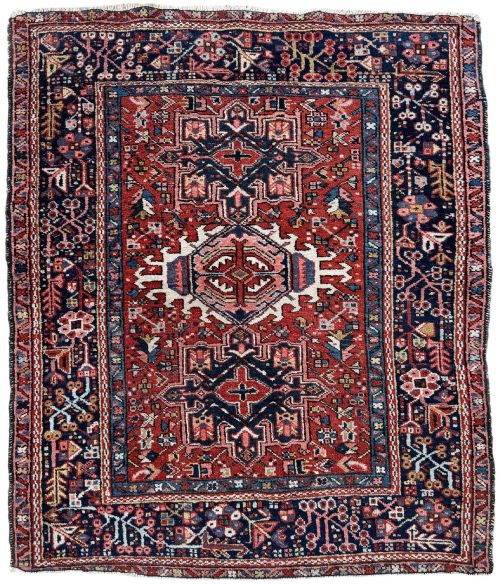


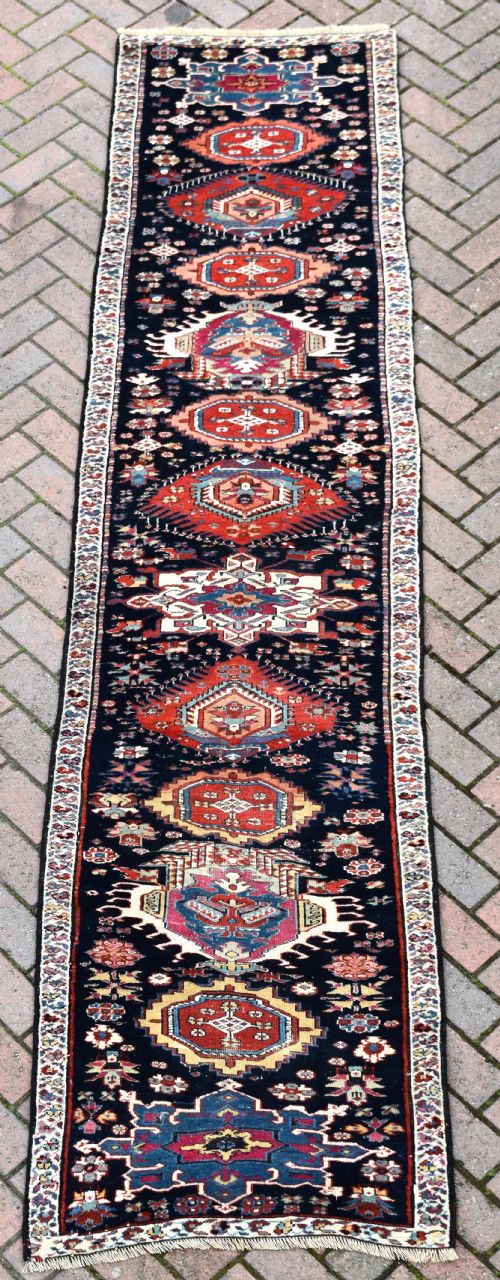


Karaja Runner Carpet Persian
These karaja runner carpet persian examples are resilient village floor coverings from north west Persia, sought after for robust wool and bold geometric motifs.
Karaja Runner Carpet Persian
When you search for a karaja runner carpet persian, you encounter sturdy village weavings originating from the north west region of Persia. These floor coverings bridge the gap between compact rugs and extensive hallway runners, offering elongated formats suited to corridors and narrow spaces.
The selections available include long formats and narrow runners alongside smaller rugs bearing traditional tribal characteristics. Dating spans from the late nineteenth century through to the early decades of the twentieth century, encompassing pieces from 1870 up to 1920.
You meet variations described as Heriz Karaja or North West Persian tribal designs, reflecting regional weaving traditions. The prevalent format on this page is the narrow runner, often measuring around eighty centimetres in width while extending well over three metres in length.
Materials and construction
The physical structure relies upon durable wool pile hand-knotted onto sturdy cotton foundations. This combination provides the heavy handling and dense pile expected from authentic village production.
Weavers utilised local wool supplies known for natural lanolin content, which contributes to longevity and resistance to heavy foot traffic. Vegetable and traditional dyes deliver the rich colour palettes recorded across the nineteenth and early twentieth century pieces.
Karaja Runner Carpet Persian Retail Price Guide 2026
Typical asking prices for karaja runner carpet persian among the pieces listed under this phrase on Sellingantiques today, from the lower quarter to the upper quarter. They describe what is for sale here now, not the wider market.
Listings span seven decades of production, beginning with examples from 1870 and extending to pieces made in 1920.
Distinctions in quality
Quality rests in the precision of the geometric layout and the saturation of the natural dyes. Stronger examples display crisp drawing within the medallions and balanced borders.
The handling of the wool pile and the integrity of the original selvedges and ends separate the superior survivals from heavily worn specimens. Finer knot density and retained length across narrow runner formats command greater appreciation.
The Karaja Runner Carpet Persian Glossary
- Karaja
- A village and weaving centre located in north west Persia, known for producing sturdy rugs with geometric medallions. These pieces often share stylistic traits with neighbouring Heriz productions.
- Runner
- An elongated carpet format specifically proportioned for hallways, corridors and narrow passages. Length typically exceeds width by a significant margin.
- Heriz
- A region in north west Persia associated with bold, geometric carpet designs that frequently overlap stylistically with Karaja work. Rugs from this area utilise robust cotton foundations.
- Selvedge
- The reinforced edge of a carpet parallel to the warp, protecting the sides from fraying. Original selvedges indicate a well-preserved textile.
- Medallion
- A large central ornamental motif placed in the field of a rug. In these village pieces, medallions usually take geometric or polygonal forms.
Karaja Runner Carpet Persian: Frequently Asked Questions
Where should I place a runner?
These narrow formats suit hallways, corridors and landings where floor space is restricted. Their elongated dimensions guide movement through a passage while protecting timber flooring.
Ensure you use an appropriate underlay to keep the carpet stable on smooth surfaces and to cushion the wool pile against daily wear.
How do I clean an old wool carpet?
Regular gentle vacuuming without a beater bar removes surface grit from the wool pile. Professional specialist cleaning is advised for deeper maintenance to protect the natural dyes.
Avoid soaking the cotton foundation and keep the piece out of direct, continuous sunlight to preserve the depth of colour.
How do I date these carpets?
Dating relies upon structural analysis, wool quality, and the specific characteristics of the natural palette. Nineteenth-century examples often exhibit softer secondary colours and heavier wear patterns.
Comparison with documented pieces from 1870 through to 1920 helps establish the likely period of production based on weave density and design evolution.
What defines a tribal design?
Tribal designs feature geometric motifs, stylised floral elements and repeating patterns drawn from memory rather than strict cartographic cartoons. These patterns reflect local village traditions in north west Persia.
The resulting compositions display charming irregularities in symmetry that distinguish them from formal city workshop carpets.