





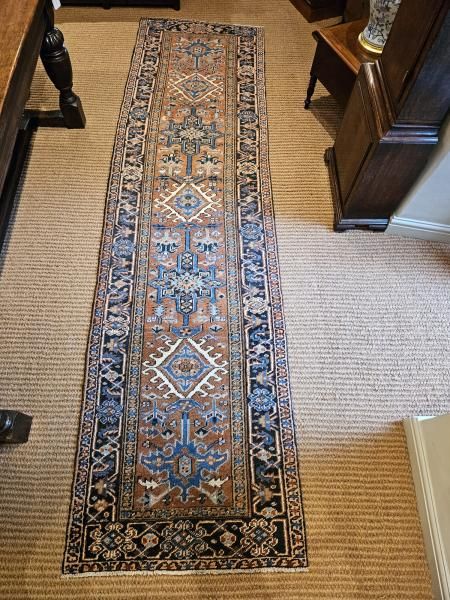
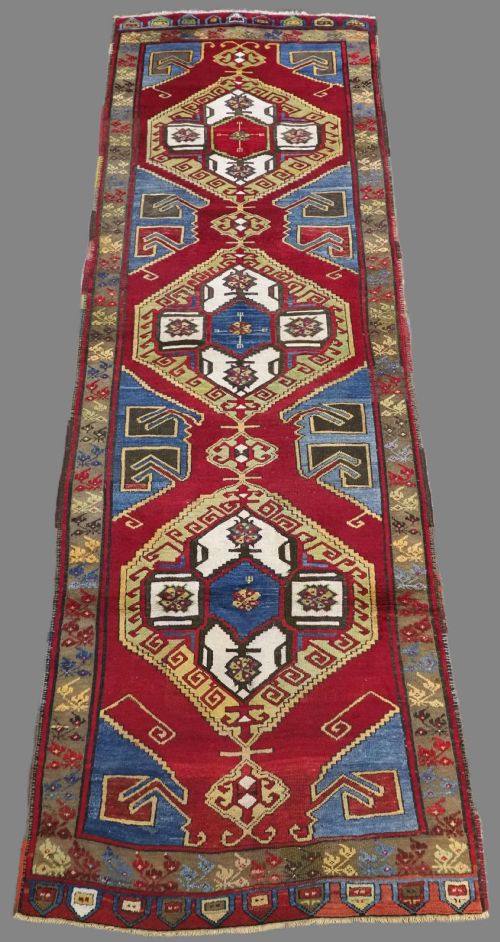
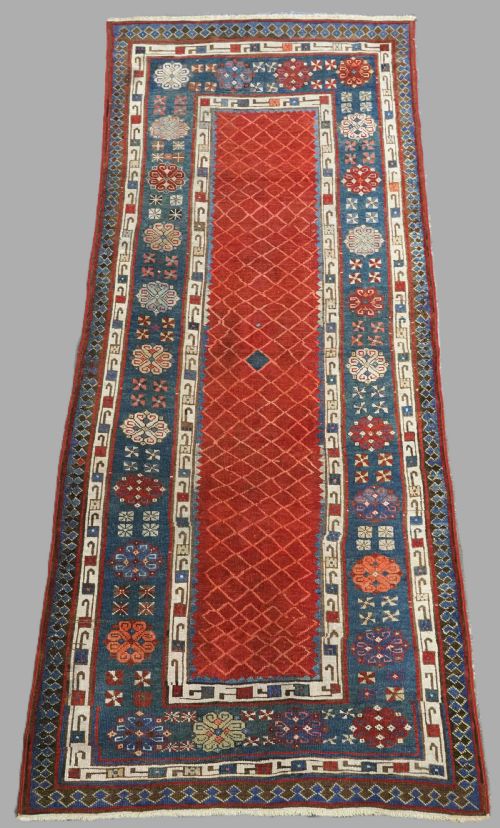
Oriental Hallway Runner Rug
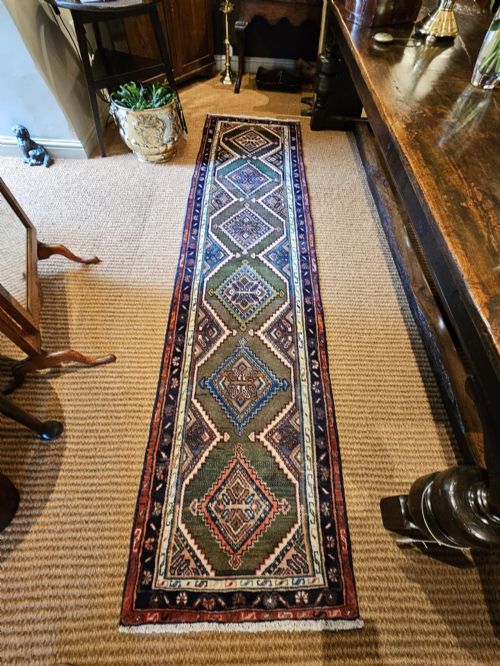
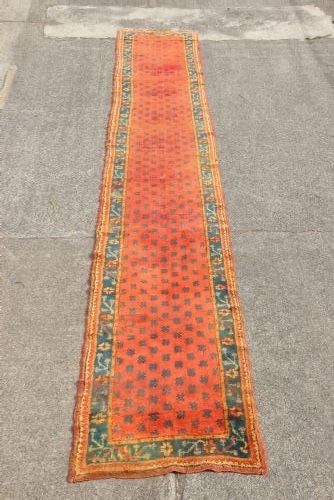
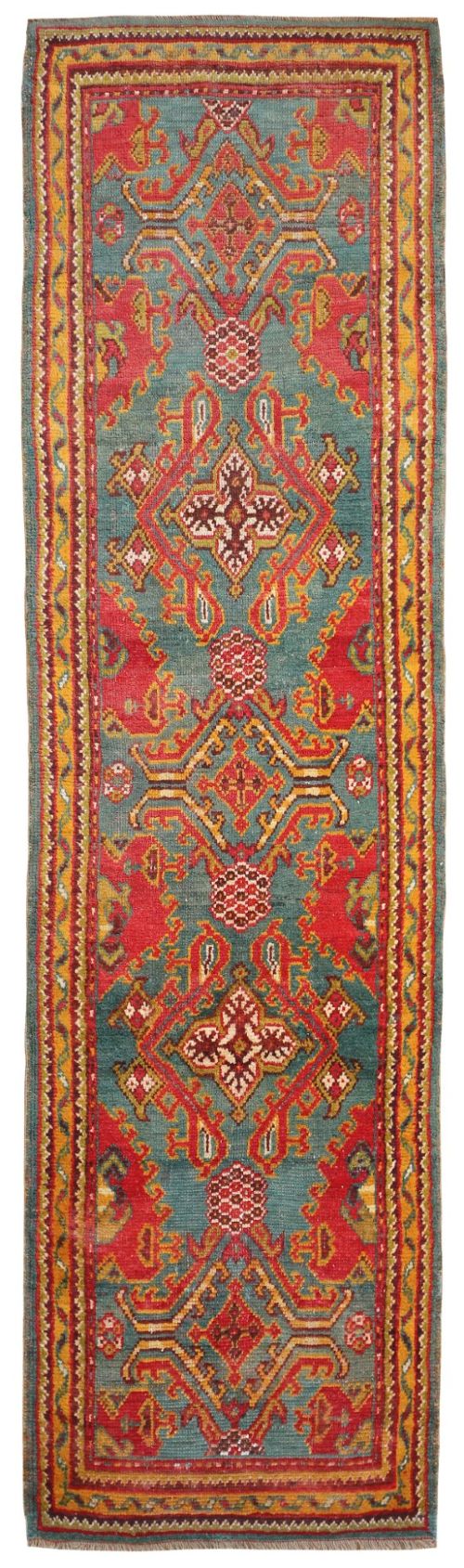
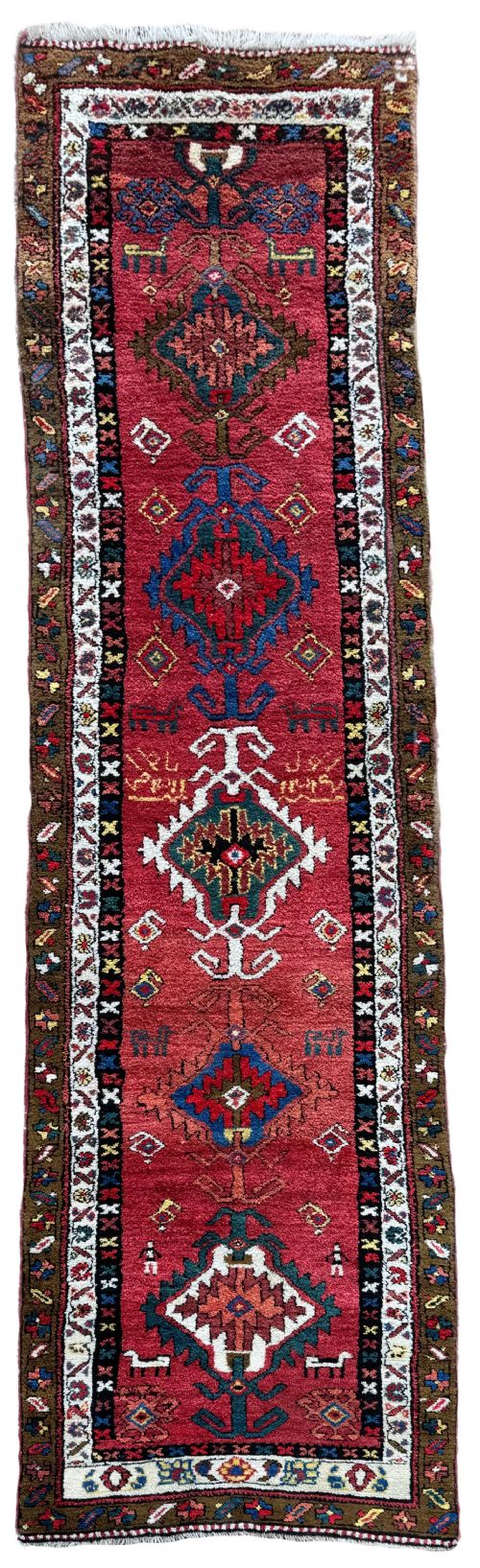
An oriental hallway runner rug brings deep colour and linear geometry to a narrow corridor.
Oriental Hallway Runner Rug
An oriental hallway runner rug is a long, narrow floor covering designed specifically for corridors, halls, and landings. These pieces combine utility with intricate regional designs originating from weaving traditions across the Near East and Central Asia.
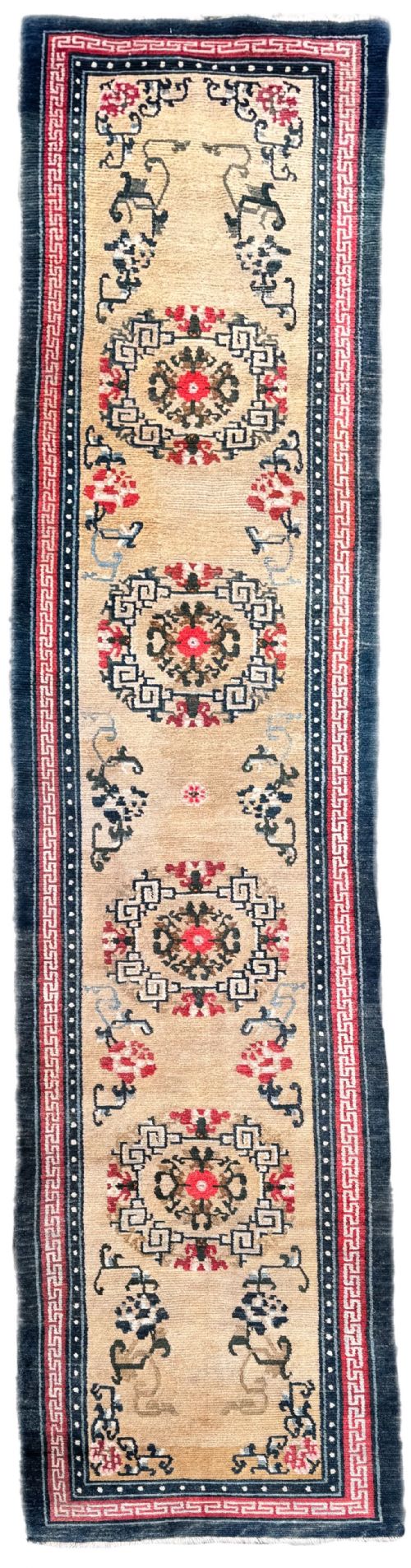
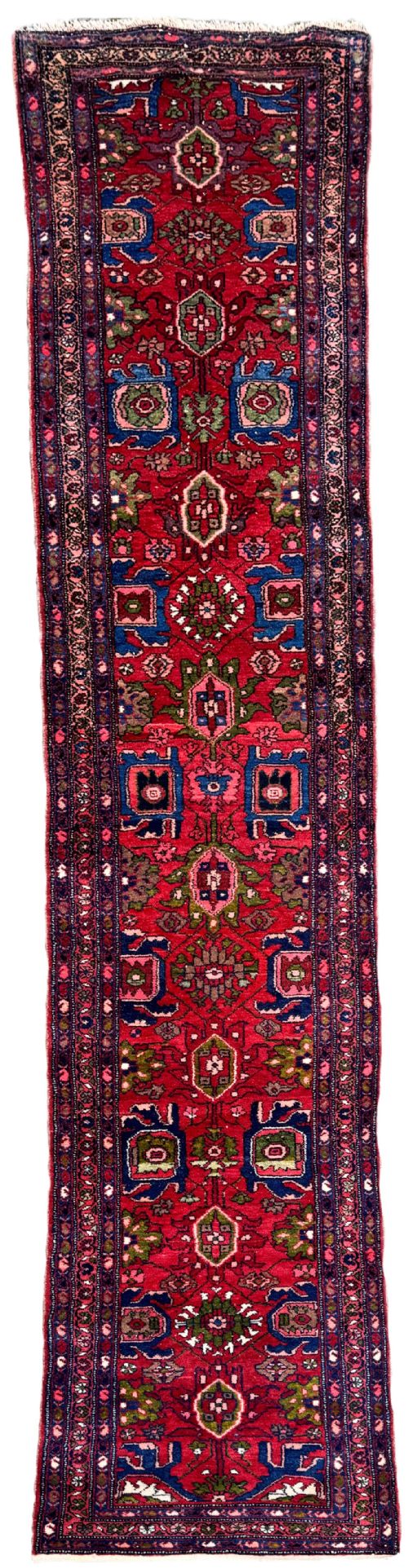
Buyers browsing this selection will frequently encounter formats originating from Persian, Turkish, Caucasian, and Tibetan workshops. The inventory spans the nineteenth and early twentieth centuries, featuring distinct tribal and village patterns tailored for extended spaces.
How They Were Made
These textiles are constructed primarily from wool foundations and pile, utilising natural cotton for support threads in specific regional types. The heavy reliance on pure wool ensures durability under foot traffic while maintaining rich pigment absorption.
Weavers knotted the pile by hand onto warp and weft threads, employing traditional techniques passed down through generations in regions such as Heriz, Ushak, and Kurdistan.
Oriental Hallway Runner Rug Retail Price Guide 2026
Typical asking prices for oriental hallway runner rug among the pieces listed under this phrase on Sellingantiques today, from the lower quarter to the upper quarter. They describe what is for sale here now, not the wider market.
Current listings span periods from the mid-nineteenth century through the 1930s, constructed predominantly in pure wool and cotton.
What Varies In Quality
Quality rests upon the fineness of the knotting and the density of the wool pile, which dictates how sharply the geometric or floral motifs resolve. Tighter construction supports structural longevity over decades of heavy corridor use.
The sophistication of the dye palette and the integrity of the original borders also separate standard village pieces from finer workshop productions. Uniformity in width across long expanses indicates disciplined weaving skill.
The Oriental Hallway Runner Rug Glossary
- Runner
- A long, narrow carpet format intended for corridors, stairs, and hallways. These pieces balance length with restricted width to fit confined architectural spaces.
- Pile
- The vertical or diagonal surface yarn of a rug formed by cut or uncut knots. This upright wool layer absorbs wear and displays the woven pattern.
- Warp
- The stationary longitudinal threads stretched tightly on the loom before weaving begins. These parallel strings form the foundational skeleton of the textile.
- Weft
- The horizontal threads passed across and interlaced through the warp strands to secure the knots in place. Together with the warp, they create the sturdy backing grid.
- Mina Khani
- A traditional repeating geometric pattern composed of daisy-like flowers linked by a lattice of curved vines. This classical motif appears frequently in Kurdish and Persian weaving.
Oriental Hallway Runner Rug: Frequently Asked Questions
Where should I place an oriental hallway runner rug?
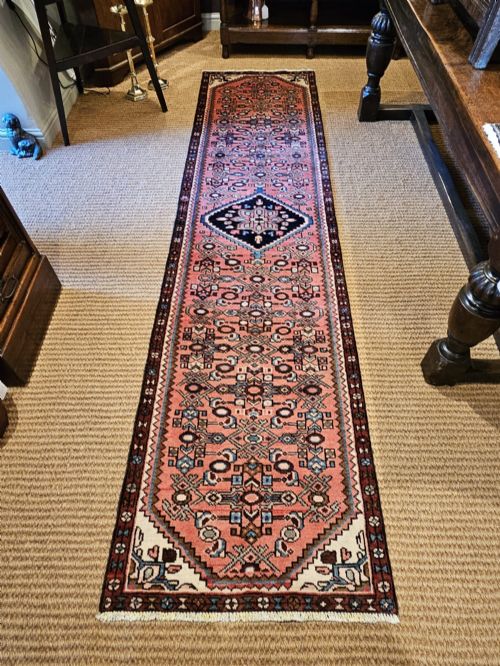
These long rectangular textiles suit narrow transition spaces such as corridors, entrance halls, and upper landings. Their elongated proportions protect high-traffic wooden flooring while defining the spatial pathway.
Ensure you measure the clear floor space between skirting boards or wall mouldings carefully before selecting a length. Leaving a uniform margin of exposed floor around the edges frames the textile properly.
How do I care for an antique wool runner?
Regular gentle vacuuming without a rotating power brush removes embedded grit from the wool pile safely. Professional cleaning by specialists in antique textiles preserves the natural lanolin and dyes.
Avoid placing these delicate floor coverings in areas exposed to harsh, direct sunlight to prevent fading. A quality underlay prevents slipping and cushions the foundation against hard subfloors.
How can I tell different regional runner styles apart?
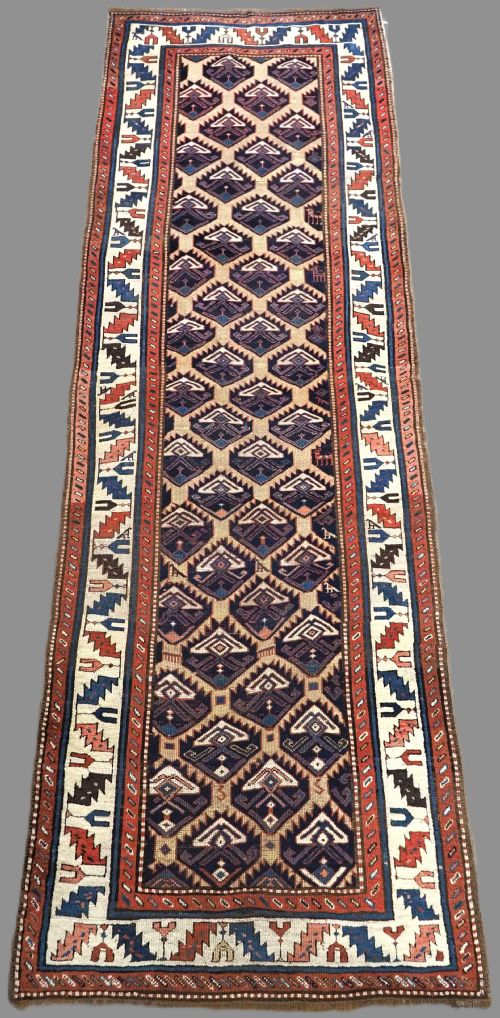
Regional attribution relies heavily on the specific palette, border arrangements, and structural geometry of the motifs. Caucasian and Kurdish pieces often favour bold, angular medallions and lattice work, whereas Ushak and Oushak examples display softer floral curves.
Examining the weave density and the materials used in the foundation threads also provides clues to geographic origin. Village workshops employed different knotting conventions compared to larger town manufactories.
What is the difference between a village rug and a workshop runner?
Village and tribal rugs are woven on home-based looms using memory designs and local materials, resulting in charming irregularities. Workshop productions follow pre-planned cartoon drawings with greater symmetry and finer knot counts.
Both categories utilise pure wool, but workshop pieces often exhibit higher precision in straight lines and curves. Village examples offer expressive individuality reflecting the weaver's personal environment.