

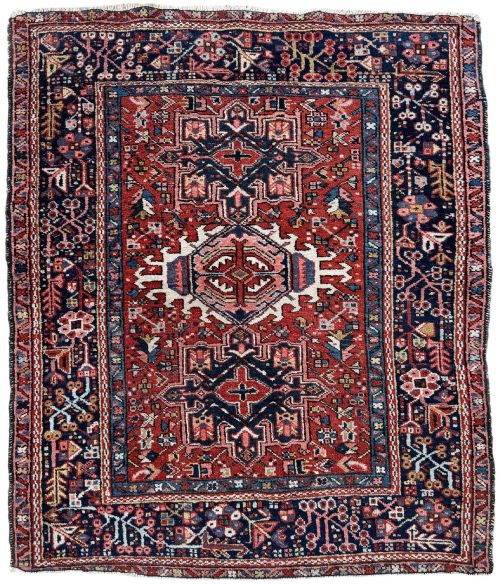
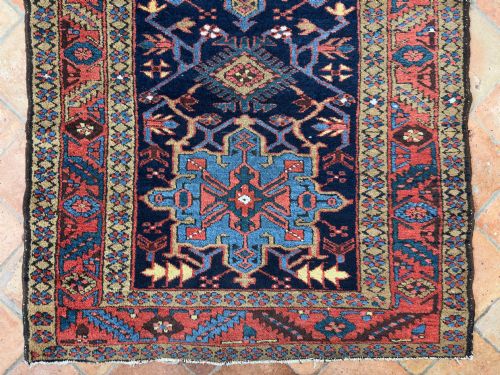


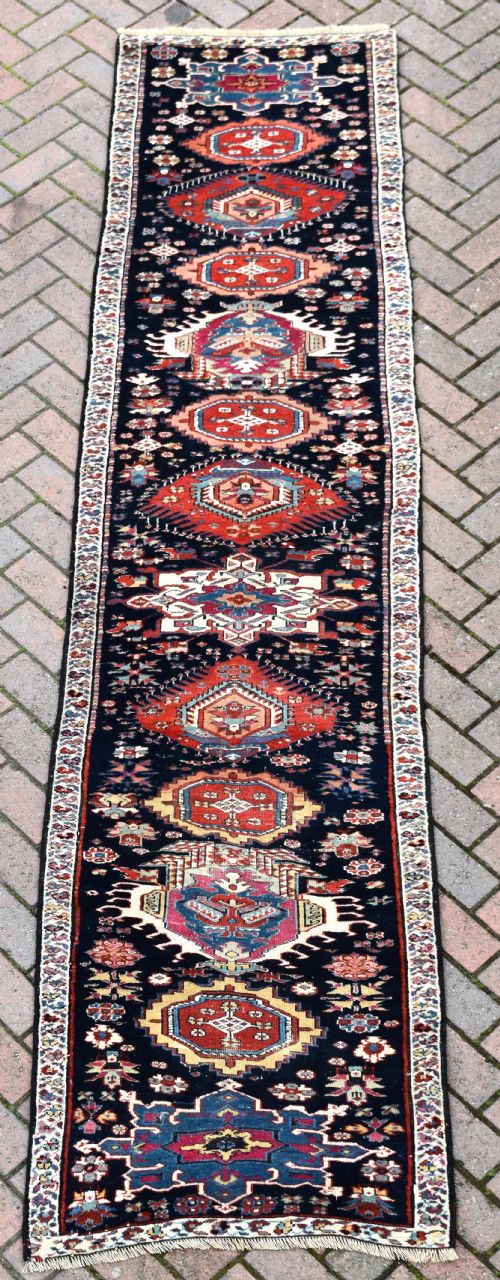


Karaja Geometric Runner
A karaja geometric runner brings bold north west persian character to a hallway, woven with wool pile and cotton foundations.
Karaja Geometric Runner
A karaja geometric runner is a narrow floor covering originating from north west persia, featuring traditional persian tribal designs. These pieces span periods from the nineteenth century into the early twentieth century, specifically appearing in dates such as eighteen seventy, eighteen eighty, eighteen ninety, nineteen hundred, nineteen ten, and nineteen twenty.
Most examples found here take the form of hallway runners and narrow runner rugs, designed specifically for long, linear spaces. The style connects closely with persian karaja, heriz region, and traditional persian aesthetics, showing distinctive geometric patterns across the length of the carpet.
How they were made
These runners are constructed using a wool pile knotted onto a cotton foundation, which provides the structural stability needed for long, narrow formats. The materials reflect traditional persian methods, combining durable wool for the surface traffic with strong cotton warps and wefts.
Weavers in the heriz region and wider north west persia utilised traditional techniques to create these rugs, resulting in sturdy hallway runners and long rugs. The combination of wool and cotton supports both the geometric designs and the durability required for domestic use.
Karaja Geometric Runner Retail Price Guide 2026
Typical asking prices for karaja geometric runner among the pieces listed under this phrase on Sellingantiques today, from the lower quarter to the upper quarter. They describe what is for sale here now, not the wider market.
Listings span the nineteenth century through to nineteen twenty, featuring wool and cotton materials in traditional persian styles.
What varies in quality
Quality in a karaja geometric runner rests on the precision of the wool knotting and the crispness of the geometric design. Finer examples show a deliberate execution of the traditional persian motifs along the narrow format.
The condition of the wool pile and the integrity of the cotton foundation dictate the grade of each runner. Pieces demonstrating strong colour retention and careful weaving stand apart in this tradition of north west persian rug production.
The Karaja Geometric Runner Glossary
- Karaja
- A style of rug and runner originating from the north west persian region near heriz, known for geometric designs. These pieces often feature bold tribal patterns.
- Runner
- A long, narrow carpet format intended primarily for hallways and corridors. The proportions suit linear domestic spaces.
- Heriz region
- An area in north west persia associated with robust carpet weaving traditions. Rugs from this district share technical similarities with karaja production.
- Wool
- The animal fibre used for the pile of these runners, providing softness and resilience. It accepts natural dyes effectively.
- Cotton
- The plant fibre utilised for the foundation warps and wefts of the rugs. It offers structural strength and keeps the runner flat on the floor.
Karaja Geometric Runner: Frequently Asked Questions
Where were karaja geometric runners made?
These runners were produced in north west persia, specifically within the heriz region and surrounding tribal areas.
The tradition links local weaving methods with distinct geometric designs suited for narrow formats.
What materials make up these runners?
The construction relies on a wool pile set onto a cotton foundation, balancing surface comfort with structural integrity.
This combination provides the durability necessary for hallway use.
How do I use a runner in a hallway?
A narrow runner rug fits naturally into long, linear spaces like corridors, entryways, and passages.
The elongated proportions protect flooring while adding traditional persian design to circulation areas.
What periods do these rugs date from?
The available pieces span the nineteenth century and the early decades of the twentieth century, including dates around eighteen seventy through to nineteen twenty.
Each period reflects traditional persian tribal aesthetics.