





Rust Red Wool Runner
A rust red wool runner brings deep earthy warmth and durable floor covering to a hallway, woven in wool with cotton and goat hair.
Rust Red Wool Runner
When you search for a rust red wool runner, you are looking at narrow floor coverings that bridge traditional Persian styles and tribal nomadic weaving traditions. These pieces appear in formats designed for corridors and narrow spaces, drawing on designs originating from North West Persia and South-East Persia.
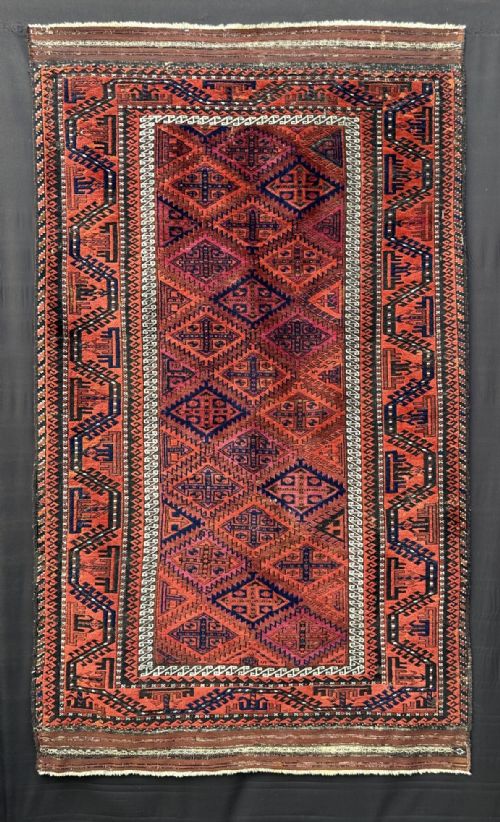
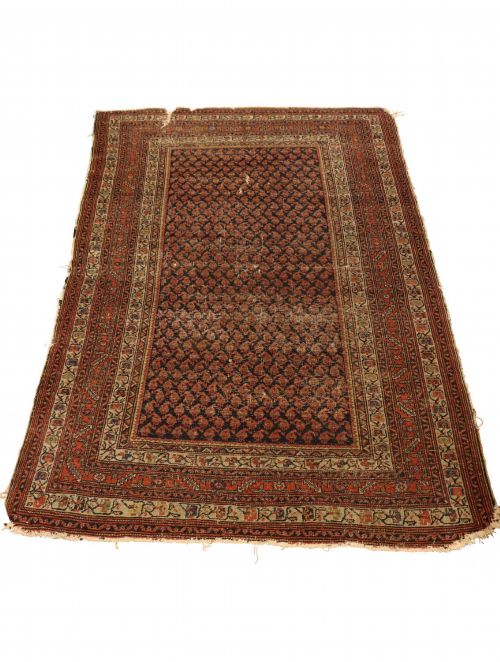
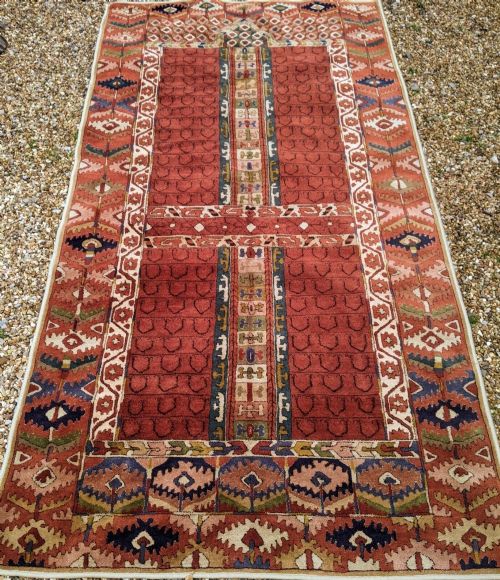
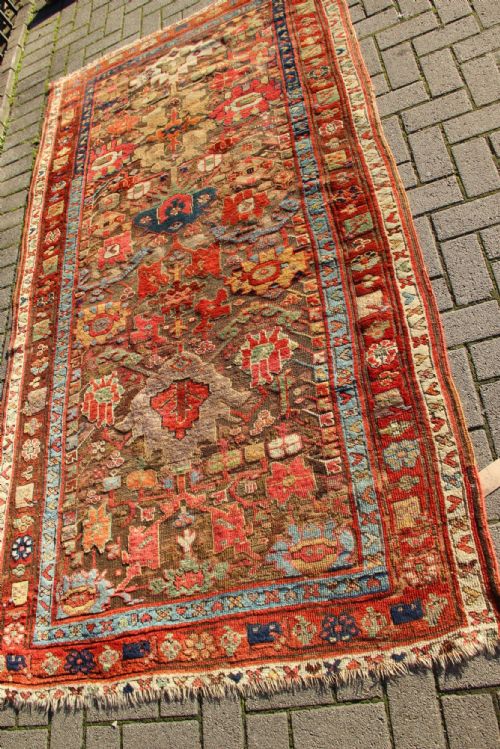
The selections span the nineteenth century through the early twentieth century, taking in periods such as 1800, 1880, 1890, 1900, 1910, and 1920. You will encounter tribal baluch works, Heriz Karaja narrow runners, and Gorravan narrow runners among the standard rug and carpet categories.
Originating from workshops and nomadic groups alike, these long floor textiles utilise rich dye palettes dominated by rust tones. They provide practical dimensions for narrow passageways while carrying the distinct aesthetic of Persian tribal and traditional oriental craftsmanship.
How they were made
The physical construction of these pieces relies primarily on wool piles knotted by hand onto foundational structures. Weavers incorporated cotton for warp and weft foundations, occasionally utilising goat hair for added durability in tribal pieces.
Hand-knotting techniques allowed makers to execute intricate motifs such as boteh designs, large guls, calyx lattice patterns, and repeat small octagons. Natural dye traditions secured the deep rust backgrounds and contrasting hues that define the visual character of each runner.
Rust Red Wool Runner Retail Price Guide 2026
Typical asking prices for rust red wool runner among the pieces listed under this phrase on Sellingantiques today, from the lower quarter to the upper quarter. They describe what is for sale here now, not the wider market.
Some tribal weavers tucked stray goat hairs into the margins, leaving a rustic signature from the animals that walked beside them.
What varies in quality
Quality in these textiles rests upon the density of the hand-knotting and the precision of the wool preparation. Finer knots permit sharper definition in traditional patterns like lattice work and boteh repeats, separating standard utility weaves from finer workshop and tribal productions.
The integrity of the foundation materials also dictates the standard of a piece. Runners employing robust wool alongside sturdy cotton or goat hair foundations maintain their structural cohesion better through centuries of foot traffic.
The Rust Red Wool Runner Glossary
- Runner
- A long, narrow carpet format specifically proportioned for corridors, hallways, and staircases. These pieces measure significantly longer than they are wide to fit confined spaces.
- Boteh
- A traditional teardrop or almond-shaped motif with a curved upper end, frequently repeated across Persian and tribal textile fields. It represents a stylized floral or cypress tree form.
- Gul
- A medallion-like primary design element often found in tribal and nomadic weaving traditions. These repeating octagonal or polygonal motifs serve as clan or regional identifiers.
- Warp
- The stationary longitudinal threads stretched tightly on a loom before knotting begins. Cotton is the most common material found in the foundations of these pieces.
- Weft
- The horizontal threads passed across and interlaced between warp threads to secure the rows of knots. They bind the structure together widthways.
Rust Red Wool Runner: Frequently Asked Questions
Where should I place a narrow runner?
These narrow formats suit hallways, corridors, and bedside spaces where standard rectangular rugs are too wide.
They protect high-traffic flooring while introducing traditional colour and pattern to transitional areas of a home.
How do I care for antique wool textiles?
Regular gentle vacuuming without a rotating brush bar keeps dust from settling into the hand-knotted wool pile. Professional cleaning suited to antique textiles preserves the natural lanolin in the wool.
Keep them out of direct, harsh sunlight to prevent the rust red dyes from fading over the decades.
What is a Baluch rug?
Baluch rugs are woven by nomadic and semi-nomadic tribes inhabiting the borderlands of Persia, Afghanistan, and Balochistan. They frequently feature deep earth tones, goat hair edges, and geometric guls.
Their compact sizes and durable structures reflect a functional nomadic lifestyle.
How do I identify a Heriz runner?
Heriz runners originating from North West Persia display robust geometric medallions and angular large-scale motifs. They utilise sturdy wool foundations designed for heavy domestic use.
Narrow versions maintain this characteristic bold geometry scaled down for corridors.