

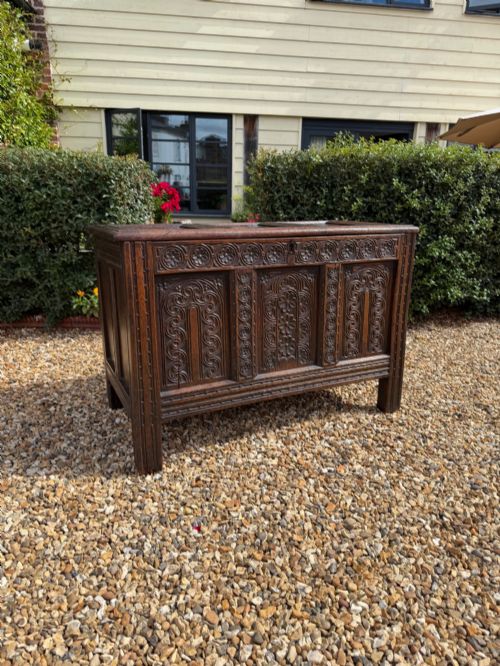
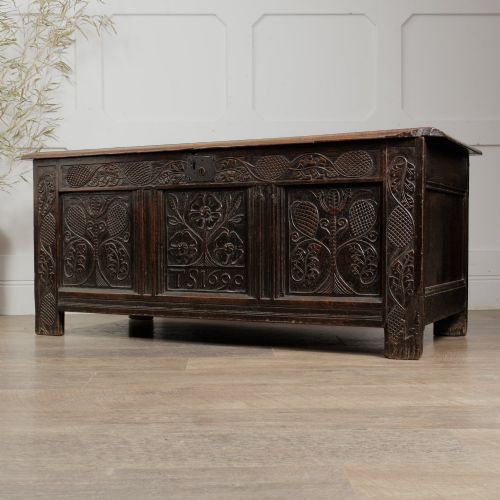
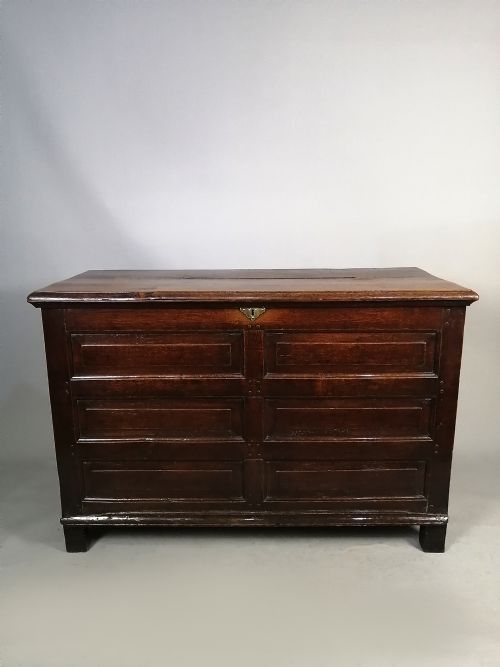
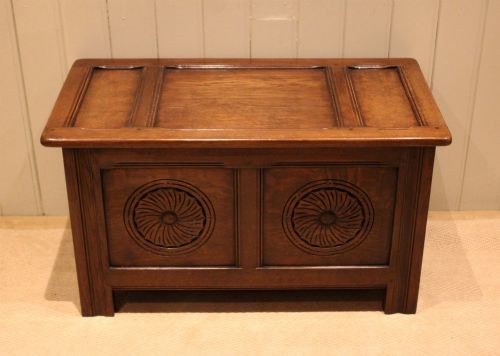
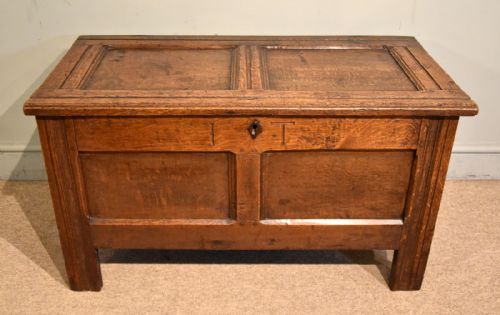
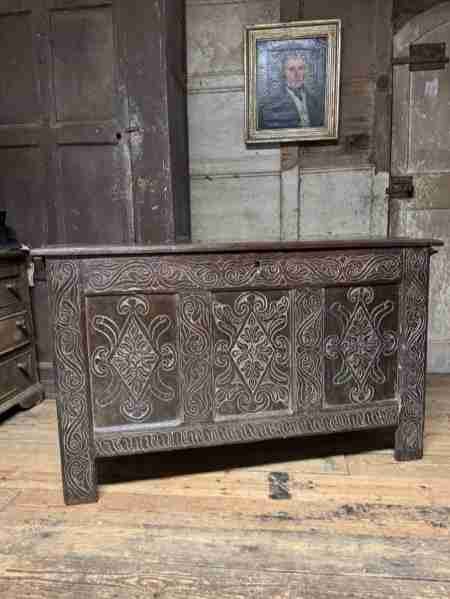
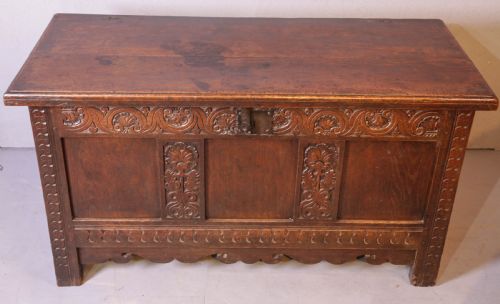
Joined Oak Storage Chest
A joined oak storage chest offers heavy timber construction and panelled strength, serving generations of domestic utility from the sixteenth century onwards.
Joined Oak Storage Chest
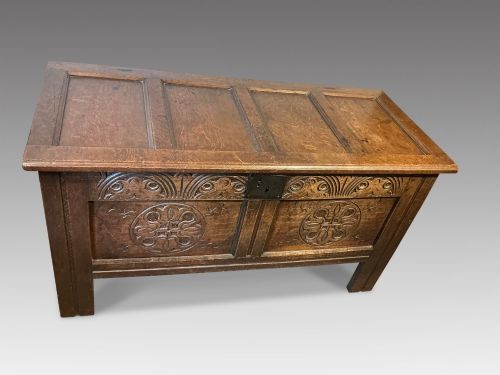
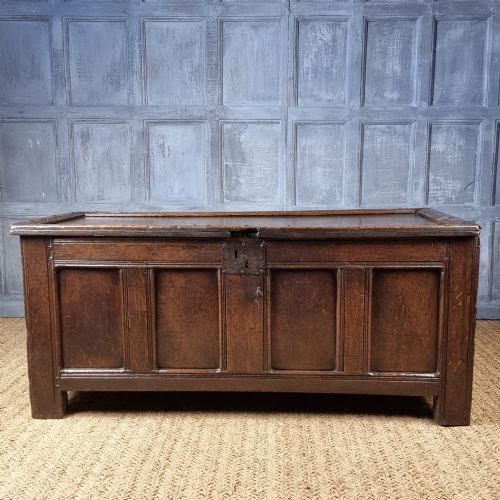
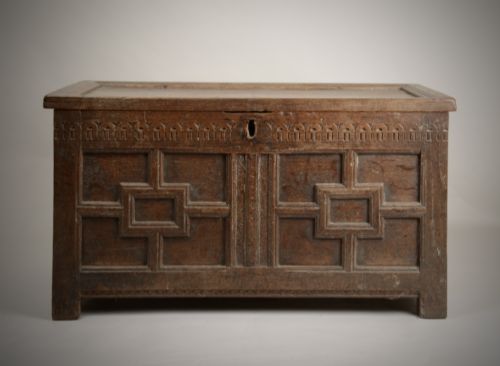
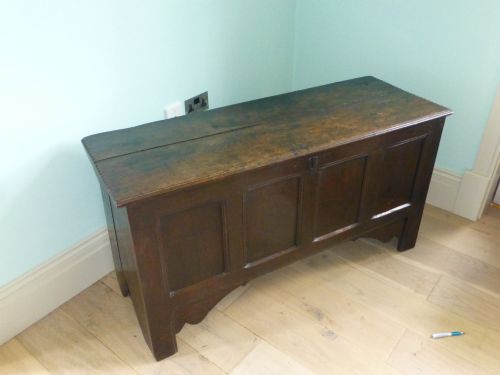
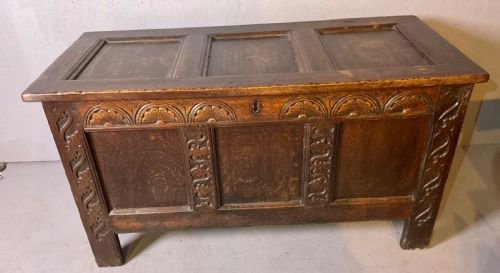
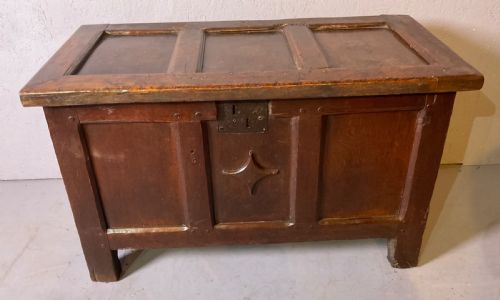
A joined oak storage chest takes the form of a coffer, blanket box, or mule chest built with mortise and tenon framing. Buyers encounter seventeenth-century examples most frequently, alongside sixteenth-century Elizabethan and Henry VIII pieces, as well as later eighteenth-century Georgian variants.
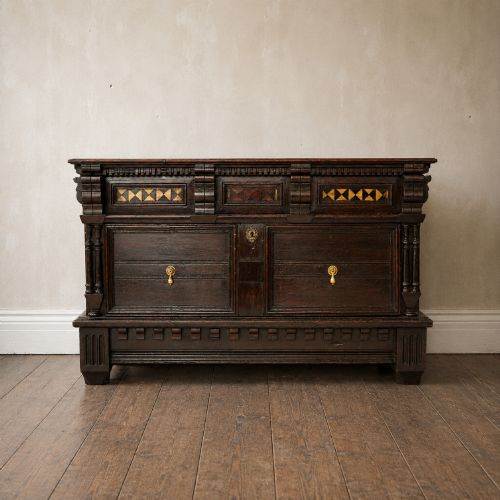
Regional British origins define these pieces, with Welsh, Lancashire, Lakeland, and South Gloucestershire workshops producing distinct regional characteristics. Formats range from single panel and two-panel coffers to carved blanket chests and chests with lower drawers.
Construction and materials
Makers utilised solid oak boards assembled with joined framing, securing panels within grooved stiles and rails. Iron and brass hardware, alongside wrought iron hinges and locks, reinforced the heavy timber structures.
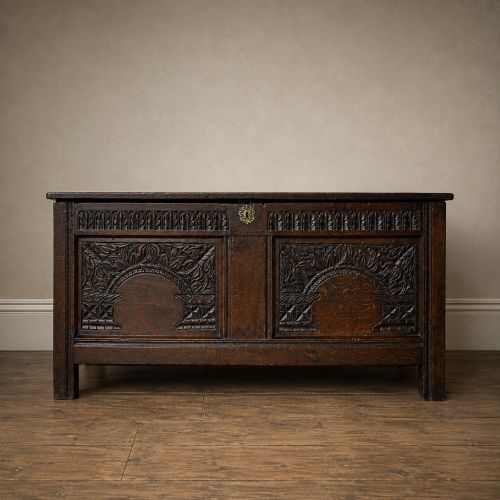
Surface enrichment involved hand carving, geometric moulding, wood inlay, and traditional linenfold panels on earlier sixteenth-century examples.
Some chests retain seventeenth-century floor dust trapped beneath their baseboards for over three hundred years.
Distinctions in quality
Quality rests in the crispness of original hand carving, the integrity of the joined oak frame, and the survival of early timber surfaces. Regional details and documented provenance elevate certain pieces above standard domestic examples.
Thomas Dennis
The Joined Oak Storage Chest Glossary
- Joined oak
- Timber construction utilising mortise and tenon joints pinned with wooden dowels rather than simple nailed boards. This method provided exceptional structural rigidity for heavy storage furniture.
- Coffer
- A heavy wooden chest traditionally used for storing valuables, documents, or textiles. These pieces typically feature a hinged lid and robust framing.
- Linenfold
- A style of wood carving that mimics folded fabric, commonly found on sixteenth-century panels. This decorative technique added texture and movement to flat wooden surfaces.
- Mule chest
- A storage chest featuring one or more drawers at the base beneath the main compartment. This form bridges the evolution between the traditional coffer and the chest of drawers.
Joined Oak Storage Chest: Frequently Asked Questions
What is a joined oak storage chest?
A joined oak storage chest is a heavy timber box constructed with mortise and tenon joints, designed for domestic storage.
These pieces date primarily from the sixteenth, seventeenth, and eighteenth centuries, serving as precursors to modern wardrobes and drawer units.
How were these chests used historically?
Households utilised these chests to store valuable textiles, blankets, documents, and personal belongings securely.
The heavy wooden lid often doubled as a table surface or a bench seat within the domestic interior.
How do you identify seventeenth-century pieces?
Seventeenth-century examples display characteristic joined oak framing, hand-carved panels, and geometric moulding details.
Construction methods rely on pegged joints and wrought iron hardware rather than modern fixings.
Where were these chests made?
English and Welsh regional workshops produced these chests, with specific regional traits appearing in pieces from Lancashire, Lakeland, and South Gloucestershire.
Local cabinet makers adapted traditional joinery techniques to suit available regional oak timber.