
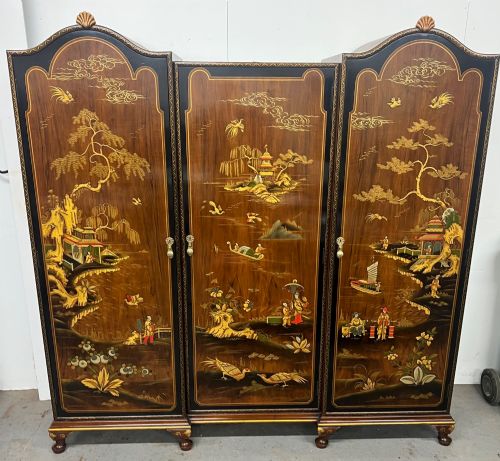
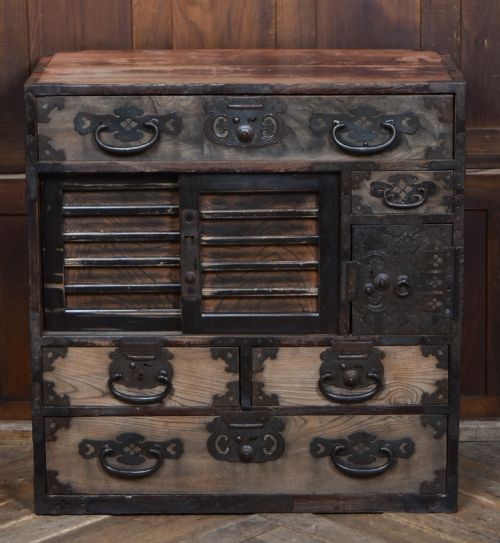
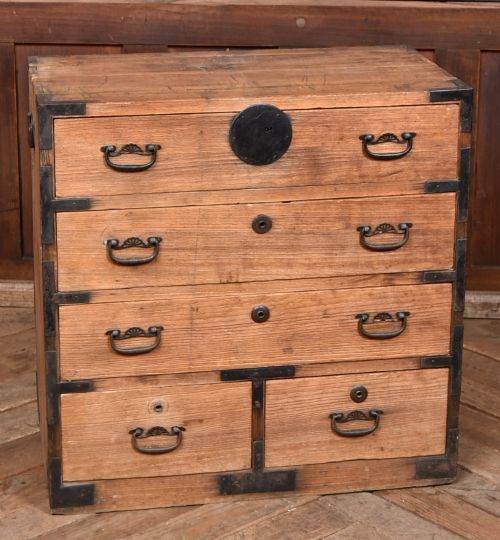
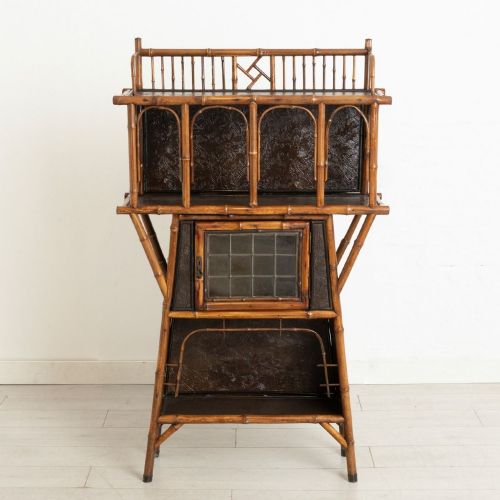


Japanese Storage Cabinet
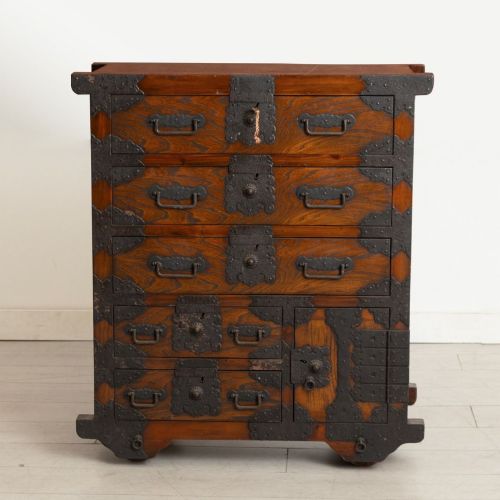
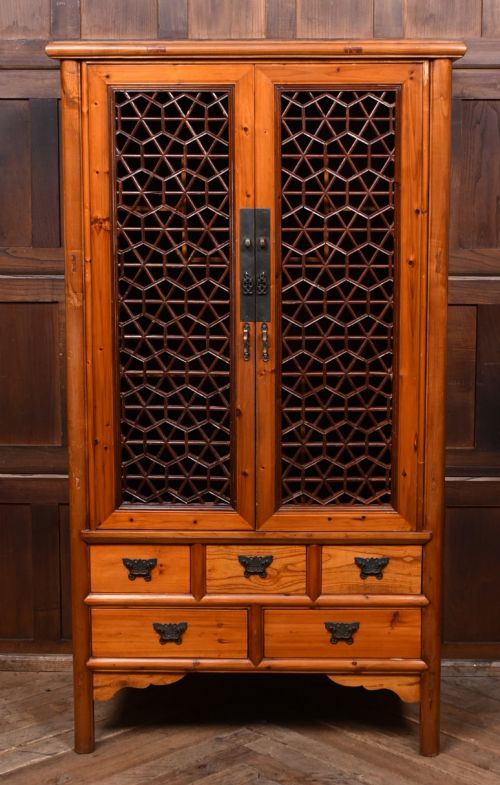
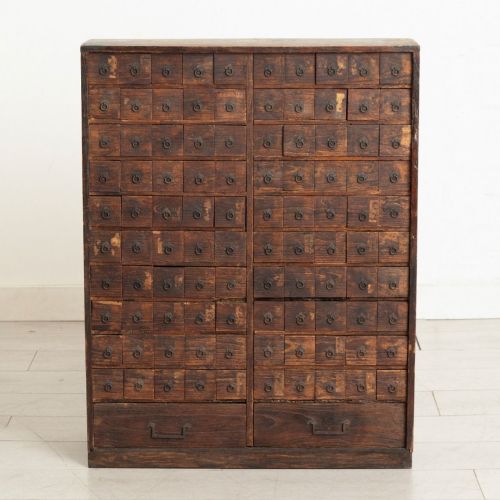
These Japanese storage cabinet examples are robust wooden tansu chests built for practical home organisation.
Understanding Japanese storage cabinet pieces
A Japanese storage cabinet typically takes the form of a tansu chest designed for domestic utility. Buyers encounter these practical storage pieces originating from the nineteenth century and the early twentieth century.
The selections available include specific regional variations such as merchant chests and items mounted on wheels. These wooden items reflect traditional Japanese craftsmanship from the Meiji and Taisho periods.
The forms range from multi-drawer configurations to specialised cabinet designs intended for everyday organisation. Each piece demonstrates the functional domestic heritage of historical Japanese woodworking.
Materials and construction methods
Construction relies heavily on native timbers including zelkova wood, keyaki, cedar, chestnut, paulownia wood, pine, and elm. These woods provide both structural durability and distinct grain patterns across the cabinet surfaces.
Metalwork plays a crucial role in the assembly and reinforcement of each chest. Forged iron and wrought iron hardware, including brackets and handles, secure the wooden framework while adding functional contrast.
Retail Price Guide 2026
Typical UK retail prices for japanese storage cabinet, calculated from the Sellingantiques database of over a million retail prices indexed since 2003. This retail price guide relies exclusively on Sellingantiques data; no external sources or auction records are used, so the figures do not describe the wider market.
Some nineteenth-century chests come equipped with wheels to help you roll your heavy hardware across the tatami.
Assessing quality and craftsmanship
Quality reveals itself in the selection of timbers such as keyaki and zelkova, alongside the precision of the joinery. Superior examples maintain structural integrity and display clean integration of wooden panels.
The complexity and finish of the forged iron or wrought iron hardware distinguish finer pieces from simpler utility items. The condition of the original wheels and metal fittings contributes significantly to the overall character.
The Japanese Storage Cabinet Glossary
- Tansu
- A traditional Japanese mobile chest or storage cabinet used for domestic organisation. These pieces often feature multiple drawers and sliding doors.
- Keyaki
- Japanese zelkova wood prized for its dense grain and durability in cabinet making. It forms the primary material for high-grade merchant chests.
- Meiji Period
- The historical Japanese era spanning from eighteen sixty-eight to nineteen twelve, associated with traditional craftsmanship. Many surviving wooden chests originate from this time.
- Taisho Period
- The historical era succeeding the Meiji period, lasting from nineteen twelve to nineteen twenty-six. Cabinets from this time continue traditional joinery methods.
Frequently Asked Questions
What woods are used?
Makers utilised a variety of native Japanese timbers including zelkova, cedar, chestnut, paulownia, pine, and elm. Keyaki, a form of zelkova, appears frequently in finer merchant chests.
These woods provide the necessary strength for daily storage while offering distinct natural grain patterns.
How old are these cabinets?
The available pieces date from the nineteenth century through the early twentieth century. This encompasses the Meiji and Taisho historical periods of Japan.
Construction techniques and material choices align with the manufacturing standards of these specific eras.
What is iron hardware used for?
Forged iron and wrought iron hardware provide structural reinforcement to the wooden frames. These metal elements secure corners, joints, and drawer fronts.
Handles and brackets also facilitate the movement and daily operation of the heavy storage cabinets.