


Japanese Merchant Cabinet
A Japanese merchant cabinet brings centuries of functional craftsmanship into a modern interior, offering clever storage through traditional compartmentalised design.
Japanese Merchant Cabinet
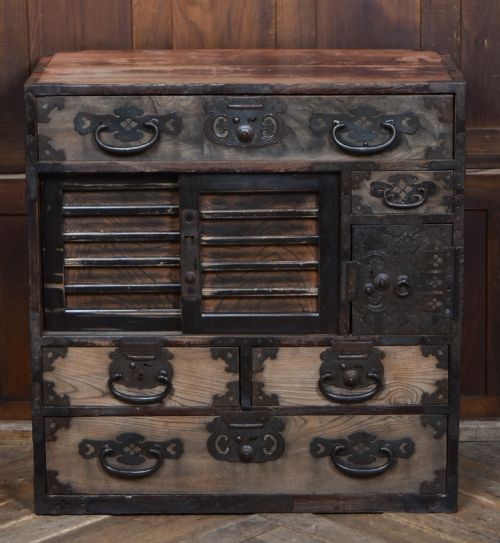
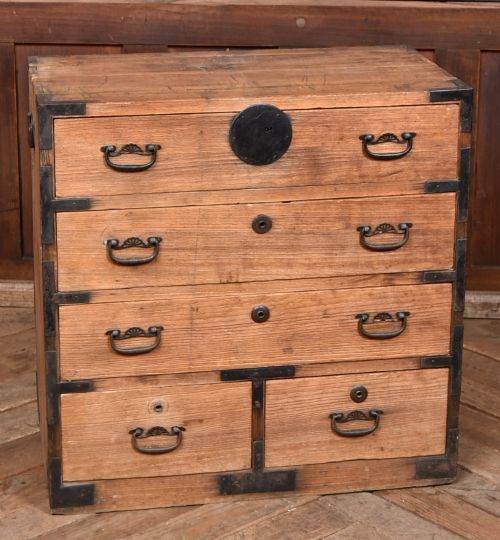
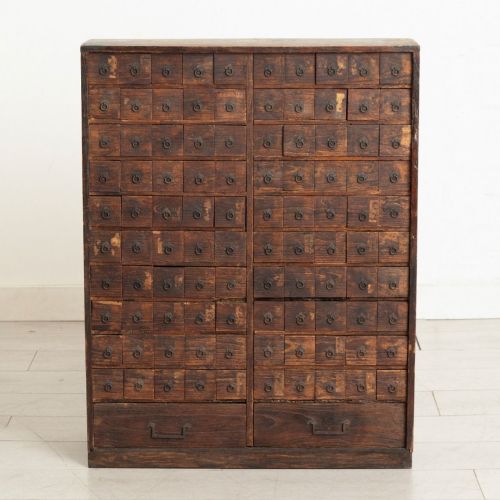
A Japanese merchant cabinet encompasses various forms of traditional storage furniture, most frequently encountered as tansu chests from the nineteenth century and the early twentieth century. These pieces serve as practical storage cabinets, chests of drawers, and apothecary banks of drawers designed for commercial or domestic utility.
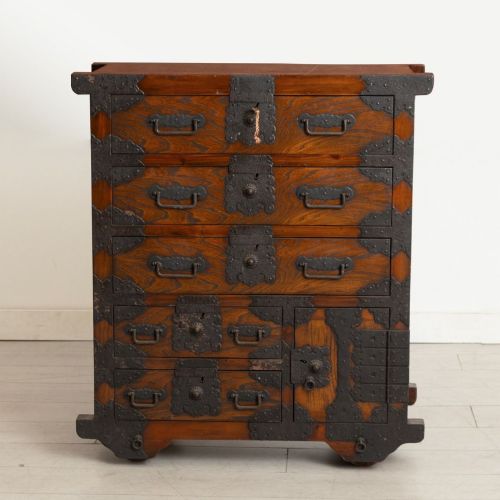
The inventory includes specialised regional or functional variants such as keyaki merchant tansu chests, mizuya kitchen tansu, ship's tansu chests, and wheeled cabinets. Originating across traditional Japanese periods including the Meiji and Taisho eras, these cabinets reflect the specific storage needs of merchants and households.
Buyers seeking a Japanese merchant cabinet will find pieces categorized under traditional Japanese styles and manufactured from diverse regional timbers. The selection ranges from robust multi-drawer apothecary units to mobile cabinets fitted with wheels.
Materials and Construction
Makers constructed these cabinets using a variety of native timbers, predominantly cedar, elm, chestnut, and zelkova wood, often referred to as keyaki. These woods provided both structural integrity and varied grain patterns, while lighter timbers such as kiri wood found use in specialised storage applications.
Hardware played a crucial structural and decorative role, featuring forged iron reinforcement brackets, corner plates, and heavy-duty handles. Surface finishes included traditional red lacquer applications, which enhanced durability and provided a distinctive protective sheen.
Listings feature items exclusively from the nineteenth century and the early twentieth century, spanning the Meiji and Taisho periods.
Factors of Quality
Quality in these cabinets rests upon the selection and pairing of timbers, where dense cabinet woods like zelkova command attention for their durability and figured grain. The integration of the timber with robust framing dictates the structural longevity of the piece.
The refinement of the forged iron hardware, from simple plates to elaborate locking mechanisms and strapwork, indicates the original tier of production. Joinery precision and the smoothness of drawer operation within apothecary banks and multi-tier chests further separate standard utilitarian pieces from finer workshop examples.
The Japanese Merchant Cabinet Glossary
- Tansu
- A traditional Japanese mobile chest or cabinet used for storage. These pieces evolved specific forms for clothing, documents, and merchant goods.
- Keyaki
- Japanese zelkova wood. This hardwood is prized for its strength and distinct grain pattern, frequently utilised in high-status furniture.
- Mizuya
- A kitchen tansu chest. These storage cabinets held domestic kitchen utensils, food stores, and tableware in traditional households.
- Kiri Wood
- Paulownia wood. This lightweight, warp-resistant timber was commonly employed for protective storage cabinets and chests.
- Taisho Period
- The historical period spanning from 1912 to 1926. Furniture from this era often blends traditional craftsmanship with transitional design influences.
Japanese Merchant Cabinet: Frequently Asked Questions
What is a tansu?
A tansu is a traditional Japanese mobile chest or storage cabinet designed for domestic or commercial utility.
These pieces feature diverse configurations of drawers and sliding doors to accommodate specific goods and household items.
How were merchant cabinets used?
Merchant cabinets served businesses and households for organising documents, currency, inventory, and everyday items.
Specialised forms included apothecary banks of drawers for herbs and medicines, alongside kitchen cabinets for provisions.
Where should I place a cabinet?
These cabinets function effectively as standalone storage focal points in living spaces, hallways, or dining rooms.
Their compact footprints and compartmentalised drawers suit modern interiors requiring practical organisation.
How do I identify periods?
Period identification relies on observing timber choices, hardware styles, and construction techniques associated with the nineteenth century and early twentieth century.
Meiji and Taisho era pieces exhibit specific regional characteristics and joinery methods native to Japanese workshops.