


Meiji Period Tansu Cabinet
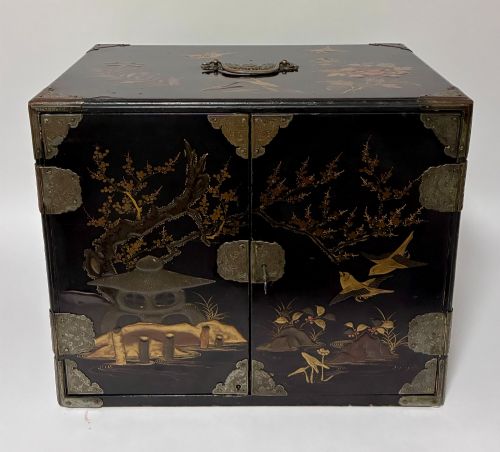
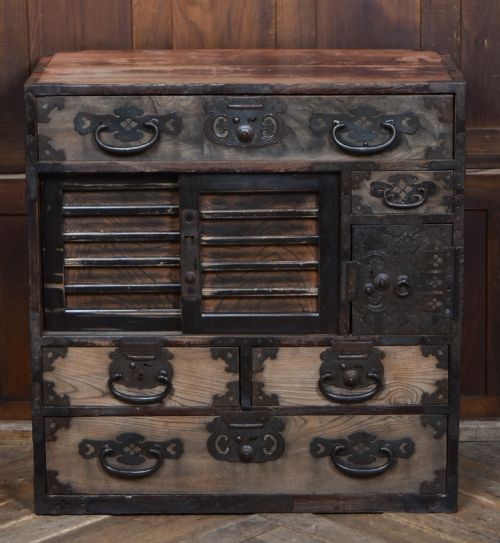
A meiji period tansu cabinet brings sturdy utility and rich regional timber into a room, offering clever storage compartments hidden behind robust metal hardware.
Meiji Period Tansu Cabinet
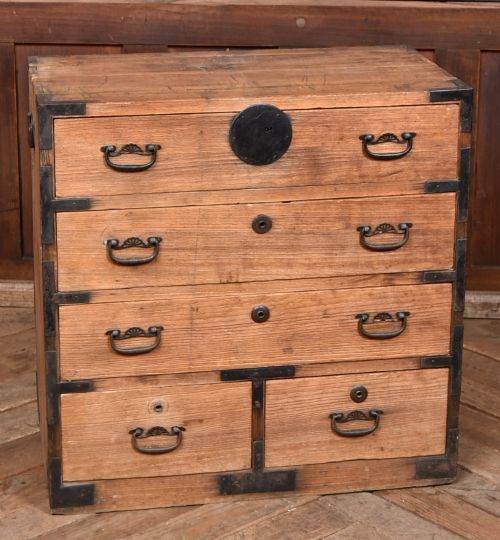
The search phrase meiji period tansu cabinet directs attention toward Japanese storage furniture built across the nineteenth and early twentieth centuries. These pieces encompass various regional forms, ranging from kitchen storage units to merchant chests and step chests.
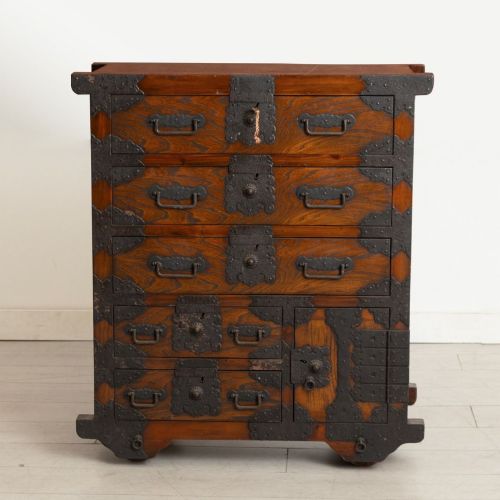
Buyers encounter numerous variations on this page, including traditional wooden chests, table cabinets, and mobile cabinets mounted on wheels. Many examples date from the nineteenth century, constructed from domestic timbers like cedar and zelkova wood.
Functional utility dictates the layout, featuring internal drawers, sliding doors, and compartments designed originally for household goods or merchant stock. Each piece reflects the domestic craftsmanship of its period, using traditional joinery without relying on modern fasteners.
How they were made
Cabinet makers utilised native woods such as cedar, zelkova, and chestnut for the primary structure, applying lacquer finishes to select surfaces for protection and visual depth. These timbers provided the necessary strength for heavy daily domestic use while maintaining a refined grain.
Forged iron and brass hardware reinforce the corners, drawers, and locking mechanisms, securing the timber assemblies against transit and wear. Heavy metal strapwork and decorative plates function structurally to hold the multi-part wooden frames together.
Some merchant chests travelled on ships, while others doubled as staircases to the loft.
What varies in quality
Quality diverges significantly in the selection of primary timbers and the complexity of the internal arrangement. Cabinets utilising figured zelkova or dense cedar demonstrate a higher grade of material sourcing than simpler utility pieces.
The refinement of the forged iron or brass hardware also marks the distinction between standard storage items and finer examples. Elaborate metalwork, secure locking mechanisms, and intact original lacquer finishes elevate the standing of an individual piece.
The Meiji Period Tansu Cabinet Glossary
- Tansu
- Traditional Japanese mobile cabinetry and storage chests built for domestic or mercantile use. These units often feature specialised compartments for specific household goods.
- Zelkova wood
- A durable hardwood native to Japan, valued for its prominent grain pattern and strength. Cabinet makers utilised this timber for the exterior facades of better storage chests.
- Kaidan tansu
- A traditional step chest configured in a staircase shape to maximise floor space and provide access to loft areas. These dual-purpose structures combine shelving with functional steps.
- Mizuya
- A traditional Japanese kitchen storage cabinet used for holding utensils, provisions, and tableware. These pieces form a distinct category within broader tansu cabinetry.
- Keyaki
- The Japanese term for zelkova wood, frequently referenced in descriptions of high-grade merchant chests. This timber provides both structural resilience and decorative surface appeal.
Meiji Period Tansu Cabinet: Frequently Asked Questions
What is a tansu cabinet used for?
These cabinets served traditional Japanese households and merchants for storing clothing, documents, kitchen utensils, and valuables. The compartmentalised interior accommodated specific goods safely.
Today, owners utilise them as statement storage pieces in living spaces, hallways, or bedrooms, storing contemporary items while displaying the traditional timber exterior.
How do I identify a meiji period piece?
Identification relies on examining the construction materials, joinery methods, and the style of the metal hardware. The evidence shows pieces from the nineteenth and early twentieth centuries employing cedar, zelkova, and forged iron.
Comparing the specific form against documented types like step chests, kitchen cabinets, or merchant chests helps confirm the era and regional origin.
Are these cabinets heavy?
Solid construction using dense timbers like cedar and zelkova, combined with heavy forged iron or brass hardware, makes these pieces substantial in weight. Some specialised variants include wheels to assist with movement.
Placing the cabinet requires careful planning regarding floor weight capacity and final room layout, as frequent repositioning is generally impractical.
How do I care for the wood and lacquer?
Maintaining the timber and lacquer surfaces involves keeping the cabinet away from direct heat sources and excessive moisture fluctuations. Gentle dusting with a dry cloth preserves the finish without harming the historic materials.
Avoid chemical polishes or abrasive cleaners, as these can degrade the original lacquer or dry out the historical cedar and zelkova timbers.