
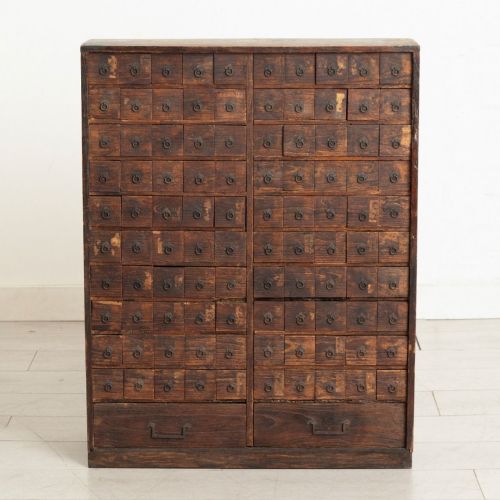


Traditional Japanese Storage Chest
These traditional japanese storage chest pieces offer clever engineering and honest woodwork, bringing historic utility and quiet elegance to modern rooms.
Traditional Japanese Storage Chest
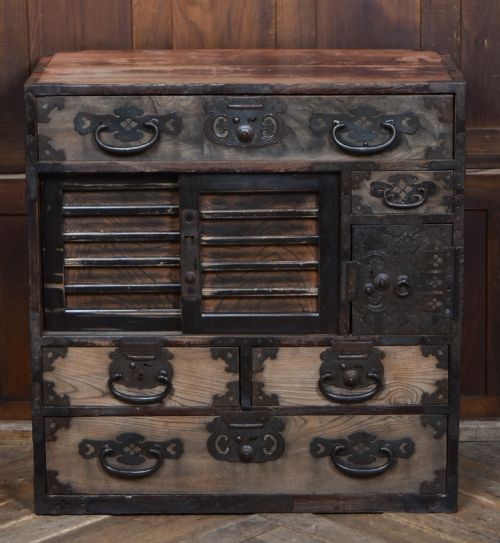
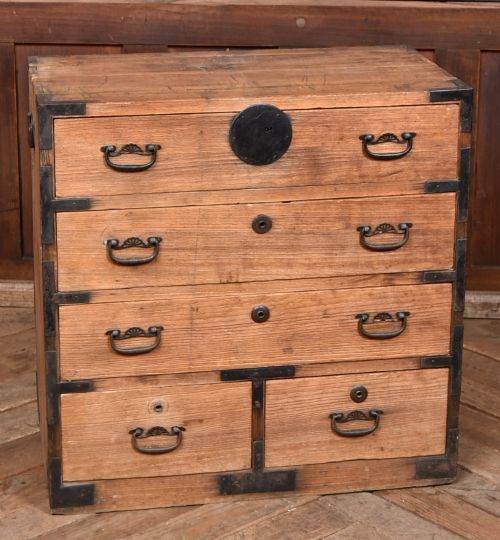
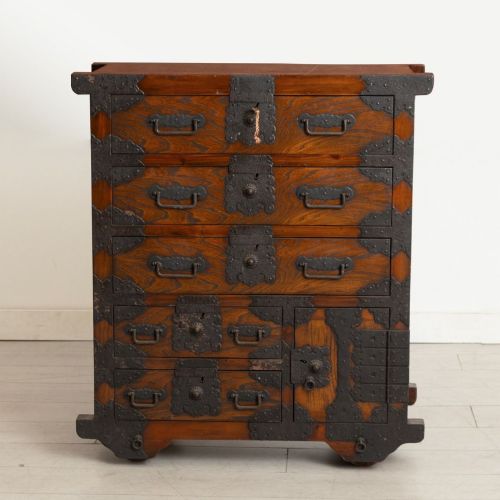
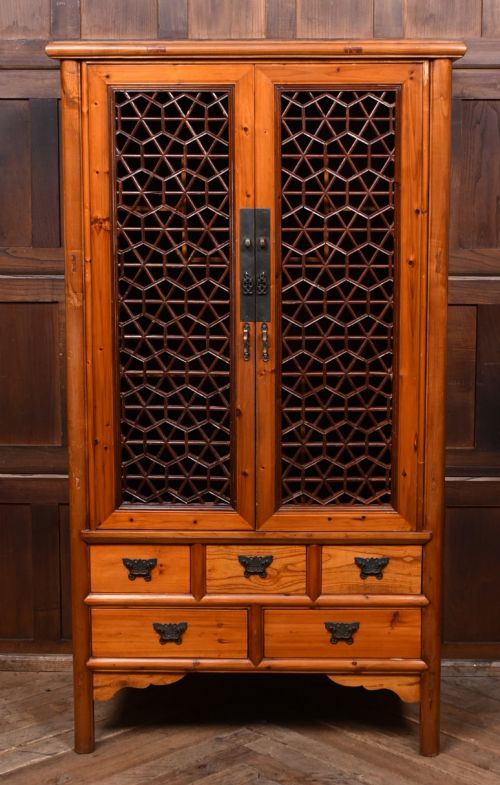
A traditional japanese storage chest takes many forms on this page, spanning the nineteenth century through the early decades of the twentieth century. Buyers encounter robust tansu chests, apothecary banks of drawers, larder cupboards, and mobile wheeled designs intended for domestic use. The selection demonstrates practical storage solutions developed across the Meiji and Taisho periods.
The most frequent discovery is the classic tansu chest, often constructed from cedar, elm, or keyaki wood. These pieces range from simple merchant chests to specialised kitchen cabinets and step chests designed for interior organisation. Each example reflects the traditional craftsmanship of Japanese cabinet makers working in wood and iron.
How they were made
Makers utilised native timbers such as cedar, elm, chestnut, pine, and zelkova wood to build the carcasses of these cabinets. These woods provided structural stability while allowing for varied grain patterns and textures across different types of chests.
Iron fittings and heavy hardware reinforce corners, drawers, and operational elements like wheels on kuruma-dansu pieces. Selected cabinets also display red lacquer finishes, combining protective coatings with traditional decorative treatments.
Listings span the nineteenth century, nineteen-ten, and nineteen-twenty, featuring cedar, elm, pine, chestnut, and zelkova wood.
What varies in quality
The distinction between tiers of work rests on the selection of timber, such as figured zelkova or keyaki versus simpler pine or cedar. Finer examples display more intricate iron hardware and tighter joinery that has survived decades of daily use.
Overall condition and the intact survival of original surface finishes, whether exposed wood grain or red lacquer, set distinct grades among surviving pieces.
The Traditional Japanese Storage Chest Glossary
- Tansu
- Traditional Japanese mobile or stationary storage chest. These cabinets served diverse domestic functions ranging from merchant accounting to clothing storage.
- Keyaki
- Japanese zelkova wood. This dense timber is prized for its prominent grain and durability in cabinet making.
- Kuruma-Dansu
- Wheeled Japanese chest. The integrated wheels allowed merchants to move valuable goods quickly during fires.
- Kaidan-Tansu
- Step chest. These clever multi-tiered cabinets doubled as staircases in compact traditional dwellings.
Traditional Japanese Storage Chest: Frequently Asked Questions
What is a tansu chest?
A tansu is a traditional Japanese mobile or stationary storage cabinet built for domestic organisation. These pieces range from merchant chests to specialised kitchen units.
They utilise native timbers and heavy iron hardware to ensure durability and security.
How were step chests used?
Kaidan-tansu served both as storage units and as functional staircases in multi-level traditional Japanese homes. The integrated steps provided access to upper spaces while housing drawers beneath.
This dual purpose maximised usable floor area in compact historical dwellings.
What woods appear in these chests?
Makers constructed these cabinets using native Japanese timbers including cedar, elm, pine, chestnut, and zelkova wood. Keyaki and elm provided sturdy frames and striking grain patterns.
Iron hardware reinforced the joints and protected vulnerable corners from impact.
How do I date a tansu?
Dating relies on stylistic markers from the nineteenth century through the Meiji and Taisho periods. Nineteenth-century examples often show simpler construction, while early twentieth-century pieces incorporate specific regional hardware variations.
Materials and cabinet types offer further clues to the manufacturing era.