





Traditional Japanese Furniture
Traditional Japanese furniture comprises chests, cabinets, and tables from the nineteenth and early twentieth centuries that bring historic craftsmanship into modern rooms.
Traditional Japanese Furniture
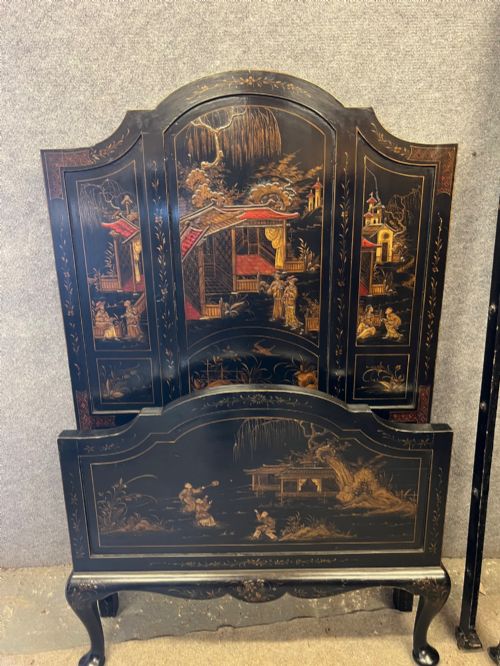
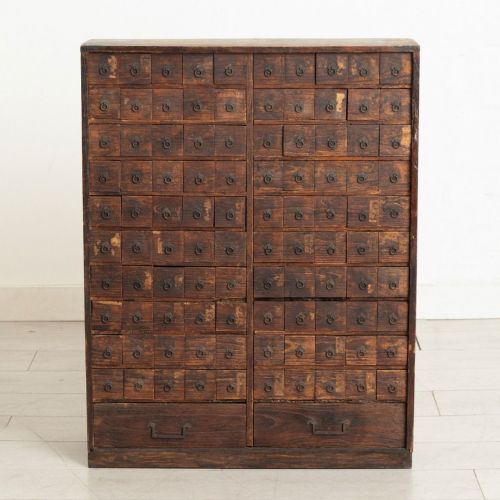
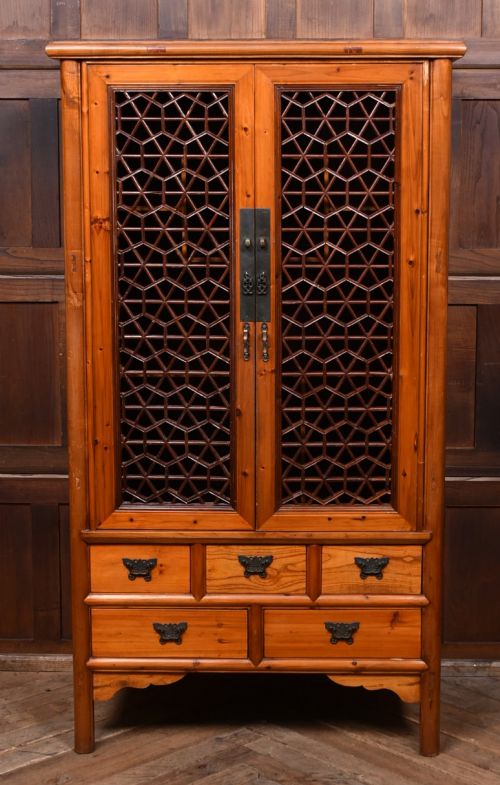
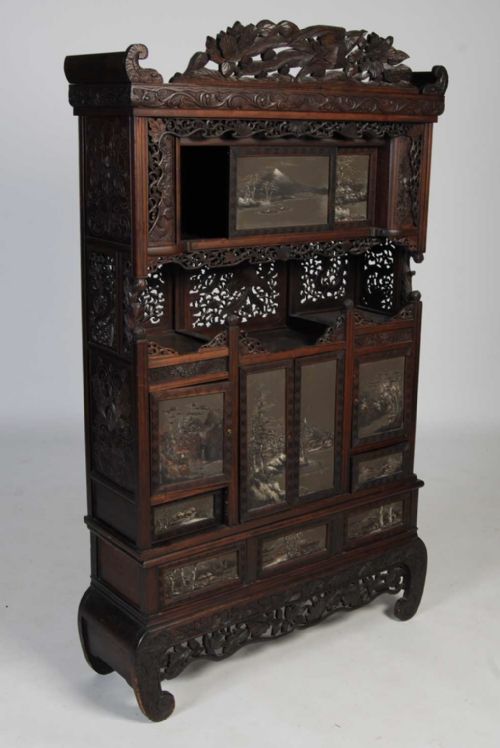
Traditional Japanese furniture centres on functional storage pieces built during the nineteenth century and the early decades of the twentieth century, including the Meiji and Taisho periods. When you search for traditional Japanese furniture, you encounter robust forms designed for domestic and commercial use, such as multi-drawer tansu chests, larder cupboards, and apothecary cabinets.
The most common pieces on this page are tansu chests, often fitted with iron hardware and constructed for portability or specific household storage needs. Alongside these, you find specialised items like calligraphy writing tables, storage cabinets on stands, and merchant chests that reflect the diverse needs of Japanese households in the 1800s and 1900s.
Materials and construction
Makers utilised native timbers suited to each piece's function, frequently employing woods such as cedar, chestnut, paulownia, elm, keyaki, zelkova, and kiri. These timbers provided both the structural strength required for heavy storage and the fine grain needed for polished or lacquered finishes.
Iron, forged iron, and wrought iron played a crucial structural and decorative role, forming the heavy brackets, corner plates, and carrying handles that reinforced the wooden carcasses. Red lacquer finishes also appear, adding a protective and decorative layer to the exterior of specific chests.
Traditional Japanese Furniture Retail Price Guide 2026
Typical asking prices for traditional japanese furniture among the pieces listed under this phrase on Sellingantiques today, from the lower quarter to the upper quarter. They describe what is for sale here now, not the wider market.
Materials recorded across the inventory include iron, wood, lacquer, cedar, chestnut, forged iron, paulownia wood, and wrought iron.
What distinguishes finer examples
Quality in these pieces rests upon the selection of timber and the precision of the joinery used to unite the wooden elements. Finer examples display carefully chosen woods like zelkova or keyaki alongside robust, hand-forged iron hardware that integrates securely with the wooden structure.
The refinement of the surface treatment, whether through the preservation of natural wood grain or the application of red lacquer, separates standard storage items from pieces exhibiting greater artisanal care. The complexity of the internal arrangement, such as the multiple drawers in apothecary banks or merchant chests, also influences the character of the piece.
The Traditional Japanese Furniture Glossary
- Tansu
- A traditional mobile Japanese chest or cabinet used for storing clothing, documents, or household goods. These pieces often feature iron reinforcement and multiple drawers.
- Meiji Period
- The era in Japanese history spanning from 1868 to 1912, characterised by significant cultural and social shifts while traditional craft methods persisted.
- Taisho Period
- The period lasting from 1912 to 1926, bridging older Japanese designs with early modern aesthetic influences.
- Keyaki
- A species of elm native to Japan valued for its dense grain and durability in cabinet making.
- Kiri
- Paulownia wood, known for its light weight and resistance to warping, frequently used in traditional Japanese box and chest construction.
Traditional Japanese Furniture: Frequently Asked Questions
What is a tansu chest?
A tansu is a traditional Japanese mobile storage cabinet or chest built to hold clothing, valuables, or household goods. These pieces are typically reinforced with iron hardware and designed to be moved easily.
They represent one of the most common forms of traditional Japanese furniture encountered by collectors today.
How do I date these pieces?
Dating relies on the stylistic markers of periods such as the nineteenth century, the Meiji period, and the Taisho period. Examining the specific timber varieties, such as keyaki or kiri, and the style of the iron mounts also helps establish the era of manufacture.
Most items on this page originate from the 1800s or the early 1900s.
What woods were used?
Makers constructed these pieces using native timbers including cedar, chestnut, paulownia wood, elm, keyaki, and zelkova. Each wood offered specific properties relating to weight, grain pattern, and durability.
Iron and forged iron components were routinely added to reinforce these wooden structures.
How were apothecary cabinets used?
Apothecary banks of drawers served as storage units for medicinal herbs, dried ingredients, and powders in traditional Japanese commerce. Their numerous small compartments allowed merchants to organise diverse medical supplies efficiently.
Today, these multi-drawer cabinets function well as distinctive storage furniture in modern interiors.
Can I use a calligraphy table today?
Calligraphy writing tables provide low, flat surfaces originally intended for seated work with brushes, ink, and paper. In contemporary settings, they function effectively as display surfaces or compact desks.
Their restrained wooden construction complements both traditional and modern room schemes.