
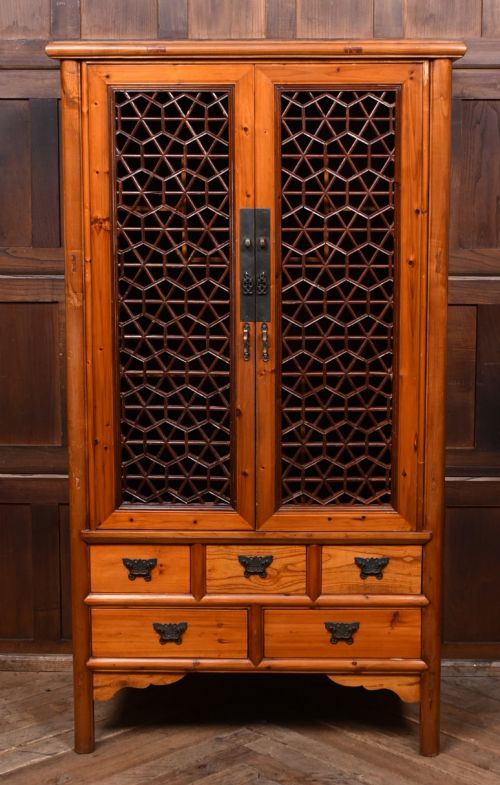
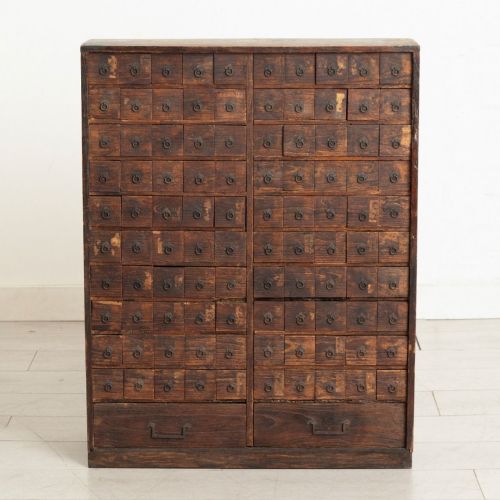


Japanese Storage Chest
These Japanese storage chest pieces are traditional wooden and lacquered containers built for utility, offering robust organisation with distinct historic craftsmanship.

Japanese Storage Chest
A Japanese storage chest serves as a practical container created to hold household goods, clothing, and valuables across historic periods. The examples found here span the nineteenth century up to the nineteen-twenties, incorporating distinct regional and domestic forms.
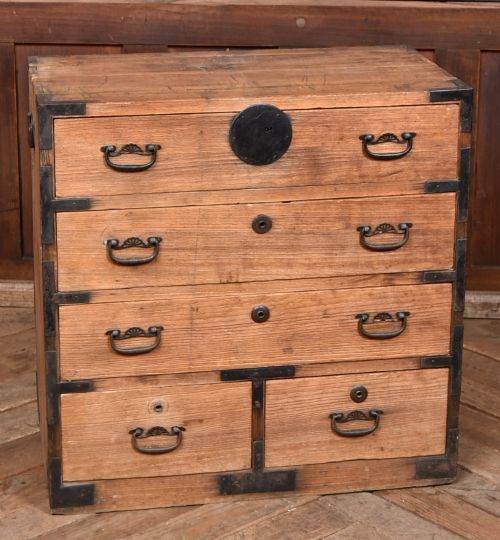
Buyers will most frequently encounter the tansu form, alongside specialised variations like the merchant chest, kitchen tansu, and wheeled storage units. These pieces reflect the traditional interior organisation of Japanese homes and commercial spaces.
The selection ranges from portable small cabinets to substantial multi-drawer banks constructed from native timbers. Each configuration fulfills a specific storage requirement, from apothecary sorting to general blanket containment.
Materials and construction methods
Construction relies heavily on native timbers such as zelkova wood, cedar, elm, pine, and kiri wood, chosen for their durability and grain. Cabinetmakers joined these woods using traditional framing techniques designed to withstand seasonal humidity shifts.
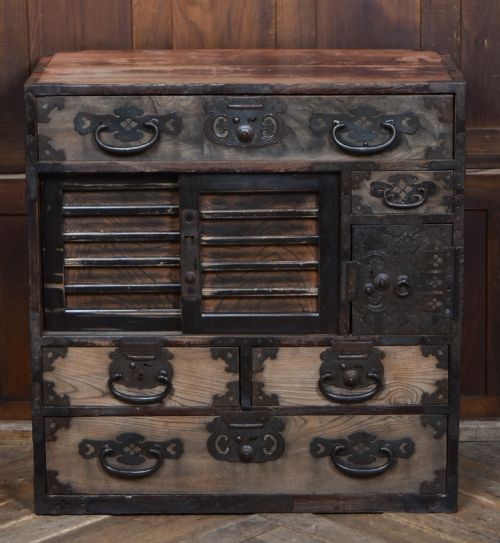
Metal reinforcement plays a structural and decorative role, utilising iron and brass for corner plates, heavy handles, and locking mechanisms. Selected pieces feature lacquered finishes, applying resin coatings to protect the wood and provide a glossy surface.
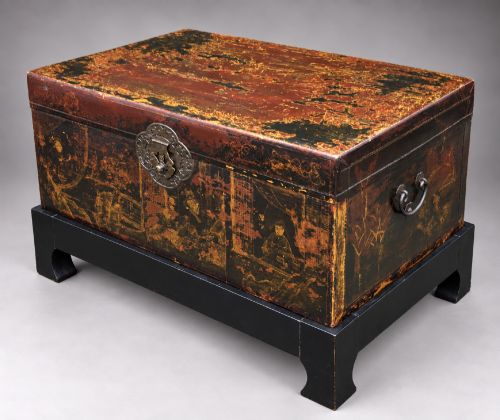
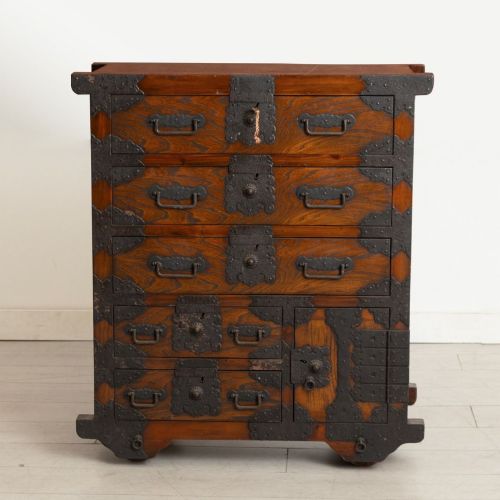
Wheeled variants incorporate integrated wooden castors or carriage systems to permit movement across tatami mats and wooden floors. Stands and carved bases support certain cabinet forms, elevating the main storage body.
The listings span the nineteenth century and the early twentieth century, incorporating Victorian-era imports alongside specific Meiji and Taisho period pieces.
Assessing quality and execution
Quality reveals itself in the selection of timber and the precision of the joinery connecting the panels and drawers. Finer examples utilise figured woods like zelkova for the primary facade while employing lighter secondary timbers internally.
The weight, thickness, and hand-forging quality of the iron or brass hardware distinguish superior chests from standard utility items. Intricate lock plates, robust drop handles, and integrated locking bars demonstrate advanced metalworking skill.
Surface finish preservation separates exceptional survivals from heavily altered pieces, particularly where lacquer or original wood patination remains intact. The alignment of drawer partitions and the smoothness of sliding doors also indicate the maker's competency.
The Japanese Storage Chest Glossary
- Tansu
- A traditional Japanese mobile or stationary storage chest built primarily for domestic utility. These cabinets feature numerous drawers and sliding doors configured for specific household contents.
- Zelkova wood
- A durable deciduous hardwood native to Japan, prized for its pronounced grain pattern and strength. It frequently forms the visible exterior of high-status merchant chests.
- Meiji Period
- The era in Japanese history spanning from eighteen sixty-eight to nineteen twelve, characterised by rapid modernization alongside traditional craftsmanship. Pieces from this time often exhibit refined metal decoration and cabinetwork.
- Chinoiserie
- European decorative style reflecting Chinese and broader East Asian artistic influences, applied to lacquered cabinets and stands. This style appears on select imported or influenced storage pieces.
- Kiri wood
- Japanese paulownia timber valued for its light weight, fire-resistant qualities, and dimensional stability. Makers utilised this wood extensively for internal drawer construction and delicate storage cabinets.
Japanese Storage Chest: Frequently Asked Questions
What is a tansu chest?
A tansu is a traditional Japanese mobile storage cabinet designed with drawers and compartments for household organisation. These pieces were built for daily utility rather than static display.
Craftsmen constructed them using native timbers and reinforced them with heavy iron hardware to ensure durability during transit.
How do I use a storage chest at home?
These chests function effectively as living room media units, bedroom clothing storage, or hallway accent cabinets. Their internal drawers and compartments accommodate modern organizational needs.
Placing them away from direct heat sources helps preserve the historic wood and lacquer surfaces.
What is the difference between Meiji and Taisho periods?
The Meiji period covers eighteen sixty-eight to nineteen twelve, while the Taisho period spans nineteen twelve to nineteen twenty-six. Pieces from both eras show traditional joinery combined with evolving decorative metalwork.
Datings often rely on stylistic transitions and construction shifts recorded across the nineteenth and early twentieth centuries.
Why do some chests have wheels?
Wheeled chests, known as kuruma-dansu, allowed merchants and homeowners to move heavy valuables quickly in the event of fire. The integrated wooden or iron wheels facilitated rolling across interior flooring.
This mobility feature highlights the practical engineering built into traditional Japanese storage design.