
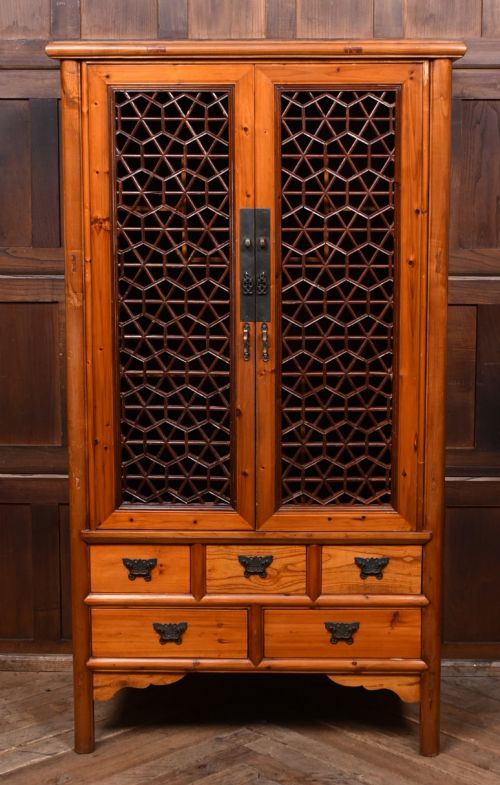


Meiji Tansu Chest
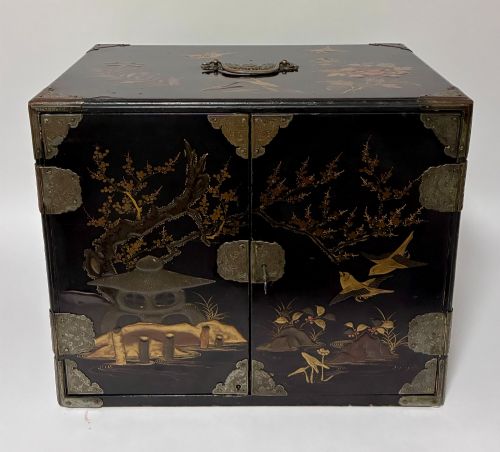
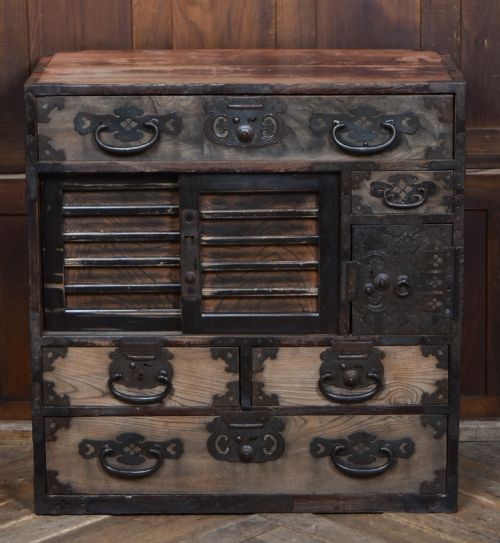
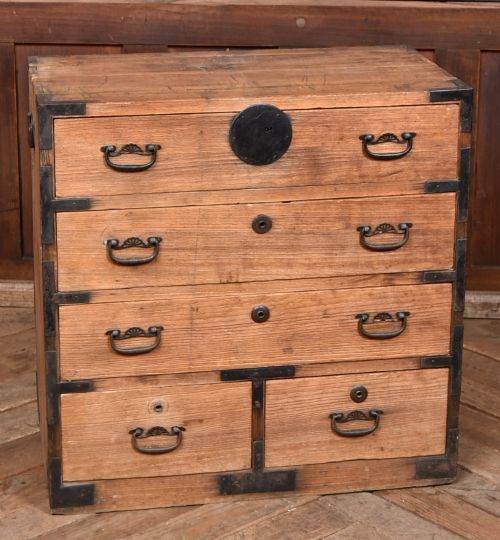
These meiji tansu chest pieces are traditional storage cabinets built for Japanese homes, offering robust timber construction and distinctive metal hardware.
Meiji Tansu Chest
The objects span multiple traditional styles including Japanese Edo and Meiji periods, reflecting a rich heritage of woodworking and metal ornamentation. Each form reveals specific historical uses, from securely storing coin collections to organising household provisions.
How they were made
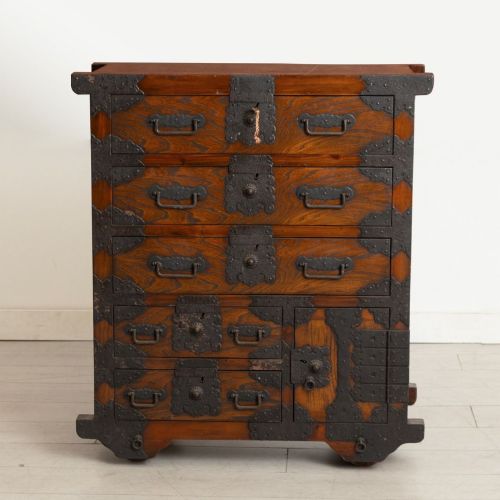
Woodworkers utilised native timbers including cedar, zelkova, pine, chestnut, and occasionally applied red lacquer finishes to the exterior surfaces. These materials provided the necessary structural strength and durability for heavy daily usage.
Craftsmen secured the timber structures with robust iron and brass hardware, creating reinforced corners, strapwork, and elaborate locking mechanisms. Wheels were integrated into specific transportable designs like the kuruma-dansu for ease of movement.
Listings span the nineteenth century through the early twentieth century, featuring materials such as iron, cedar, zelkova, and red lacquer.
What varies in quality
The choice of primary timber significantly influences the character of a piece, with figured zelkova and cedar commanding attention for their grain patterns. Superior examples display careful timber selection that enhances the visual depth of the cabinet.
The complexity and execution of the iron or brass hardware distinguish finer items from simpler utilitarian storage. Elaborate locking plates, hinges, and corner reinforcements demonstrate the skill of the metalworker alongside the joiner.
The Meiji Tansu Chest Glossary
- Tansu
- Traditional Japanese mobile storage cabinetry and chests produced for domestic or commercial use. These pieces often feature specialised internal compartments and heavy metal fittings.
- Kuruma-dansu
- A wheeled merchant chest designed for mobility during fires or emergencies. The integrated wooden or iron wheels define this specific subtype.
- Kaidan tansu
- A step chest built to double as a staircase in multi-level Japanese dwellings. The stepped configuration incorporates concealed drawers and cupboards beneath the treads.
- Mizuya
- A kitchen tansu utilised for storing food provisions, utensils, and dining ware. These storage cabinets reflect the domestic organisation of traditional households.
- Zenibako
- A portable money box or merchant ledger chest fitted with secure compartments for currency. These compact boxes typically incorporate heavy iron locking hardware.
Meiji Tansu Chest: Frequently Asked Questions
What is a meiji tansu chest?
A meiji tansu chest is a traditional Japanese wooden storage cabinet created during the nineteenth and early twentieth centuries.
These pieces range from merchant chests and ship trunks to kitchen cupboards and step chests, all built with utilitarian purpose.
How were these chests used?
These cabinets served daily domestic and commercial storage needs in traditional Japanese buildings.
Specific forms held clothing, money, kitchen provisions, or mercantile records, while wheeled versions allowed rapid relocation.
What woods are commonly found?
Construction materials primarily include native timbers such as cedar, zelkova, pine, and chestnut.
Some examples also feature surface applications of red lacquer or extensive iron and brass hardware reinforcements.
How do I date these pieces?
Dating relies on stylistic markers and historical periods recorded across nineteenth-century and early twentieth-century examples.
Transitions in hardware design and timber preparation help distinguish Edo period influences from later Meiji and Taisho production.