

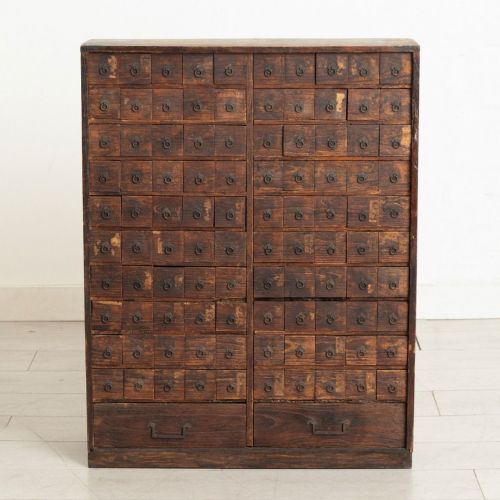


Japanese Merchant Chest
A Japanese merchant chest offers practical storage with striking metalwork, bringing traditional craftsmanship into a modern interior.

Japanese Merchant Chest
A japanese merchant chest is primarily represented on this page by tansu cabinets and chests of drawers originating from the nineteenth century and the early twentieth century. These pieces encompass traditional Japanese designs from the Edo, Meiji, and Taisho periods.
Buyers encounter forms such as the choba tansu alongside standard merchant chests of drawers fitted with multiple internal compartments. The majority of these items date from the nineteenth century or around nineteen ten.
How they were made
Construction relies on timber varieties including cedar, chestnut, paulownia, zelkova, keyaki, and elm wood. Cabinetmakers selected these native woods for their structural stability and distinct grain patterns.
Forged iron and wrought iron hardware provides structural reinforcement and secure closure for drawers and doors. Metal mounts and corner brackets secure the wooden frame while adding decorative contrast.
Japanese Merchant Chest Retail Price Guide 2026
Typical asking prices for japanese merchant chest among the pieces listed under this phrase on Sellingantiques today, from the lower quarter to the upper quarter. They describe what is for sale here now, not the wider market.
The listings feature timbers including cedar, chestnut, paulownia, zelkova, keyaki, and elm wood.
What varies in quality
The choice of timber significantly dictates the grade of a japanese merchant chest, with dense woods like keyaki and zelkova commanding high regard compared to softer framing timbers. Master joinery and precise dovetailing distinguish superior cabinetwork from simpler utility builds.
The intricacy and weight of the forged iron or wrought iron hardware also signal distinction. Heavy, hand-beaten mounts and elaborate locking mechanisms reflect a higher standard of original commission.
The Japanese Merchant Chest Glossary
- Tansu
- The traditional Japanese mobile cabinetry used for storage, which includes merchant chests and specialised household storage units. These pieces often feature numerous drawers and sliding panels.
- Keyaki
- The Japanese zelkova wood prized by historical cabinetmakers for its hard texture and pronounced grain. It frequently appears on the facades of high-status merchant chests.
- Choba tansu
- A specific regional form of merchant chest traditionally utilised in shops for account books and daily administration. They include small internal drawers behind locking doors.
- Taisho
- The period in Japanese history spanning from nineteen twelve to nineteen twenty-six, following the Meiji era. Pieces from this time blend traditional joinery with transitional decorative influences.
Japanese Merchant Chest: Frequently Asked Questions
What is a choba tansu?
A choba tansu is a traditional merchant chest designed specifically for shop use to store account ledgers and money. These cabinets feature various small compartments and secure doors.
They offer a glimpse into historical commercial life in Japan. Today, they function well as decorative accent furniture in contemporary homes.
How do I date a tansu chest?
Dating relies on examining the timber species, the style of the iron hardware, and construction techniques. Nineteenth-century examples often display heavy hand-forged ironwork and distinct regional woods.
Later pieces from the Meiji and Taisho periods introduce slight stylistic variations. Comparing the joinery with documented historical eras helps confirm the period of origin.
What woods were used for chests?
Cabinetmakers utilised native Japanese timbers such as cedar, chestnut, elm, paulownia, zelkova, and keyaki. Each wood offered specific benefits for weight, durability, and visual grain presentation.
Hardwoods like keyaki frequently graced the outer facade and drawer fronts. Softer woods were often employed for internal framing and backing boards.
Where should I place my chest?
These cabinets suit living rooms, hallways, or studies where their substantial hardware and rich wood grain serve as a focal point. Their practical drawer layout provides useful storage for household items.
Positioning them away from direct heat sources protects the historic timber and ironwork. Ensuring stable humidity levels preserves both the wood and the traditional joinery.