
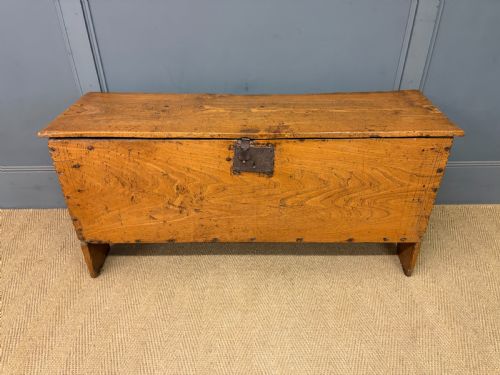
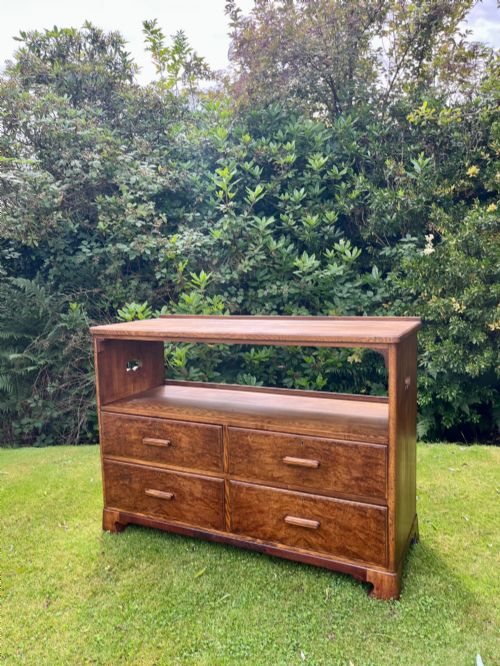
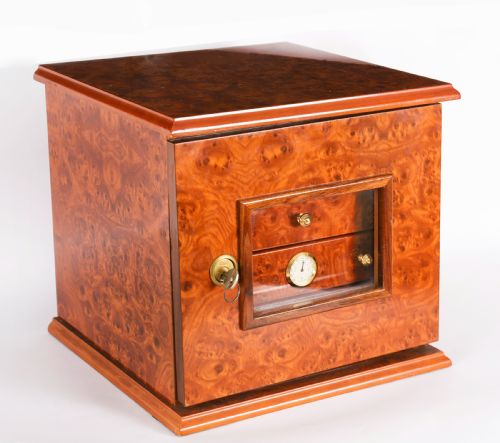
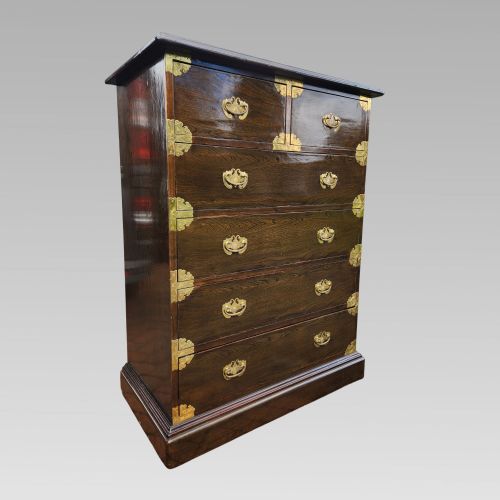


Vintage Elm Storage Chest
A vintage elm storage chest brings warmth and character to a room, offering practical containment with the distinct grain of timber.
Vintage Elm Storage Chest
When you search for a vintage elm storage chest, you encounter a wide variety of forms spanning centuries of domestic and utilitarian craftsmanship. These pieces range from eighteenth-century coffers and blanket boxes to nineteenth-century toolboxes, sideboards, and blanket chests.
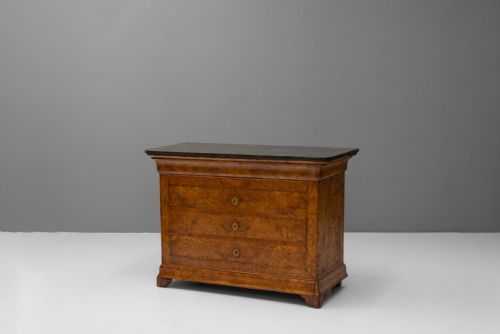
The version you are most likely to meet on this page is a nineteenth-century example, often featuring brass or iron mounts and constructed from solid elm or burr elm. Regional traditions also appear, including Korean bandaji chests, Japanese tansu chests, and Chinese sideboards.
Design styles stretch across rustic country, Georgian vernacular, and Arts and Crafts aesthetics, alongside traditional Asian forms. Each object serves the fundamental purpose of storage, whether for bedding, tools, documents, or personal possessions.
How they were made
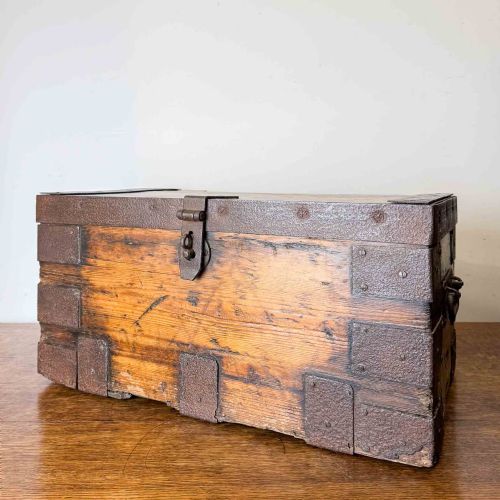
Makers utilised solid elm and burr elm for their strength and decorative grain patterns, frequently combining them with secondary woods like pine. Iron hinges, hasps, carrying hoops, and brass mounts provide structural reinforcement and secure closure for travelling and heavy domestic use.
Construction techniques rely on traditional joinery suited to heavy timber, resulting in robust carcasses designed to withstand generations of handling. Surface treatments range from polished finishes that highlight the natural figure of the wood to simpler, utilitarian coatings on workboxes and strongboxes.
Listings feature elm alongside brass and iron hardware, spanning periods from the eighteenth century through to the mid-twentieth century.
What varies in quality
The standard of a piece depends heavily on the selection of the timber, with highly figured burr elm or well-matched planks commanding greater visual interest. The subtlety of the joinery and the integrity of the original hardware, such as brass locks and iron strapwork, also determine the tier of the piece.
Proportion and execution distinguish regional and period examples, from refined Georgian vernacular chests to robust carpenter's toolboxes. Pieces that retain their original mountings and untreated internal surfaces demonstrate higher fidelity to their original utilitarian purpose.
Whytock and Reid
The Vintage Elm Storage Chest Glossary
- Bandaji
- A traditional Korean storage chest featuring prominent front brass strapwork and hardware. These pieces typically store bedding and garments.
- Cofer
- A heavy wooden chest used for storing valuables or household goods before the widespread adoption of fitted wardrobes. They often feature robust boarded construction.
- Burr elm
- A growth deformity in elm trees that produces highly figured, swirling grain patterns prized by cabinet makers for decorative veneers and panels.
- Tansu
- A traditional Japanese mobile storage cabinet or chest built with integrated iron handles and framing for domestic organisation.
- Dough bin
- A specialised utilitarian wooden container with a sloped or flat lid, historically used for preparing bread dough in domestic kitchens.
Vintage Elm Storage Chest: Frequently Asked Questions
How do I clean a vintage elm storage chest?
Dust the timber regularly with a soft, dry cloth to prevent dirt accumulation in the grain. Avoid modern chemical polishes that can degrade the historic finish.
Apply a traditional beeswax sparingly if the wood appears dry, buffing gently to maintain a natural lustre.
Where should I place a storage chest in my home?
Position the chest away from direct heat sources and strong sunlight to prevent the timber from warping or splitting. These pieces work well at the foot of a bed or as a coffee table.
Ensure the room maintains stable humidity levels to protect the antique wood and metal mountings.
How can I tell an eighteenth-century chest from a nineteenth-century one?
Examine the construction methods, hand-cut dovetails, and tool marks visible on the interior surfaces. Earlier pieces often display simpler, heavier board construction without modern fasteners.
Compare the timber patination and wear patterns around handles and keyholes to gauge the age of the piece.
What were strongboxes and toolboxes used for originally?
Tradesmen and travellers utilised these robust chests to secure valuable tools, documents, and personal belongings during transit. The iron banding and locking mechanisms provided security.
Today, they serve as compact storage trunks or display objects that highlight utilitarian history.