


Meiji Period Chest
A meiji period chest brings the striking utility of Japanese traditional craftsmanship into a room, offering robust storage built from timber, iron, and lacquer.
Meiji Period Chest
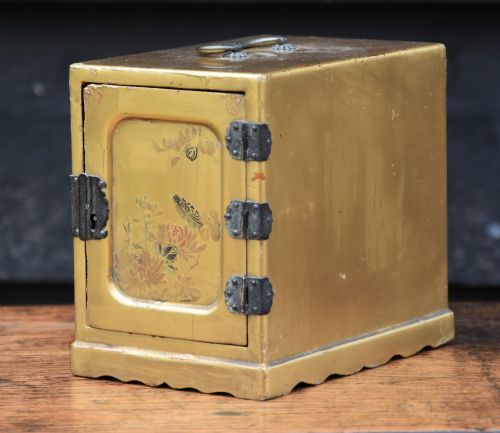
When you search for a meiji period chest, you encounter a wide variety of functional Japanese storage forms originating primarily from the nineteenth century and the early decades of the twentieth century. These pieces range from substantial merchant and ship's tansu to smaller table cabinets and jewellery boxes designed for specific domestic uses.
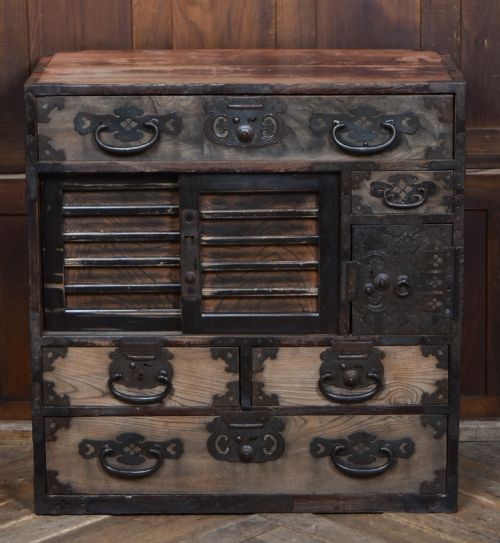
The version you are most likely to meet on this page is the wooden tansu chest, often constructed from cedar or keyaki wood and fitted with iron hardware. These traditional pieces reflect the diverse regional styles and practical storage needs of historical Japan, encompassing wheeled kuruma-dansu, step chests, and kitchen mizuya.
How they were made
These chests rely on traditional joinery executed in native timbers such as cedar, zelkova, and keyaki wood, providing a durable structural core. Artisans finished surfaces with rich lacquer or gold leaf, integrating natural materials with sturdy construction.
Functional iron and brass hardware, including strapwork, corner plates, and heavy-duty locks, reinforced the wooden frames. This metalwork was often forged by hand to secure the structure and withstand daily use.
Materials documented across the page include iron, brass, gold leaf, cedar, zelkova wood, and keyaki wood.
What varies in quality
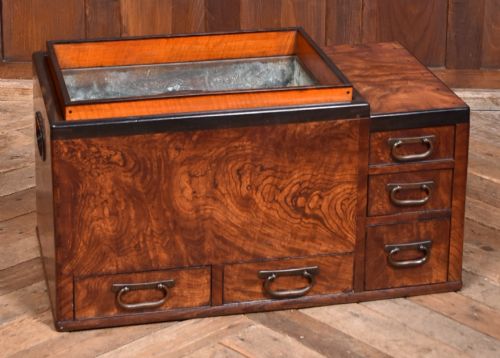
Quality reveals itself in the selection of timber and the precision of the joinery, distinguishing utilitarian storage from finer decorative examples. Denser hardwoods like keyaki and intricate lacquer finishes indicate a higher standard of workmanship.
The execution and weight of the metal fittings also separate pieces, with hand-forged iron and detailed bronze animal decoration marking superior production. The overall harmony of proportions and the preservation of original surfaces guide the distinction across the range.
The Meiji Period Chest Glossary
- Tansu
- A traditional Japanese mobile chest or cabinet used for storage. These pieces were built for specific domestic or commercial purposes, ranging from clothing storage to merchant bookkeeping.
- Keyaki
- Japanese zelkova wood, prized for its dense grain and durability. It served as a primary timber for high-quality merchant chests and structural elements.
- Lacquer
- A durable, glossy finish applied to wooden surfaces using refined tree sap. It provided both protection and a deep decorative sheen, often enhanced with gold leaf.
- Kuruma-Dansu
- A wheeled storage chest designed for mobility. The integrated wheels allowed heavy goods to be moved quickly during fires or emergencies.
- Mizuya
- A traditional Japanese kitchen storage cabinet. These large pieces organised utensils, dry goods, and tableware in domestic settings.
Meiji Period Chest: Frequently Asked Questions
What is a tansu chest?
A tansu is a traditional Japanese mobile storage cabinet built for domestic or commercial use. These chests were designed to organise clothing, documents, and valuables.
They utilise native timbers and robust iron hardware, reflecting the practical needs of historical Japanese households and merchants.
How do I use a meiji chest at home?
These chests function well as living room storage cabinets, bedside tables, or display surfaces for smaller objects. Their drawers and compartments accommodate modern household items while adding historical character.
Placing them away from direct heat sources helps preserve the timber, lacquer, and original ironwork over time.
What woods were used for these chests?
Cabinetmakers primarily used native Japanese timbers such as cedar, zelkova, and keyaki wood. These woods provided the structural strength needed for heavy daily use.
Finer pieces often feature dense grain patterns in the keyaki timber, complemented by contrasting iron or brass fittings.