


Vintage Japanese Tansu
These vintage japanese tansu pieces are traditional storage cabinets that bring enduring craftsmanship and versatile utility to any room.
Vintage Japanese Tansu
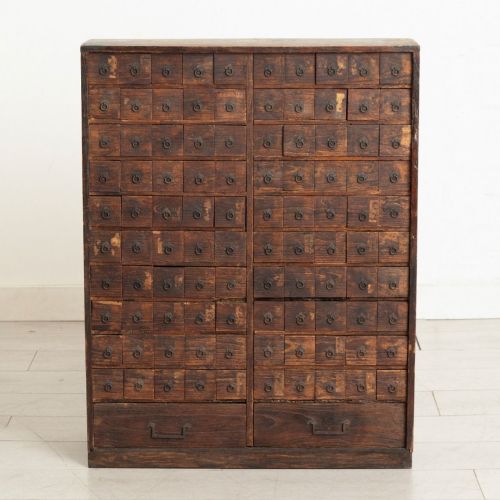
A vintage japanese tansu is a traditional storage cabinet designed for domestic use, merchandising, or travel across various historical eras. Buyers searching for vintage japanese tansu encounter forms ranging from simple chests of drawers to specialised apothecary banks and kitchen storage units.
The pieces on this page span the nineteenth century through the early twentieth century, including items from the Meiji and Taisho periods. The standard version met here is the classic timber chest featuring multiple drawers and heavy metal hardware.
Mizuya kitchen tansu and wheeled kuruma-dansu represent the more specialised functional variants that survive today. Each form reflects the specific domestic or commercial requirements of its original Japanese setting.
Materials and construction
Cabinetmakers utilised indigenous timbers such as elm, paulownia wood, cedar, cypress, and keyaki to build these robust storage pieces. These woods provided both structural stability and distinctive grain patterns suited for daily use.
Iron and wrought iron fittings reinforced the corners and drawers, providing durability alongside visual contrast against the timber surfaces. Lacquer finishes were also applied to protect the wood and enhance the appearance of the cabinets.
Some chests came equipped with wheels so owners could roll their entire worldly wealth out the door during a sudden fire.
Factors that distinguish quality
The choice of primary timber heavily influences the character of a piece, with dense hardwoods like elm and keyaki offering superior weight and resilience compared to softer woods. Finer examples display meticulous joinery that holds the heavy structure together without reliance on modern adhesives.
The elaboration and weight of the iron hardware separate standard utility chests from finer merchant or wheeled variants. Original forged iron mounts and well-preserved surface finishes elevate the overall integrity of the piece.
The Vintage Japanese Tansu Glossary
- Tansu
- A traditional Japanese mobile storage chest or cabinet used for various domestic and commercial purposes. These pieces are renowned for their robust construction and heavy metal hardware.
- Mizuya
- A traditional Japanese kitchen tansu used for storing food, utensils, and dining ware. These cabinets typically feature sliding doors and multiple small drawers.
- Keyaki
- Japanese zelkova wood, prized for its strength and prominent grain patterns. Makers utilised this dense hardwood for high-status merchant chests and premium cabinetry.
- Meiji Period
- The era of Japanese history lasting from eighteen sixty-eight to nineteen twelve, marked by significant cultural and industrial shifts. Pieces from this time combine traditional joinery with evolving decorative tastes.
Vintage Japanese Tansu: Frequently Asked Questions
What is a tansu chest?
A tansu chest is a traditional Japanese mobile storage cabinet built for domestic use, travel, or trade. These pieces feature robust timber construction and heavy iron hardware.
Craftsmen designed them to house clothing, documents, and household goods while withstanding the demands of daily life.
How were tansu cabinets used?
Original owners utilised these cabinets for organising household possessions, kitchenware, or merchant goods depending on the specific form. Apothecary versions held dried herbs and medicines in numerous small drawers.
Specialised variants like wheeled chests allowed families to quickly move valuables during emergencies.
Where should I place a tansu in my home?
These cabinets function well as standalone storage pieces in living rooms, hallways, or bedrooms. Their strong horizontal lines and dark metal fittings complement both modern and traditional interiors.
Ensure the placement allows adequate clearance to appreciate the heavy hardware and timber grain.
How do I identify the period of a tansu?
Dating relies on observing construction techniques, timber choices, and stylistic traits associated with the Edo, Meiji, or Taisho eras. Nineteenth-century examples often display hand-forged ironwork and dense native hardwoods.
Later pieces from the early twentieth century may incorporate slightly different manufacturing methods while retaining traditional forms.