



Japanese Pottery with Figures
Japanese pottery with figures brings together expressive ceramic forms and detailed figurative work from the Meiji and Taisho periods.
Japanese Pottery with Figures
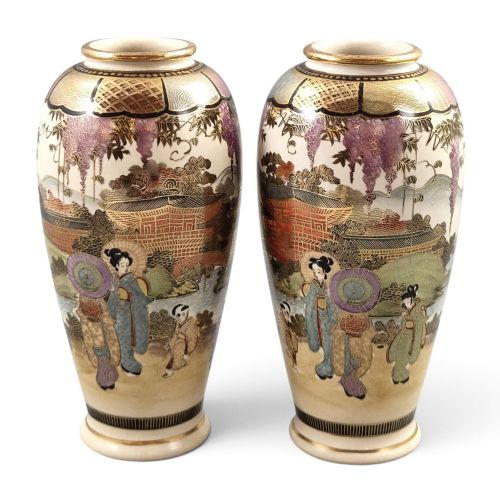
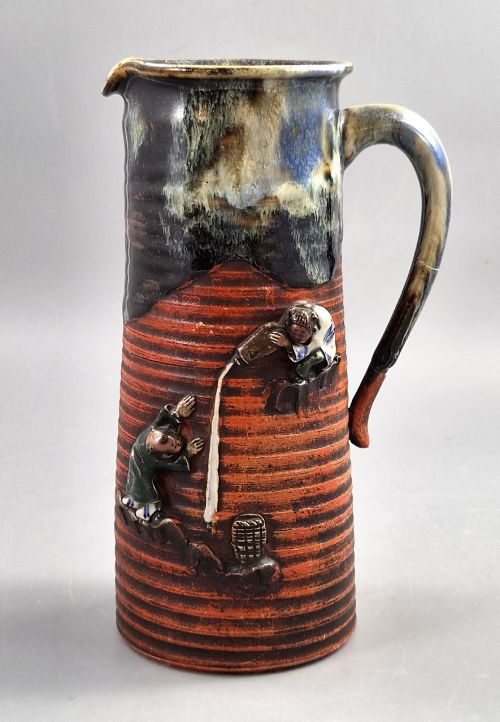
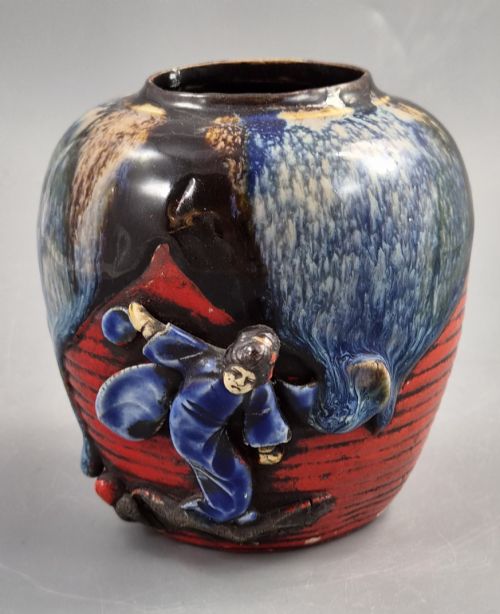
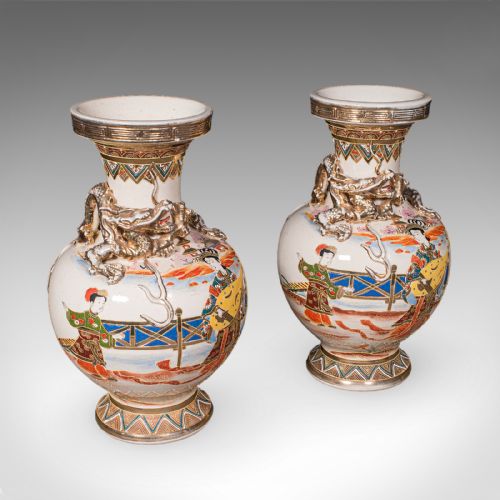
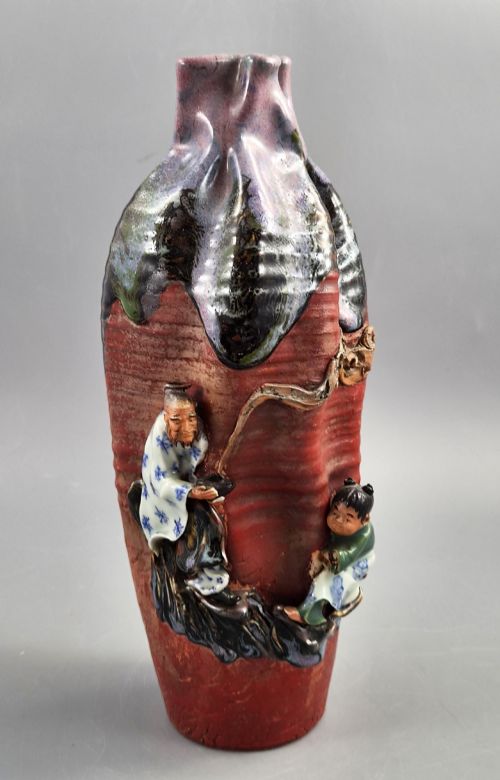
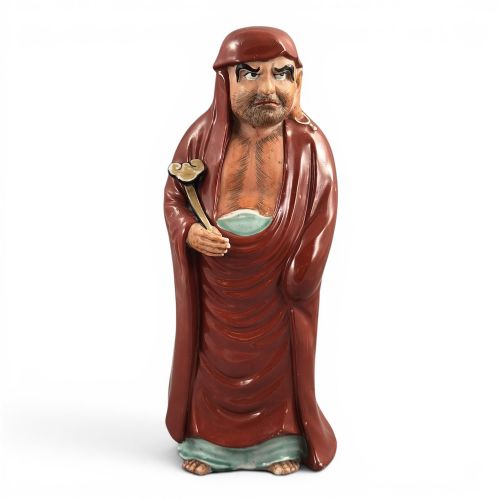
Japanese pottery with figures encompasses a diverse selection of decorative vases, pitchers, bowls, and mugs originating from the late nineteenth and early twentieth centuries. These pieces frequently showcase traditional figures such as women, children, sages, and arhats modelled in high relief or painted with intricate enamels.
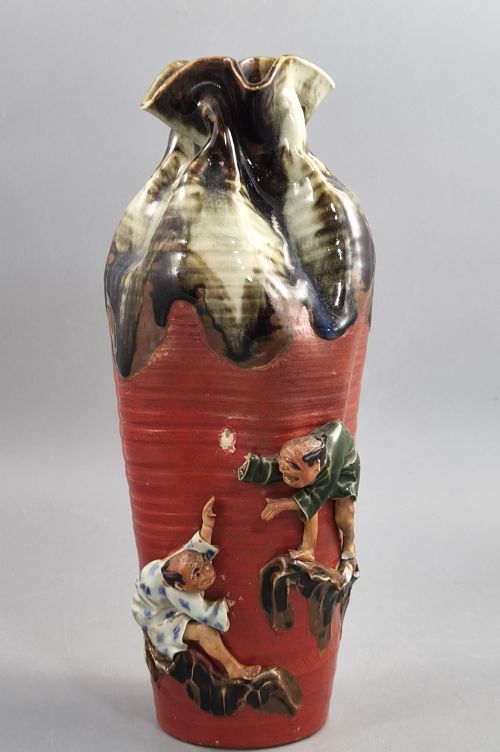
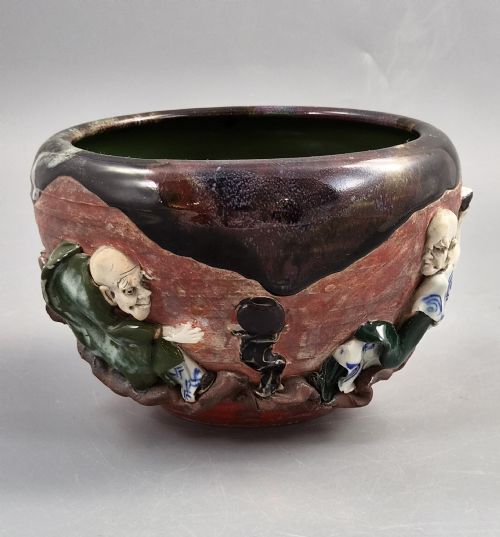
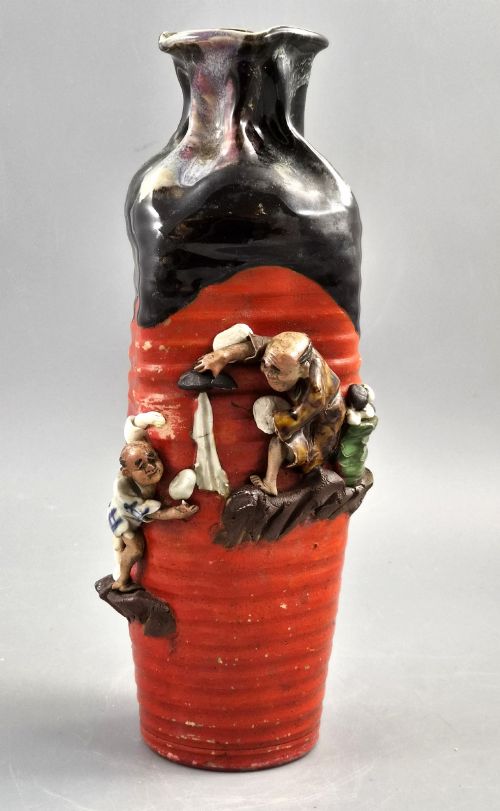
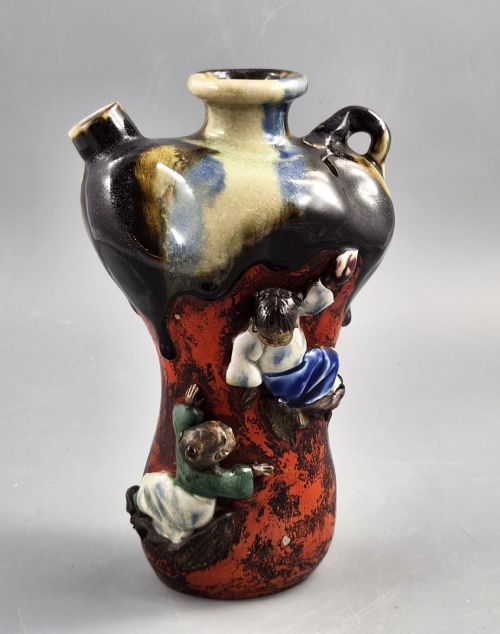
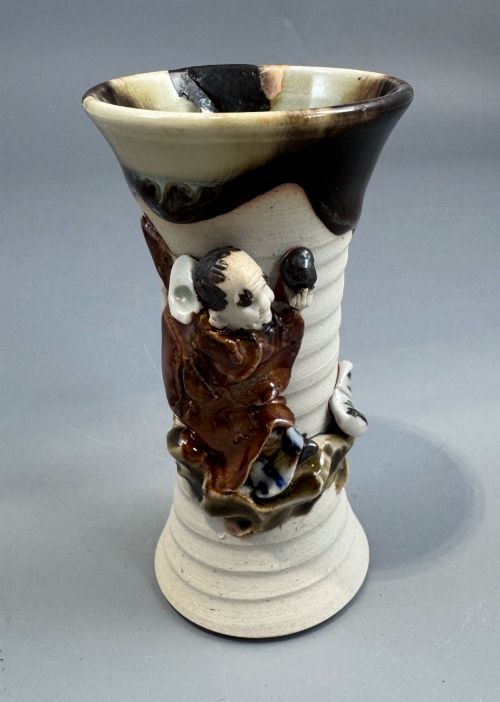
Buyers will frequently encounter Satsuma ware with moriage court scenes and Sumida Gawa pieces featuring applied figures climbing across textured surfaces. Such works capture a distinct decorative shift during the Meiji and Taisho periods, combining utilitarian ceramic forms with narrative scenes.
Distinctions in quality
Quality in these ceramics rests upon the definition and execution of the figurative modelling, particularly in applied Sumida Gawa figures and painted Satsuma court scenes. Crisp details in the faces and garments distinguish superior works from simpler production.
The complexity of the glaze work and the precision of the enamel and gold leaf application also determine the standing of a piece. Signed works by recognised makers demonstrate a higher level of individual artistry than unsigned output.
Listings feature earthenware, stoneware, and terracotta bodies finished with oxblood glazes, enamel, and gold leaf.
Shozan·Inoue Ryosai Workshop·Hiroshi
The Japanese Pottery with Figures Glossary
- Satsuma
- A type of Japanese earthenware originating from Satsuma Province, traditionally characterised by a crackled ivory glaze and elaborate polychrome and gilt decoration depicting figures and court scenes.
- Sumida Gawa
- A style of Japanese pottery originating near Tokyo, noted for heavily textured drip glazes and distinctive applied clay figures climbing across the vessel walls.
- Moriage
- A technique of applying slip in raised dots, lines, or motifs to create a textured, three-dimensional surface decoration on ceramics.
- Rakan
- Depictions of enlightened followers of Buddha, frequently appearing as distinct sculptural figures on Meiji period pottery.
- Sennin
- Taoist immortals often represented in traditional Japanese art and ceramic sculpture with characteristic attributes.
- Karako
- Traditional Chinese depictions of children playing, frequently used as a decorative motif in Japanese ceramic design.
Japanese Pottery with Figures: Frequently Asked Questions
What periods do these pieces come from?
The pieces span the Meiji and Taisho periods, stretching from the late nineteenth century into the early twentieth century. Victorian date categories also appear in descriptions for items produced during the late Meiji era.
Production methods from these decades relied on traditional hand-forming combined with increasingly detailed decorative techniques for export and domestic markets.
How are Sumida Gawa pieces recognised?
Sumida Gawa ceramics are identified by their heavy, melting drip glazes and rough, textured surfaces. Applied figures such as sages, children, and rakan climb directly onto the exterior of vases, mugs, and brush washers.
Many of these vessels bear signatures or seals from makers associated with the style, such as Koko and Ryosai.
What subjects appear on Satsuma ware?
Satsuma vases and bowls frequently display painted court figures, women, and children rendered in intricate enamel and gold leaf. Moriage decoration adds raised textural elements to the robes and backgrounds of the scenes.
These figurative compositions often draw on traditional folklore, historical narratives, and daily life in Japan.
Where should signatures be located?
Signatures on these ceramics generally appear on the base, either painted in enamel or incised directly into the clay body. Some pieces feature signature plaques or impressed seals corresponding to specific workshops.
Not all vessels carry a signature, as many export pieces relied solely on general Satsuma or maker markings.