
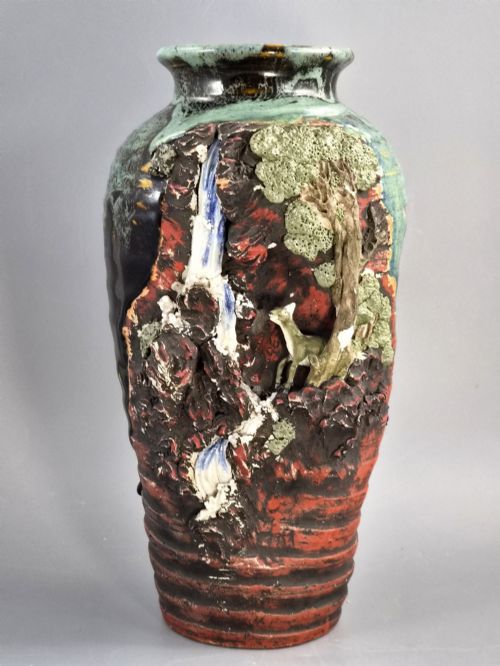
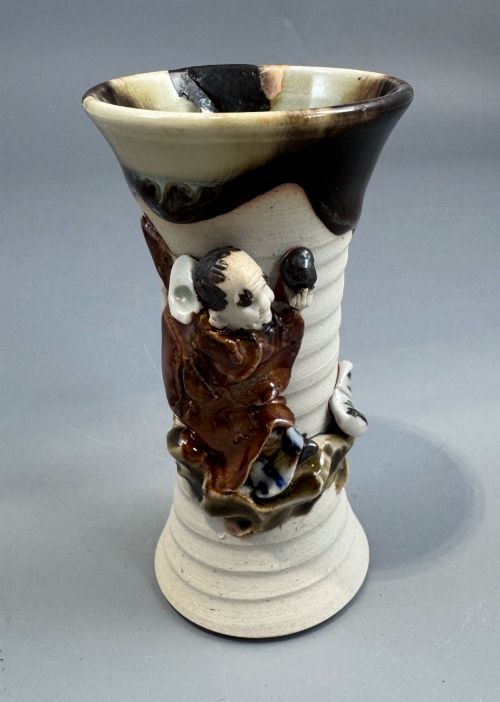


Oriental Relief Pottery Vase
These oriental relief pottery vase examples bring tactile Japanese ceramic artistry to any room.
Oriental Relief Pottery Vase
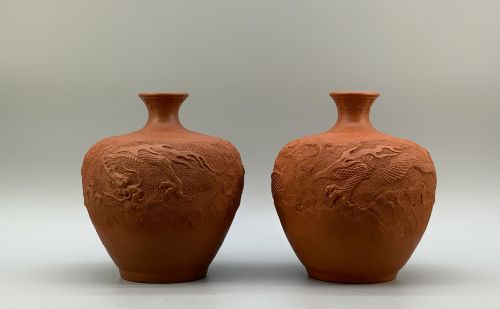
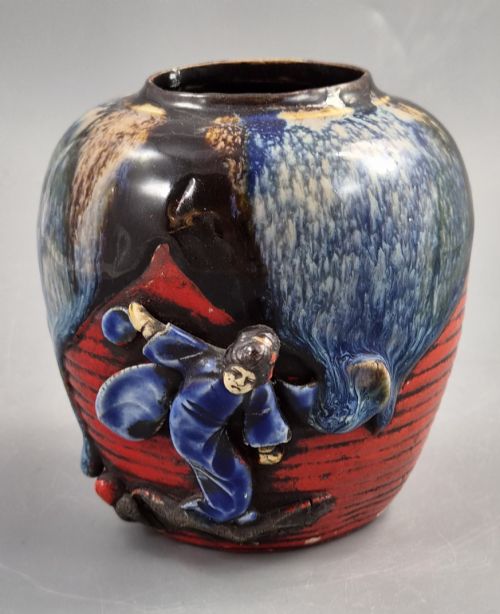
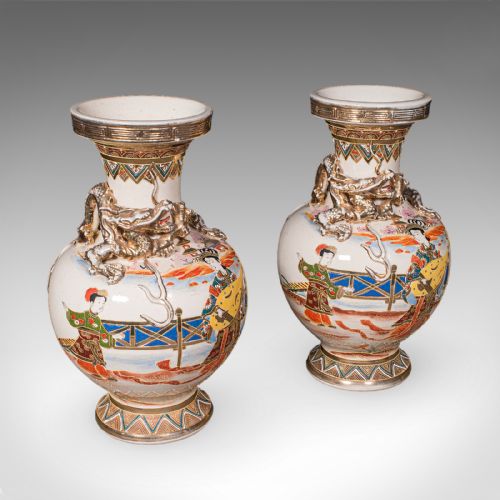
When you search for an oriental relief pottery vase, you encounter Japanese ceramic vessels defined by three-dimensional decoration. These pieces span the Meiji, Taisho, and Showa periods, alongside Victorian influences.
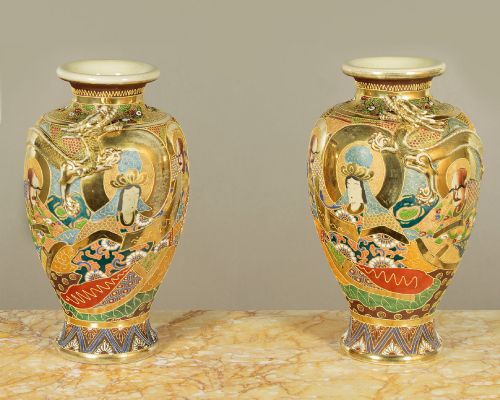
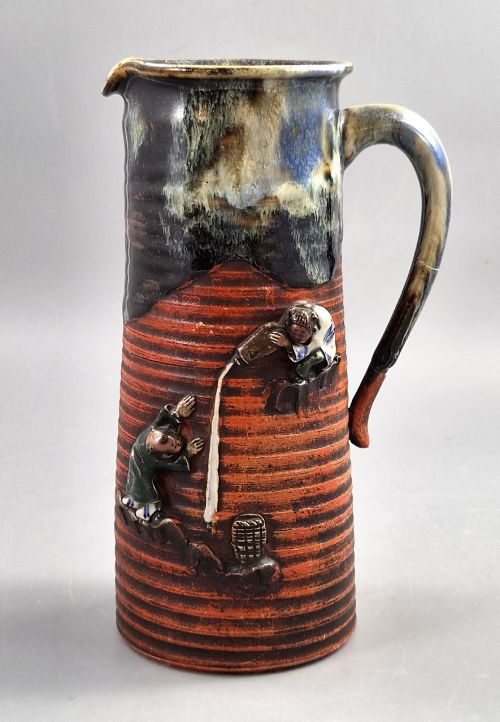
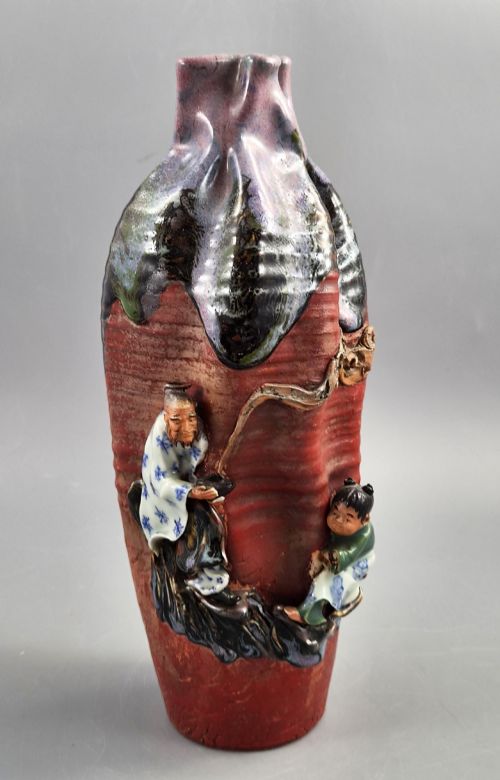
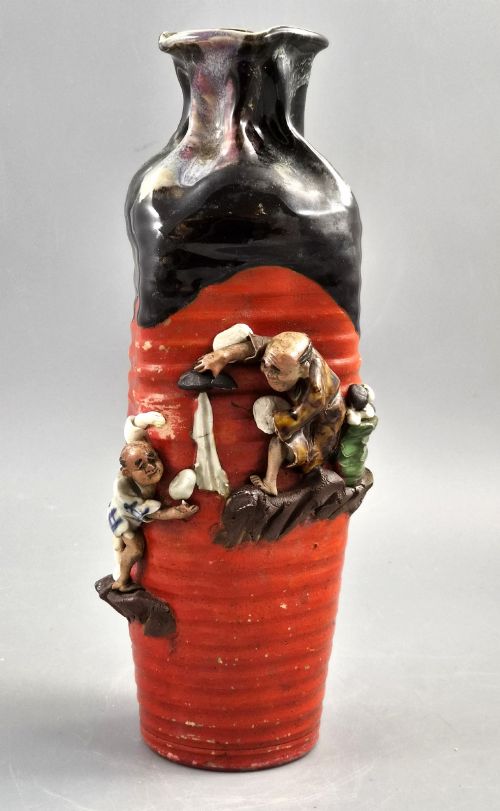
The selections on this page concentrate on distinct styles, notably Sumida Gawa and Satsuma wares. You will frequently find pitchers, jugs, and tall baluster vases bearing sculptural figures.
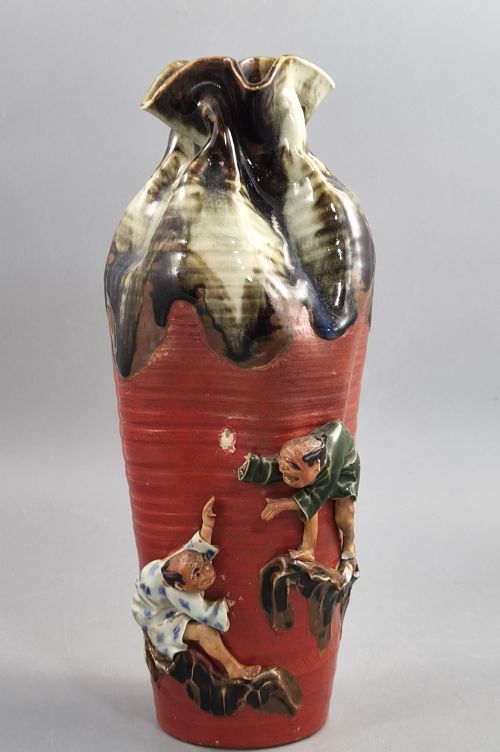
Many examples showcase applied elements such as sages, dragons, and figures climbing across textured surfaces. Tokoname red clay and glazed ceramic forms also appear within these listings.
How they were made
Potters utilised earthenware, terracotta, and stoneware as the foundation for these vessels. Artisans then applied sculptural motifs directly to the body before firing.
Techniques involved rich glaze treatments, including flambe, oxblood, and lavender effects. Touches of enamel and gold leaf often complete the decorated surfaces.
Listings feature earthenware, stoneware, and terracotta bodies finished with flambe, oxblood, and lavender glazes.
What varies in quality
The definition and execution of the applied figures set individual pieces apart. Sculptural elements rendered with sharp detail and expressive posture indicate superior craftsmanship.
Glaze control and depth distinguish standard production from exceptional examples. Successful flambe and oxblood finishes create dynamic visual movement across the ceramic body.
Inoue Ryosai·Ban-ni·Hiroshi
The Oriental Relief Pottery Vase Glossary
- Sumida Gawa
- A style of Japanese pottery characterised by heavy glazes and modelled figures applied in high relief. These pieces often originate from the banks of the Sumida River near Tokyo.
- Satsuma
- A type of earthenware originating from Kagoshima province, known for its ivory crackle glaze and ornate enamelled decoration. Many Satsuma vases feature elaborate figurative scenes.
- Flambe glaze
- A streaked or mottled metallic glaze that produces unpredictable, variegated colour effects during firing. This technique creates dramatic transitions of blue, red, and purple.
- Baluster
- A vase form with a rounded body that tapers toward a narrow neck and flares at the rim. This traditional silhouette provides a stable base for heavy relief work.
- Tokoname
- A historic centre of ceramic production in Japan renowned for its unglazed or natural clay vessels. Tokoname pieces frequently utilise red clay bodies.
Oriental Relief Pottery Vase: Frequently Asked Questions
What is Sumida Gawa pottery?
Sumida Gawa pottery refers to Japanese art pottery featuring heavy, drippy glazes and distinctly modelled figures applied in high relief. These pieces emerged around Tokyo during the late nineteenth and early twentieth centuries.
Potters moulded figures like sages, children, and animals directly onto the body of the vase or pitcher. The resulting works offer a tactile, sculptural quality quite distinct from smooth porcelain.
How do I date these vases?
Dating relies on stylistic markers, materials, and signatures associated with specific Japanese periods such as Meiji and Taisho. Many pieces span the transition from the late nineteenth century into the 1920s and 1930s.
Examining the base, glaze type, and signature helps narrow the timeframe. Victorian influence or specific regional styles also provide clues to the era of production.
Where were these pieces made?
These ceramics originated in Japan, with specific styles linked to traditional pottery regions and urban workshops. Sumida Gawa pieces were produced near Tokyo, while Tokoname is known for its red clay.
Workshops in these areas employed local clays and specialised glazing techniques. Master potters often signed their creations on the base or body.
How should I display them?
Display these textured vessels where adequate lighting can catch the three-dimensional relief and glaze variations. Placing them on sturdy surfaces allows viewers to appreciate the applied figures up close.
Keep them away from direct foot traffic to protect protruding elements like branches or sculpted limbs. Pairing them with minimal surroundings lets the complex surface work stand out.