
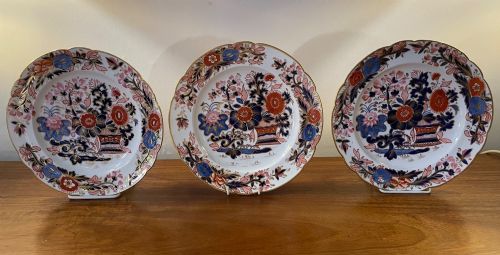
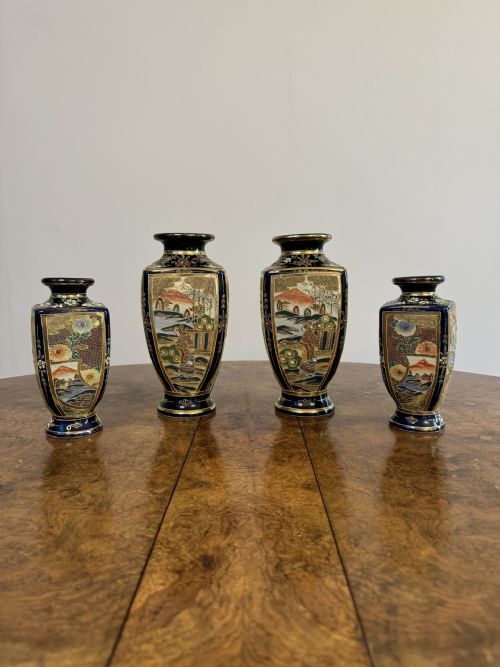


Japanese Pottery Set
When you search for a Japanese pottery set, you are looking at earthenware, porcelain, and stoneware vessels from the Meiji and Taisho periods decorated with rich enamel, gold leaf, and gilding.
Japanese Pottery Set
A Japanese pottery set encompasses matched collections of vases, garnitures, bowls, and tea wares originating from the nineteenth and early twentieth centuries. When searching for a Japanese pottery set, buyers encounter diverse forms ranging from large decorative vases to delicate teacups and saucers housed in storage boxes.
The objects frequently reflect traditional Japanese aesthetics alongside influences from periods such as Meiji, Taisho, and Imari. Many surviving examples include multi-piece garnitures, sets of plates, and complete tea services designed for display or ceremonial use.
Materials and construction methods
Potters utilised clay bodies of earthenware, stoneware, and porcelain, shaping them by hand or wheel before applying various glazes. These foundational bases provided the strength required for intricate surface decoration.
Artisans applied coloured enamel, gold leaf, and delicate gilding over the fired surfaces, sometimes incorporating applied figures to create textured relief. Firing techniques fixed these pigments permanently, yielding durable yet ornate domestic and decorative items.
Tiny applied sage figures cling so persistently to some cups that one wonders how they survived a century of tea drinking.
Distinctions in craftsmanship and design
Superior examples of a Japanese pottery set display precise hand-painted detail in the enamel work and generous application of gold leaf without blurring. Lesser pieces often exhibit simpler, repetitive patterns with less refinement in the glaze finish.
The presence of original storage boxes, matched garniture counts, and documented signatures from notable makers elevate the standing of a set. Structural integrity of applied elements, such as sage figures, also dictates the desirability among collectors.
Ishiguro Kōko·Kinkozan·Taniguchi
The Japanese Pottery Set Glossary
- Satsuma ware
- A type of Japanese earthenware featuring a pale, ivory-coloured crackle glaze decorated with polychrome enamels and gold. It became particularly popular for export during the Meiji period.
- Imari
- A style of Japanese porcelain named after the port from which it was shipped, typically characterised by a palette of underglaze blue, iron red, and gold. This style heavily influenced European ceramic production.
- Garniture
- A set of matched ceramic vases or vessels designed to be displayed together on a mantelpiece or cabinet. These groupings usually consist of three, four, or five pieces of varying heights.
- Kutani ware
- Japanese porcelain known for its vibrant, bold colour palette, often dominated by greens, blues, yellows, and purples. It frequently depicts pictorial scenes from nature and mythology.
- Enameled
- Decorated with fired glass-based colours fused to the ceramic surface. This technique allows for brilliant hues that resist fading over time.
Japanese Pottery Set: Frequently Asked Questions
Were these tea sets used daily?
Many tea sets and decorative vessels were created specifically for the export market and Western display cabinets. Their survival with minimal wear suggests they served decorative roles rather than everyday kitchen duties.
Handling should remain minimal to preserve the delicate gilding and enamel surfaces. Use both hands when moving larger vases or garnitures.
How can I tell Satsuma from Imari?
Satsuma ware utilises an earthenware body covered in a fine crackle glaze, usually painted with complex figures and heavy gold. It feels softer and warmer to the touch than porcelain.
Imari ware is true porcelain, ringing slightly when tapped, and relies on a distinct palette of deep blue, burnt orange, and gold against a white background.
What is a garniture set?
A garniture is a matched group of three to five vases intended to sit in a line on a mantelpiece or sideboard. The pieces share identical decorative themes but vary in height and proportion.
Keeping a complete garniture together is important for historical and decorative integrity. Dispersed pieces lose the visual balance intended by the maker.