


Japanese Painted Porcelain
Japanese painted porcelain brings together centuries of skilled ceramic traditions, offering collectors vibrant hand-painted wares designed for display and daily use.
Japanese Painted Porcelain
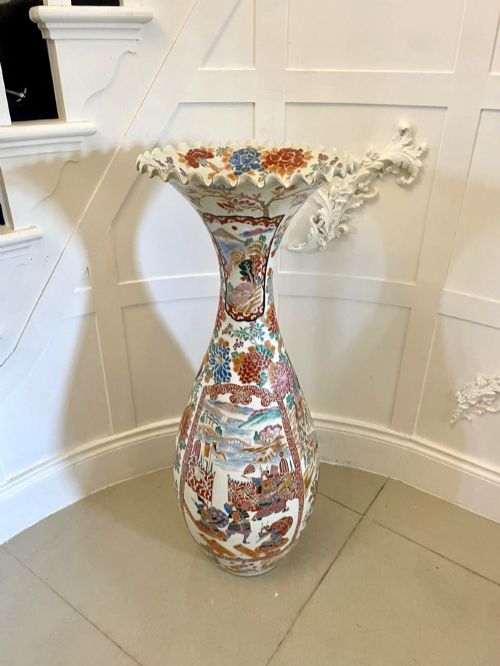
Japanese painted porcelain encompasses a wide variety of domestic vessels and display items originating from traditional periods, including the Meiji, Taisho, and Edo eras. Buyers exploring this category encounter functional items like teapots, dishes, and lidded jars alongside large decorative chargers, floor-standing vases, and incense burners.
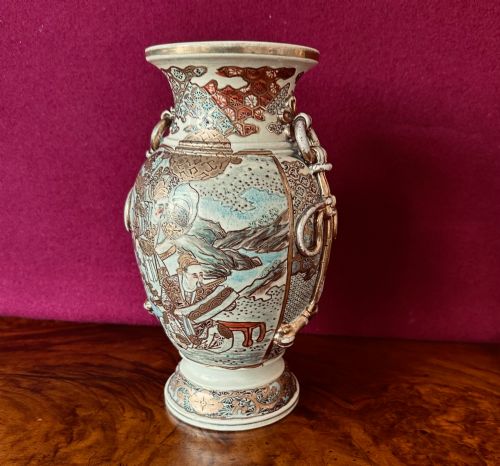
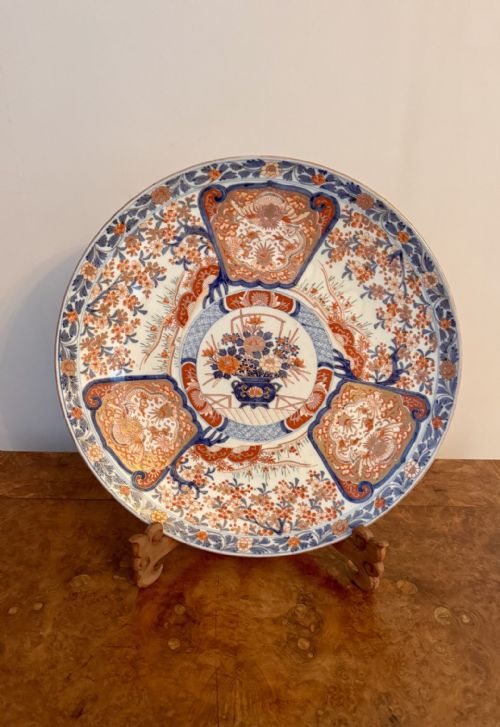
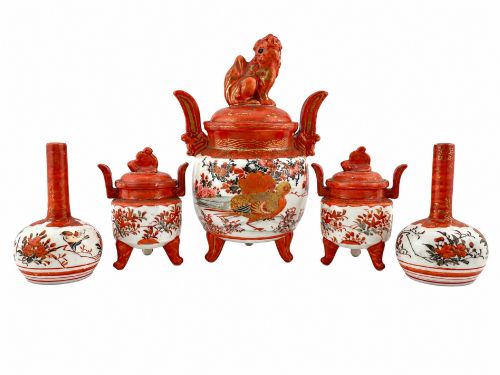
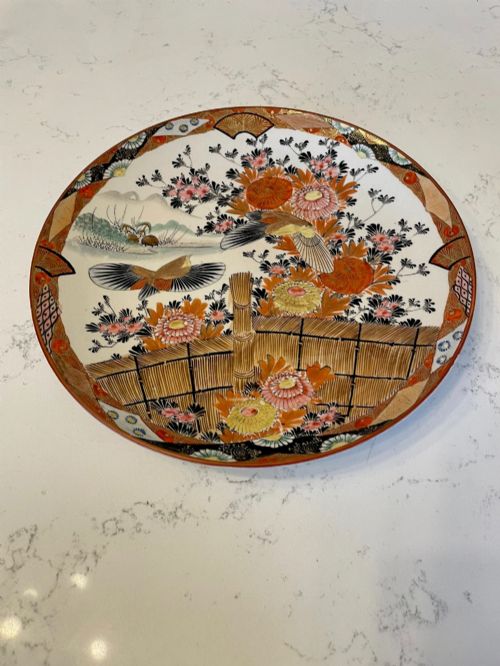
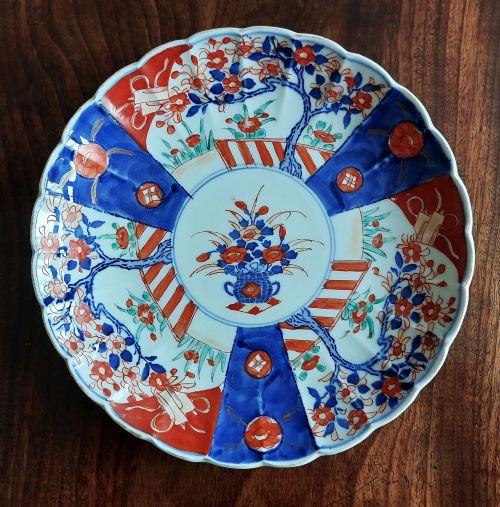
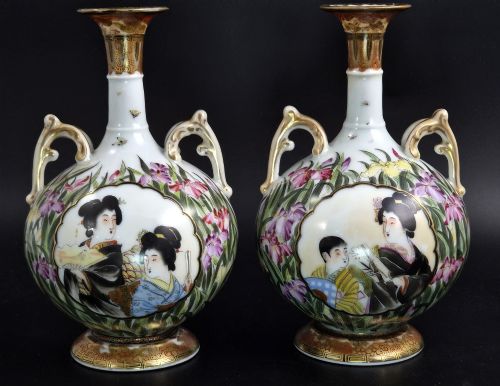
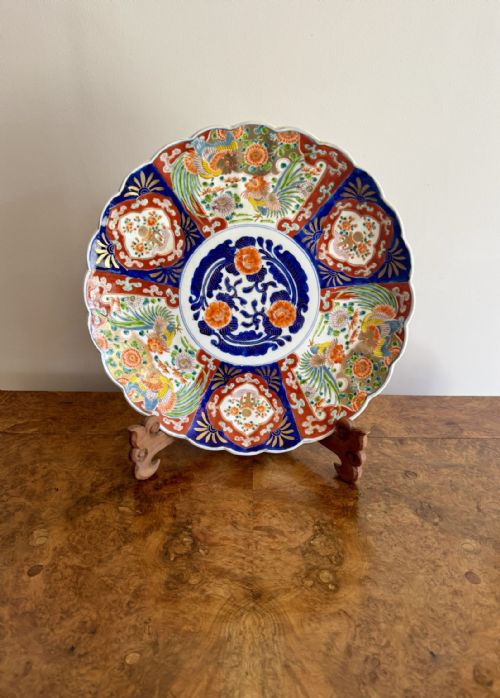
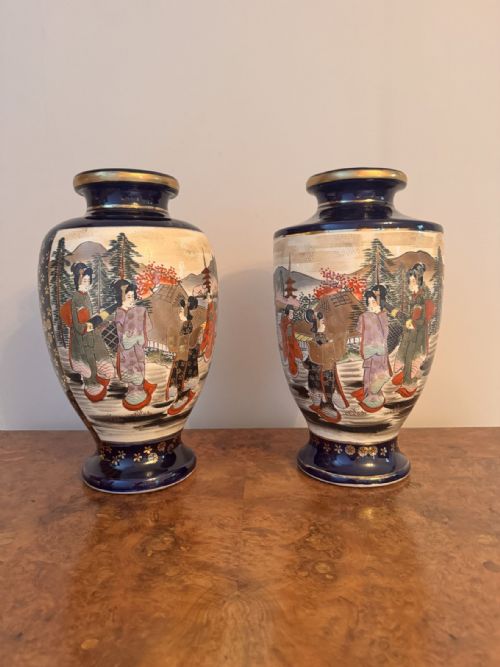
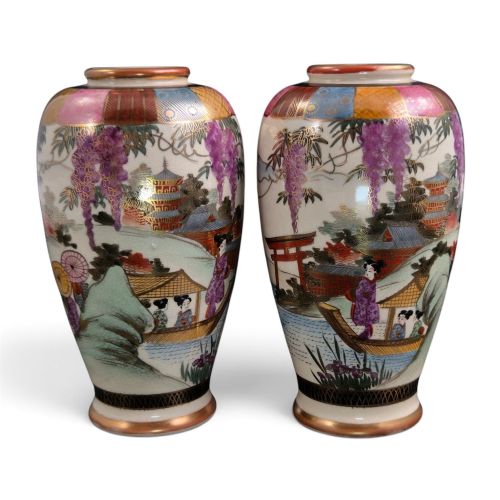
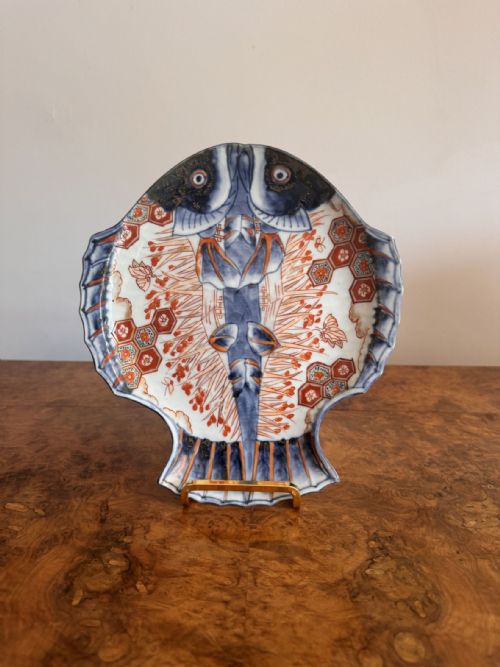
The most common forms found on this page are Imari plates and bowls, alongside Kutani and Satsuma wares produced across the late nineteenth and early twentieth centuries. These pieces reflect specific regional kilns and stylistic shifts, ranging from vibrant blue and iron-red Imari patterns to finely detailed Satsuma garnitures.
Materials and production techniques
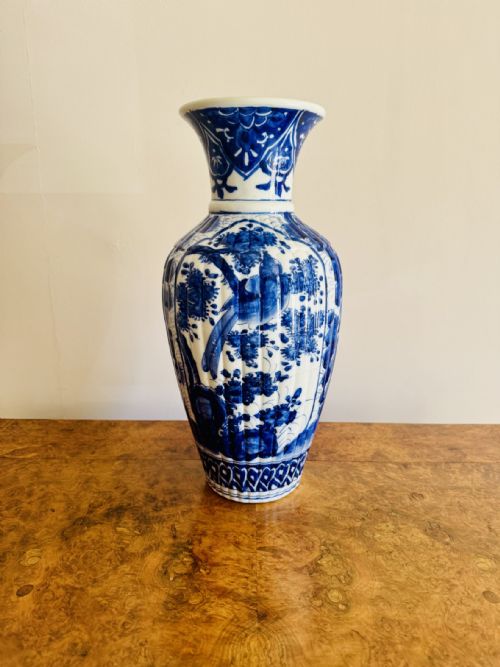
Makers shaped refined white porcelain clay into vessels before applying cobalt underglaze pigments for deep blue designs. Overglaze enamels in iron red, green, and other colours were then painted on top, frequently highlighted with gold leaf and gilt detailing.
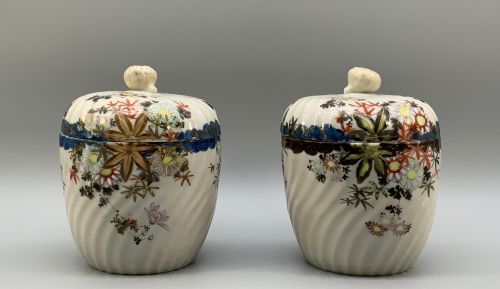
Kiln firing fused these mineral pigments to the glaze surface, creating durable finishes on items such as Koro incense burners, coffee sets, and ginger jars. Certain pieces incorporated earthenware bodies alongside porcelain, particularly within Satsuma productions.
Materials recorded across the inventory include cobalt underglaze, gold leaf, enamel, and gilt applied to porcelain and earthenware.
Distinctions in quality and execution
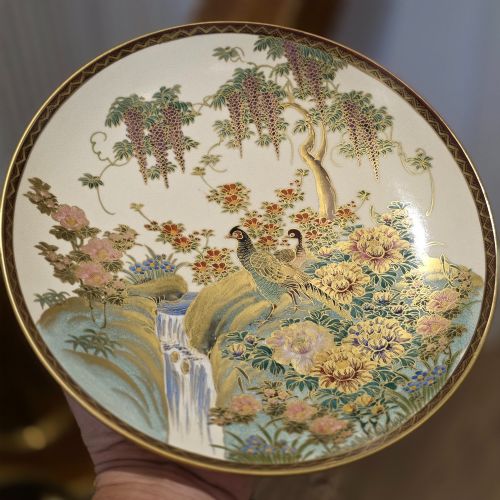
Quality varies significantly in the precision of the brushwork and the complexity of the painted composition, with finer pieces displaying meticulous detail in motifs such as exotic birds, floral arrangements, and landscapes. The application of gold leaf and the crispness of cobalt underglaze separation distinguish superior items from standard commercial wares.
The architectural form and structural integrity of larger objects, such as floor-standing vases, jardinières, and scalloped-edge bowls, influence their standing. Pieces retaining original matching pairs, fitted lids, or boxes demonstrate higher degrees of preservation.
Ginshōtei Gyokushi·Noritake
The Japanese Painted Porcelain Glossary
- Imari
- A style of Japanese porcelain featuring cobalt underglaze blue and iron-red enamel, often accented with gold. This aesthetic gained immense popularity in Europe during the export trade.
- Kutani
- A style of Japanese porcelain known for bold polychrome enamel designs, typically featuring rich reds and greens. Kutani pieces often depict figures, landscapes, and natural motifs.
- Satsuma
- A type of Japanese earthenware characterised by a crackle-glaze finish and intricate hand-painted polychrome decoration. Satsuma wares frequently incorporate raised gold leaf detailing.
- Koro
- A traditional Japanese incense burner, usually supported on three or more feet and fitted with a pierced cover. These vessels appear in porcelain and earthenware forms.
- Charger
- A large decorative plate intended for display on a wall or sideboard rather than for serving food. These pieces frequently showcase elaborate painted compositions.
Japanese Painted Porcelain: Frequently Asked Questions
What is Japanese Imari porcelain?
Japanese Imari porcelain refers to wares decorated in distinct palettes of cobalt blue and iron-red, frequently enriched with gold leaf. These items were produced primarily for export and domestic markets from the seventeenth century onward.
Collectors prize Imari for its striking contrast and dense geometric or floral patterns. Pieces range from small everyday dishes to massive floor-standing vases and chargers.
How do I identify Satsuma ware?
Satsuma ware is readily identified by its characteristic ivory-coloured crackle glaze and detailed polychrome enamel painting. Unlike traditional porcelain, Satsuma is typically formed from an earthenware body.
Many Satsuma pieces feature dense figural scenes, birds, and flowers outlined in raised gold. They commonly take the form of vases, garnitures, and table lamps.
Were these pieces used daily?
Many Japanese painted porcelain items, such as tea cups, teapots, and dinner service plates, were made for functional dining and drinking. Others, including large chargers, okimono figures, and incense burners, served purely decorative or ritualistic purposes.
Over time, functional items often transitioned into display pieces due to their intricate artistry and fragile nature. Surviving sets frequently show light wear consistent with careful handling.
How can I date a piece?
Dating Japanese porcelain involves examining stylistic markers, potting techniques, and historical periods such as the Meiji or Edo eras. Imari and Kutani pieces often reflect the aesthetic shifts of their specific decade of production.
Examining the glaze composition, foot ring construction, and any artist signatures provides further clues to age. Comparing pieces against well-documented archives helps narrow down the manufacturing era.