
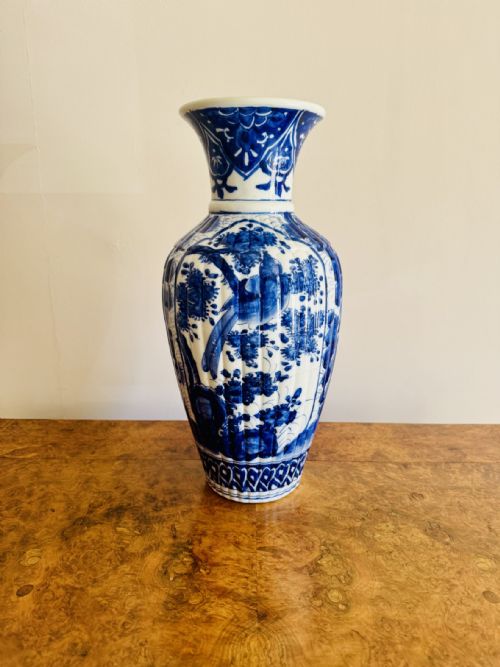


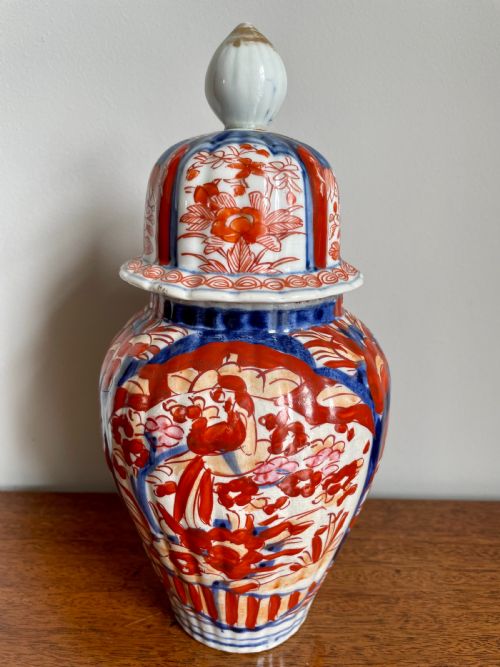
Japanese Blue White Jar
These Japanese blue white jar examples bring painted cobalt pigment on porcelain into domestic spaces, prized for centuries of ceramic tradition.
Japanese Blue White Jar
When you search for a japanese blue white jar, you encounter vessels shaped from porcelain across multiple periods. The selection spans the 17th century, 18th century, 19th century, and 1900 markers, taking forms such as lidded vases and jardinières.
The objects derive from distinct historical eras including the Edo period and Japanese Meiji period. Many pieces incorporate covers or function as large decorative containers with floral decoration or bamboo patterns.
Vessels also bridge cultures through European influences such as the Edwardian period or French interpretations. Collectors find both dedicated lidded vases and larger jardinières or fish-bowls meeting these criteria.
How they were made
Ceramic bodies are formed in porcelain and finished with a glaze or cobalt glaze. Artisans apply cobalt pigment to achieve the characteristic blue decoration beneath or within the surface layers.
Certain examples integrate enamel, gold leaf, hardwood, and brass components to augment the primary porcelain structure. Kiln work requires precise temperature control to fuse the cobalt pigment smoothly into the glaze.
Current listings feature porcelain material decorated with cobalt pigment, enamel, and gold leaf, spanning the 17th century to 1900.
What varies in quality
The clarity and depth of the cobalt pigment application distinguish finer examples from simpler production. Brushwork control across floral motifs and bamboo patterns demonstrates the skill of the individual workshop.
The preservation of original covers and integrated elements like hardwood or brass fittings influences the integrity of the piece. Porcelain bodies with minimal distortion and refined glaze consistency command greater appreciation.
Makuzu Kozan·Fukagawa
The Japanese Blue White Jar Glossary
- Cobalt pigment
- The metallic colourant used to paint blue designs beneath the glaze on porcelain. This material turns vibrant blue during high-temperature kiln firing.
- Arita
- A Japanese town renowned for early porcelain production and the creation of exported wares. Arita pieces often feature refined blue and white painting.
- Imari
- A style of Japanese export porcelain characterised by cobalt blue underglaze combined with iron red and gold highlights. It represents a major tradition in international trade.
- Jardiniere
- A large ornamental pot or bowl designed to hold plants or flowers. These ceramic vessels frequently display extensive floral or botanical decoration.
- Meiji period
- The era in Japanese history spanning from 1868 to 1912 marked by significant artistic output and international trade. Work from this time often combines traditional techniques with new stylistic influences.
Japanese Blue White Jar: Frequently Asked Questions
How were they used historically?
These vessels functioned as ornamental containers, display pieces, or receptacles for plants and flowers. Lidded versions protected their contents while adding symmetry to interior displays.
Larger jardinières accommodated growing plants or fish within domestic or courtyard settings. Their painted designs contributed to the aesthetic of elite interiors.
How do I care for porcelain?
Porcelain requires gentle dusting with a soft cloth to maintain the glazed surface. Avoid harsh chemical cleaners that might affect delicate enamel or gold leaf details.
Keep pieces away from sudden temperature shifts and unstable ledges. Secure any associated hardwood or brass elements during relocation.
How do I identify periods?
Period identification relies on examining the porcelain body, glaze characteristics, and painting style. Edo period pieces differ in brushwork and form from Meiji or 20th-century items.
Maker attributions and specific stylistic markers such as Imari or Arita traits offer further chronological clues. Comparative study of forms helps narrow down the production era.