





Japanese Moriage Ceramic Vase
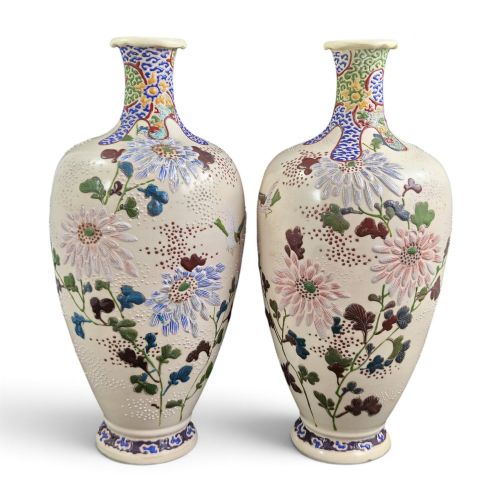
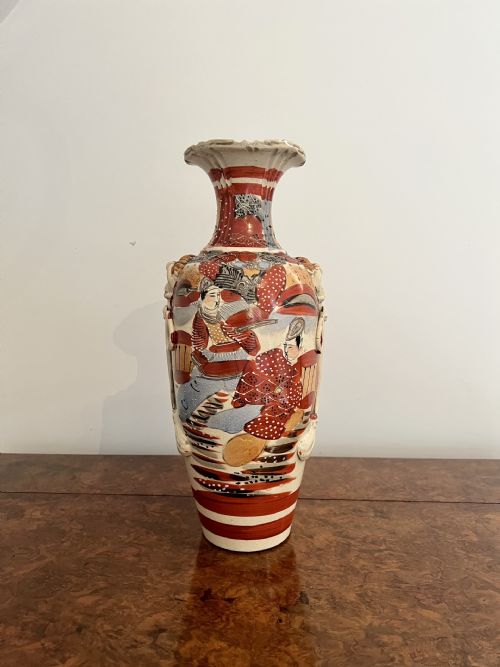
These japanese moriage ceramic vase examples bring intricate raised enamel work and gilt detailing straight into your interior.
Japanese Moriage Ceramic Vase
When you search for a japanese moriage ceramic vase, you are looking at ornate vessels adorned with distinct raised slip decoration. The examples on this page predominantly span the late nineteenth century and the Meiji period, featuring classic forms such as hexagonal bodies and decorative vases.
Most pieces you meet here belong to the Satsuma tradition, often displaying rich cobalt grounds, intricate court figures, and dense floral motifs. Alongside Satsuma, larger Kutani pieces with lion handles appear, demonstrating the diverse regional outputs of Japanese ceramics.
These decorative vessels serve as striking focal points in a room, combining traditional Japanese craftsmanship with Victorian-era collecting tastes. They range from cabinet-sized specimens to substantial pairs designed for prominent display.
How they were made
Makers shaped these earthenware and porcelain bodies by hand or on the wheel before applying base glazes. Artisans then built up the characteristic raised designs using thick slip or enamel paints, creating a tactile surface that stands proud of the ceramic body.
Gold leaf and gold gilt feature heavily across the surface decoration, outlining panels of figures, landscapes, and chrysanthemums. Kiln firing fixed these intricate layers of enamel and metal, resulting in the durable finishes seen on Meiji period pieces.
Japanese Moriage Ceramic Vase Retail Price Guide 2026
Typical asking prices for japanese moriage ceramic vase among the pieces listed under this phrase on Sellingantiques today, from the lower quarter to the upper quarter. They describe what is for sale here now, not the wider market.
Some larger Satsuma vases come with their own dedicated wooden stands, ensuring your mythical lions and court figures maintain a dignified posture.
What varies in quality
Quality in a japanese moriage ceramic vase rests on the precision and density of the raised enamel work. Superior examples display crisp, fine-lined moriage that maintains its definition without blurring into the surrounding glaze.
The application of gold leaf and gilt provides another clear distinction between tiers of production. Finer vessels exhibit meticulous hand-painting on panels depicting court figures or religious scenes, executed by skilled hands rather than rushed workshop output.
Nanzan mark
The Japanese Moriage Ceramic Vase Glossary
- Moriage
- A Japanese ceramic technique where slip is piped onto the surface to create raised decorative patterns. This method adds a tactile, three-dimensional quality to floral and figurative motifs.
- Satsuma
- A type of Japanese earthenware originating from the Satsuma province, typically characterised by a crackle-glaze ivory body. These pieces are frequently overpainted with elaborate enamel and gold designs.
- Kutani
- A style of Japanese porcelain and pottery known for bold painted designs and vibrant colour palettes. Kutani pieces often incorporate extensive gilt work alongside figurative and natural subjects.
- Meiji Period
- The era in Japanese history spanning from eighteen sixty-eight to nineteen twelve, marked by extensive international trade and artistic exchange. Ceramics from this time often show exceptional technical refinement.
Japanese Moriage Ceramic Vase: Frequently Asked Questions
What is a japanese moriage ceramic vase?
It is a decorative vessel featuring raised enamel work, where slip is piped onto the ceramic body to create textured, tactile designs. These pieces often incorporate gilt details and hand-painted panels.
Originating largely from the Meiji period, they reflect traditional Japanese ceramic artistry combined with intricate decorative techniques designed for export.
How do I identify Satsuma ware?
Satsuma ware is typically recognised by its fine crackle glaze over an ivory or cream-coloured earthenware body. The surfaces are then heavily decorated with enamel and gold gilt.
Many examples feature distinct scenes of court figures, landscapes, or chrysanthemums, often bearing artist or workshop marks on the base.
How should I display my vase?
Place your vase in a secure location away from direct sunlight and heavy traffic to protect the delicate enamel and gold gilt surfaces. Because many are decorative rather than functional, they do not require water.
Pairing them with a dedicated wooden stand, as seen with several larger examples, helps elevate the piece and showcases its base work.