


Japanese Metalwork Dish
These Japanese metalwork dish examples bring intricate Meiji period craftsmanship and rich iconography directly into modern interiors.
Japanese Metalwork Dish
A japanese metalwork dish encompasses decorative chargers, platters, trays, and bowls created in bronze, copper, brass, and iron. Most pieces found here originate from the late nineteenth century during the Meiji and Edo periods.
Makers focused on wide circular chargers and shallow vessels intended for display rather than dining. Common formats range from large wall-hanging chargers to footed trays and lidded bowls.
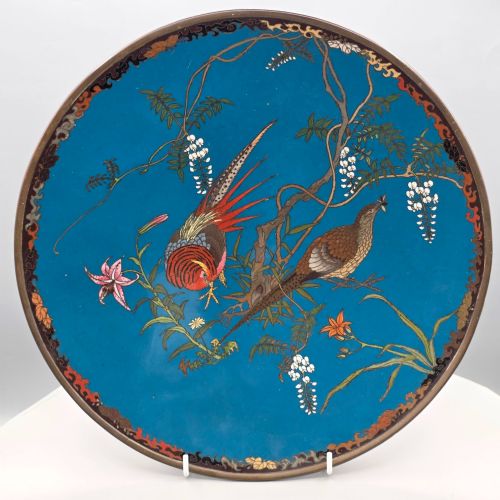
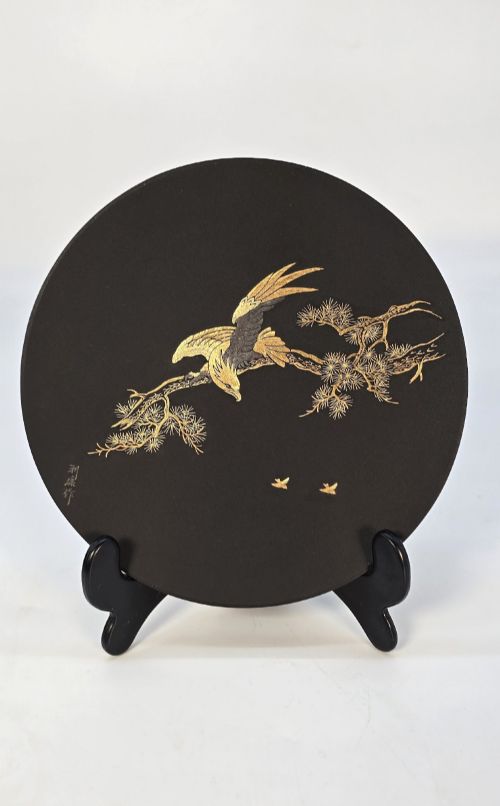
Surface decoration defines these objects, with naturalistic motifs such as birds, dragons, and floral arrangements dominating the forms. Collectors encounter both wire-based enamel work and mixed-metal inlay techniques across the selection.
Materials and construction methods
Cloisonne enamel stands out as a primary method, where thin metal wires are soldered onto a copper or brass base to create partitioned cells that receive coloured enamel pastes before firing and polishing.
Mixed-metal inlay techniques combine bronze, iron, and brass foundations with hammered applications of gold and silver. Artisans patinated the base metals to achieve dark, textured backgrounds that contrast sharply against bright metallic details.
Listings feature items spanning the Edo, Meiji, Taisho, and Showa periods.
Evaluating craftsmanship and detail
Quality rests on the precision of the wirework and the density of the enamel filling in cloisonne examples. Finer pieces display exceptionally thin, even wire grids and smooth surfaces free from pitting or cloudiness.
The complexity and depth of the iconography separate standard productions from masterworks. Pieces featuring intricate multi-layered imagery, such as dragons with gold and silver inlay or distinct artist signatures, demonstrate superior workshop output.
Kinkozan
The Japanese Metalwork Dish Glossary
- Cloisonne Enamel
- A technique of decorating metal surfaces with compartments formed by adding metal strips. Artisans fill these spaces with vitreous paste before firing.
- Charger
- A large ornamental plate or dish intended primarily for display on a wall or cabinet. These broad surfaces provided artists with ample space for elaborate pictorial scenes.
- Meiji Period
- The era of Japanese history lasting from 1868 to 1912, marked by the opening of trade with Western nations and extraordinary decorative arts output.
- Komai Style
- A specific method of ironwork featuring dense inlaid patterns in gold and silver, originating from Kyoto workshops. Pieces in this style exhibit meticulous cross-hatching.
- Patinated Iron
- Metal treated chemically or thermally to produce an aged surface finish. This dark coating highlights contrasting precious metal inlays.
Japanese Metalwork Dish: Frequently Asked Questions
How were these dishes used historically?
These metalwork vessels served predominantly as decorative showpieces within traditional interiors. Wealthy households displayed large chargers on stands or mounted them on walls to showcase fine artistic skill.
Smaller trays and lidded bowls held scholarly items or functioned as presentation pieces during the late nineteenth century.
How do I care for antique cloisonne?
Maintain these surfaces by dusting gently with a dry, soft cloth to prevent abrasive particles from scratching the polished enamel. Avoid chemical cleaners and excessive moisture, which can damage exposed base metals and aged solders.
Keep pieces away from direct sunlight to preserve the rich tones of the coloured vitreous pastes.
What is the difference between Edo and Meiji pieces?
Edo period items date prior to 1868 and typically reflect earlier aesthetic traditions with restrained decorative programmes. They often feature heavier construction and quieter palettes compared to later outputs.
Meiji period examples emerge after the reopening of international trade, displaying much larger scales, bolder pictorial narratives, and advanced technical execution.
Are signed pieces more desirable?
Signed items carry the mark of a specific artisan or prominent workshop, indicating a higher tier of production. These signatures validate the origin and often correlate with superior technical execution in the metalwork.
Unsigned examples remain common, as many high-quality provincial workshops produced exceptional pieces without personal inscriptions.