






Blue Japanese Wall Plate
A blue japanese wall plate brings vibrant Meiji period colour and intricate craftsmanship directly to an interior.
Blue Japanese Wall Plate
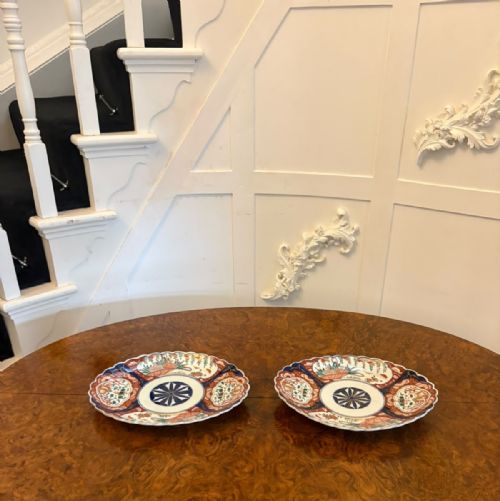
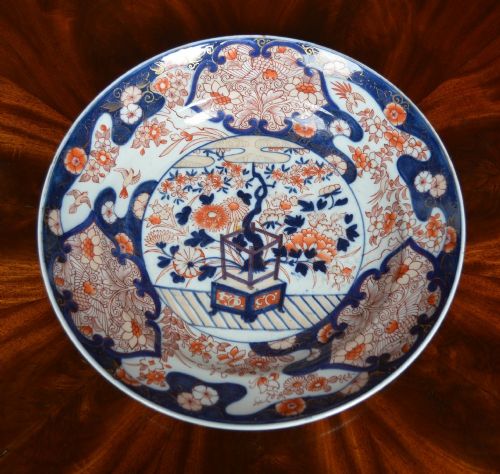
A blue japanese wall plate encompasses large decorative chargers, scalloped dishes, and display plates originating from the late nineteenth and early twentieth centuries. These pieces display distinct styles such as Japanese Imari and Arita alongside intricate Meiji period enamel work.
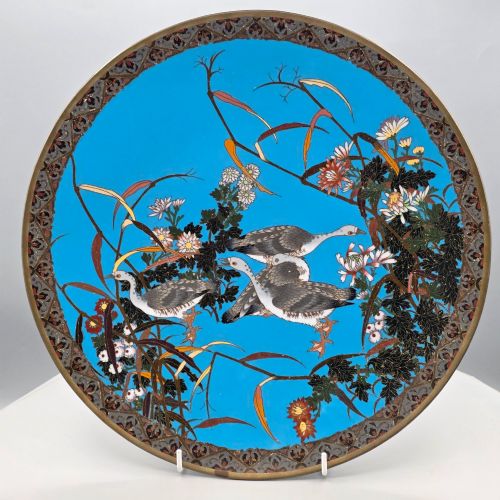
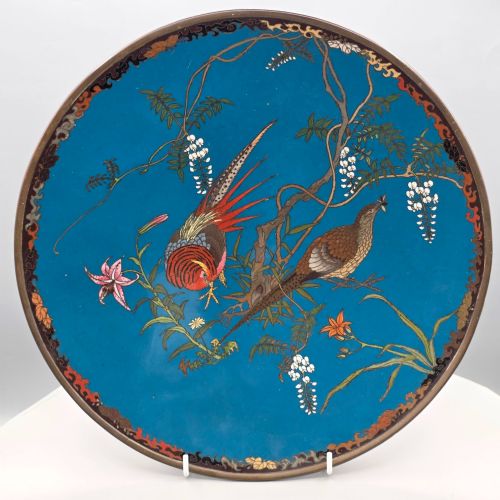
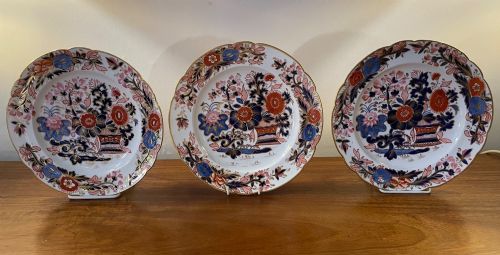
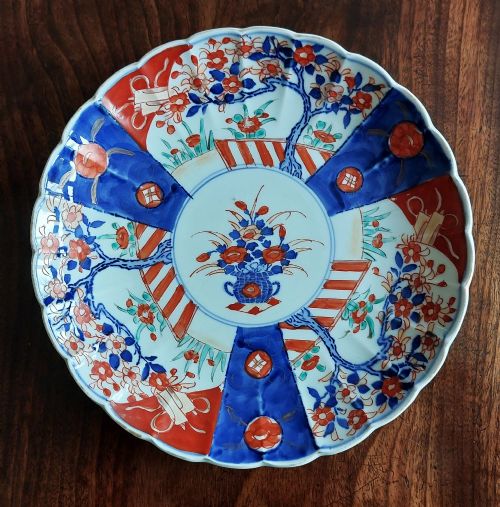
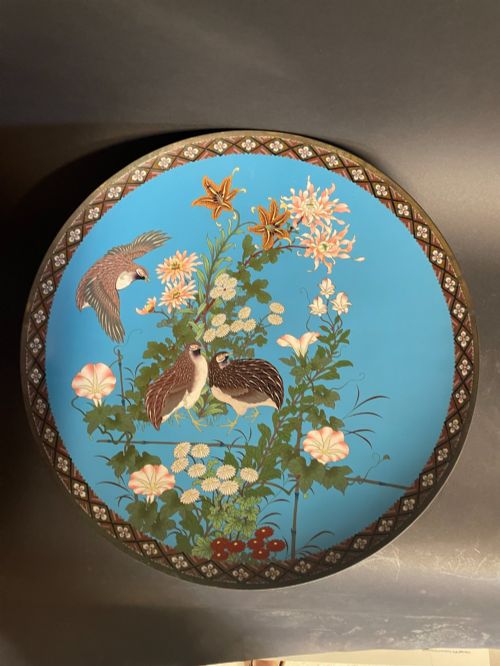
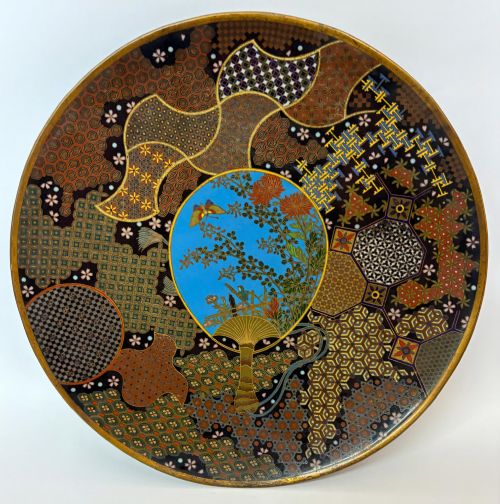
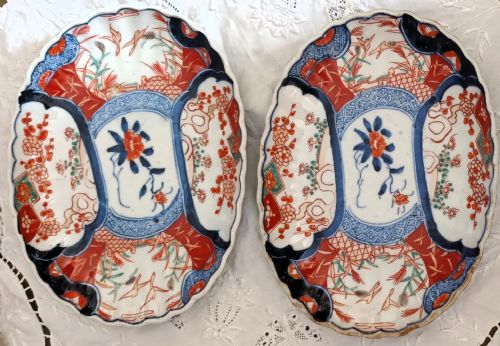
Buyers seeking a blue japanese wall plate frequently encounter traditional porcelain decorated in deep blues and iron reds, as well as copper cloisonne pieces featuring birds, landscapes, and floral motifs. The selection leans heavily toward nineteenth century examples produced for export and display.
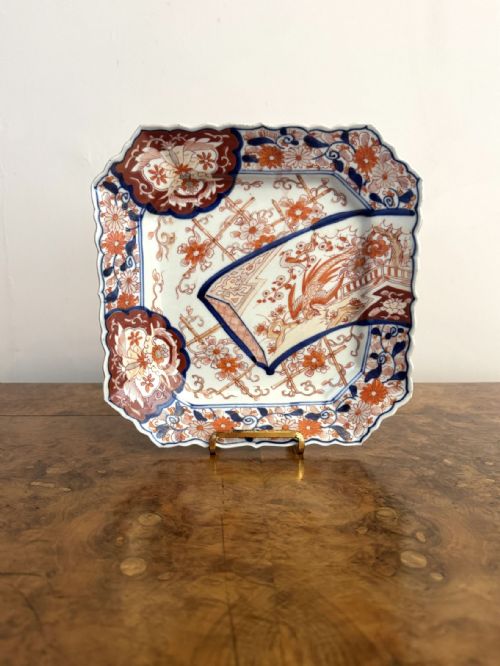
The forms range from modest square dishes to large chargers measuring over thirty centimetres across. Many incorporate scalloped edges or detailed depictions of geese, koi, and chrysanthemums.
How they were made
Porcelain plates utilise traditional high-fired ceramic bodies painted underglaze in blue and overglaze in iron red and gold leaf. Artisans shaped these pieces on wheels or in moulds before applying hand-painted motifs.
Cloisonne chargers involve soldering thin copper or brass wires onto a metal base to form cells, which are then filled with coloured enamel and fired multiple times. The surface is subsequently ground down and polished to a smooth finish.
Paper prints from the early twentieth century utilise woodblock or lithographic techniques on paper to illustrate traditional stories and fairy tales.
Nineteenth century artisans occasionally hid small frogs and leaping koi within floral charger designs to surprise attentive viewers.
What varies in quality
The precision and density of the hand-painted or enamelled detail separate standard items from superior pieces. Masterpiece chargers display intricate subjects like leaping koi, dragons, or complex floral arrangements with minimal surface irregularity.
The depth and clarity of the blue underglaze pigment and the richness of the accompanying enamel or gold leaf define the visual impact of the plate. Superior copper cloisonne exhibits tightly controlled wirework without pitting in the enamel fields.
Warwick Goble
The Blue Japanese Wall Plate Glossary
- Imari
- A style of Japanese porcelain featuring a palette of underglaze blue, iron red, and gold leaf. This ware was traditionally exported from the port of Imari during the Edo and Meiji periods.
- Cloisonne
- An enamel technique where metal wires create distinct compartments on a copper or brass body. Artisans fill these compartments with powdered glass paste before firing.
- Charger
- A large decorative plate utilised primarily for display on walls, sideboards, or tables rather than for dining purposes. These items often measure significantly larger than standard dinner plates.
- Meiji Period
- The era in Japanese history spanning from 1868 to 1912, characterised by extensive modernization and a surge in decorative arts created for international markets.
- Arita
- A Japanese town renowned as the birthplace of Japanese porcelain production. Kilns in this region produced many of the Arita Imari chargers found today.
Blue Japanese Wall Plate: Frequently Asked Questions
How do I hang a heavy charger?
Displaying a large charger securely requires a specialised spring-loaded wall plate hanger that distributes the weight evenly around the rim without placing stress on the centre. Ensure the mounting bracket fixes directly into wall studs or uses appropriate masonry anchors.
Avoid using adhesive discs or simple wire loops that rely on friction alone. Inspect the hanger periodically to confirm the tension remains secure against the porcelain or metal rim.
Were these plates used for dining?
Most large examples function as decorative chargers or display dishes rather than functional tableware. Their substantial size and intricate enamel or gold leaf decoration make them suited for visual presentation.
Smaller plates occasionally served functional purposes in traditional settings, but nineteenth century export pieces were frequently created for western collectors to display on walls and cabinets.
What is the difference between Imari and Arita?
Arita refers specifically to the geographic region and kiln sites in Japan where the porcelain clay was mined and fired. Imari is the port town from which these finished ceramics were shipped to domestic and international markets.
While all Imari ware originates from the Arita area, collectors often use the terms interchangeably to describe blue and white porcelain featuring iron red and gilt highlights.