





Japanese Meiji Metalwork
Japanese meiji metalwork brings together masterful bronze casting and intricate enamel work created during a transformative era of Japanese design.
Japanese Meiji Metalwork
Japanese meiji metalwork encompasses a diverse range of decorative and functional objects produced during the Meiji period, spanning vases, sculptures, and chargers. These pieces reflect the opening of Japan to Western markets, which inspired local artisans to scale up production of high-end decorative arts.
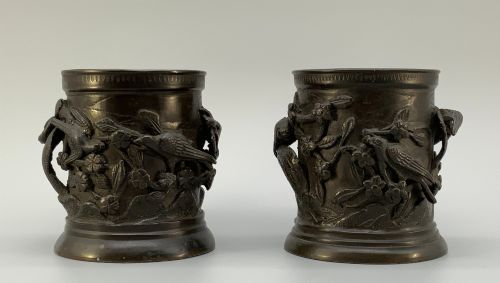
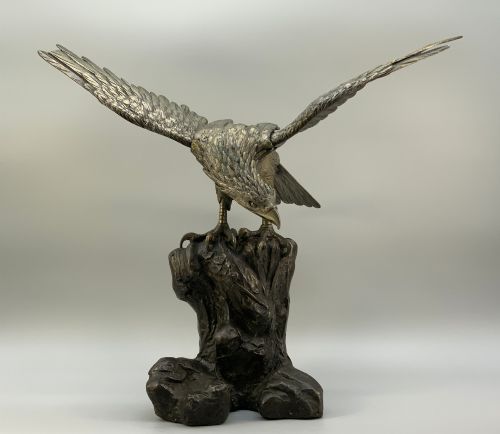
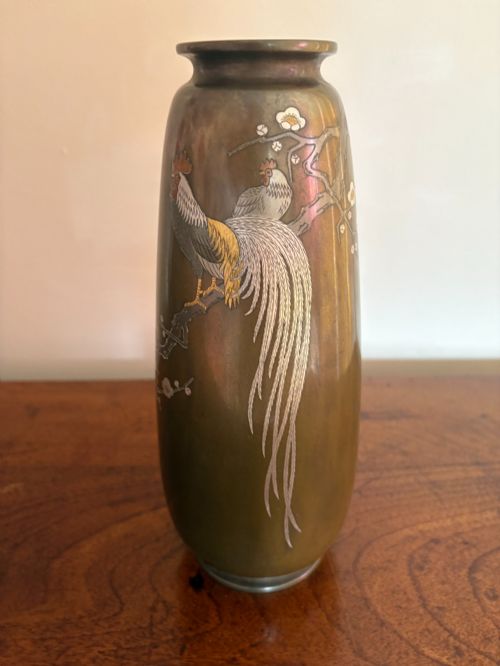
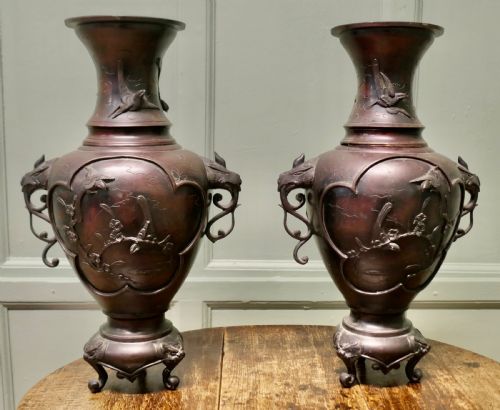
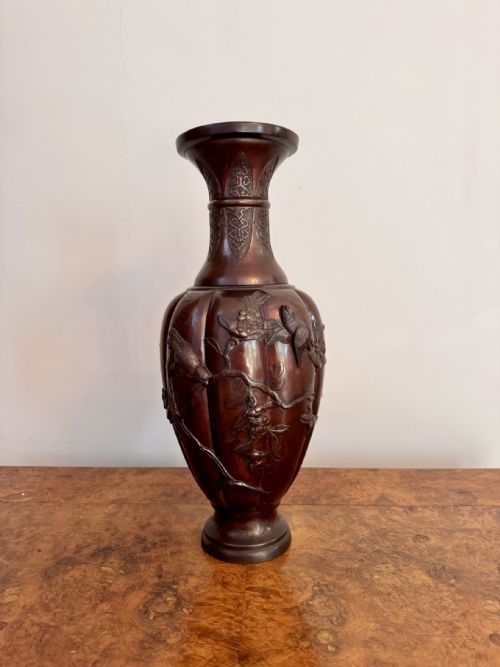
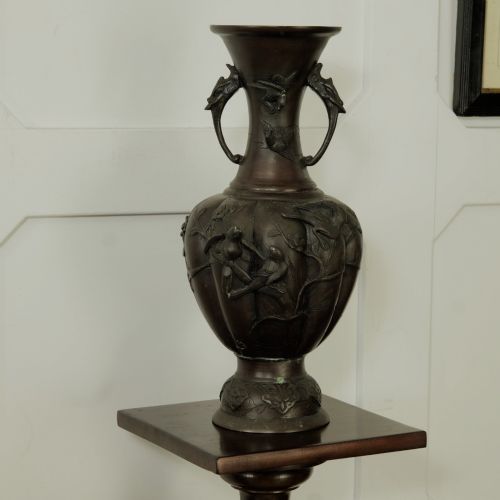
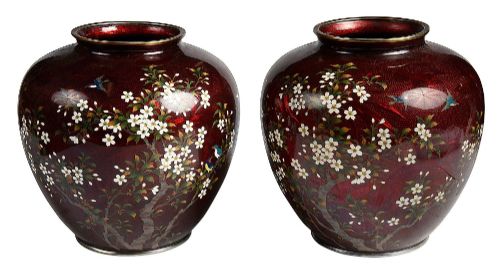
Vases and sculptural okimono form the core of what you will encounter on this page, often depicting subjects from nature such as birds, blossom, and animals. Alongside these vessels, large decorative chargers and plates showcase complex enamel designs.
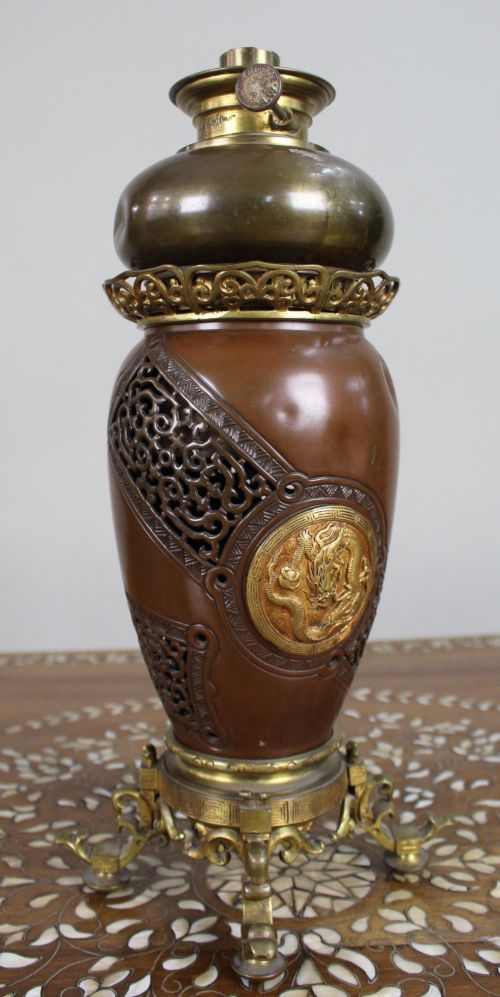
Table lamps and jardiniere pieces demonstrate how traditional forms were adapted for contemporary domestic use both in Japan and abroad. These domestic items merge utilitarian function with the refined sculptural standards of the era.
Materials and Construction
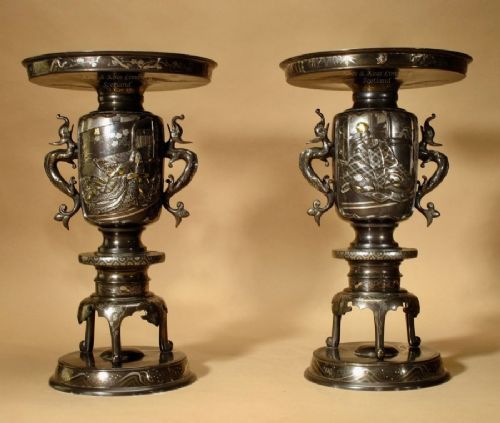
Bronze serves as the primary metal for casting figures, vases, and lamps, frequently paired with patinated finishes or intricate gold inlay. Artisans also utilised copper and brass to achieve varied surface textures and tonal contrasts.
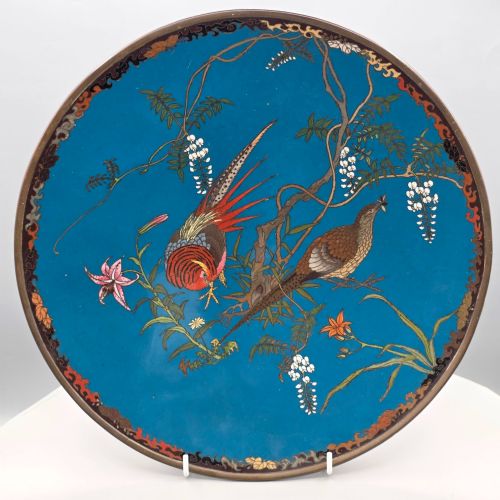
Enamel work, particularly cloisonné, relies on fine wire cells affixed to a metal base before being filled with coloured vitreous pastes and fired. This technique allowed makers to create vivid pictorial scenes featuring birds, dragons, and landscapes across flat plates and curved trays.
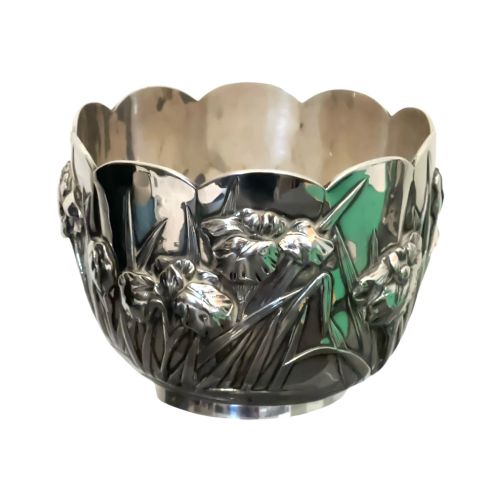
Current listings feature bronze, copper, enamel, brass, patinated bronze, silver, wood, and gold inlay across vases, sculptures, and chargers.
Assessing Quality and Execution
The distinction between standard production and top-tier work rests on the precision of the casting and the crispness of the chased details. Masterpieces display deeply undercut bronze elements and seamlessly integrated mixed-metal inlays that require immense technical control.
In cloisonné chargers and plates, the fineness of the wirework and the smoothness of the polished enamel surface dictate the overall grade. Superior examples exhibit vibrant, uniform colour fields without pitting or distortion in the fired vitreous layers.
KANASAWA·Jomi Eisuke·Kunio Itô·Tsunemitsu
The Japanese Meiji Metalwork Glossary
- Okimono
- A standalone Japanese display sculpture designed for interior placement. These figures range from realistic animals to anthropomorphic subjects.
- Cloisonne
- A decorative metalwork technique where compartments are created on a metal surface using thin flat metal wire and filled with enamel. The piece is then fired and polished to a smooth finish.
- Charger
- A large ornamental decorative plate or tray meant for display on a wall or stand rather than for dining use. They often feature elaborate pictorial narratives.
- Patinated Bronze
- Bronze treated with chemical solutions or heat to alter the surface colour, producing rich brown, black, or greenish tones. This process adds depth to sculptural details.
- Shakudo
- A Japanese billon alloy of copper with a small percentage of gold that turns a dark blue-black colour when treated. It provides a striking contrast in mixed-metal compositions.
Japanese Meiji Metalwork: Frequently Asked Questions
What is Japanese meiji metalwork?
Japanese meiji metalwork refers to decorative bronze, copper, and enamel pieces produced during the Meiji period between 1868 and 1912. This era saw Japanese artisans produce unprecedented decorative items for international export.
The category includes sculptural okimono, large vases, chargers, and table lamps that combine traditional casting techniques with elaborate mixed-metal inlays.
How do I display a bronze vase?
Bronze vases from this period suit placement on sturdy wooden tables, pedestals, or mantels where their patinated surfaces can catch natural light. Pairing them with complementary decorative objects helps ground their substantial visual weight.
Because many of these vessels were designed purely for ornamental display, keep them away from damp areas and direct moisture to protect the metal finish.
How are cloisonne plates made?
Cloisonne plates are constructed by soldering thin metal wires onto a metal base to form compartments, known as cloisons. These outlines are then filled with coloured enamel paste and fired in a kiln.
After firing, the surface is ground down and polished until the metal wires and glass paste form a smooth, continuous plane.