




Pair Japanese Bronze
These pair japanese bronze pieces bring cast metal artistry into rooms through vases, urns, and animal figures.
Pair Japanese Bronze
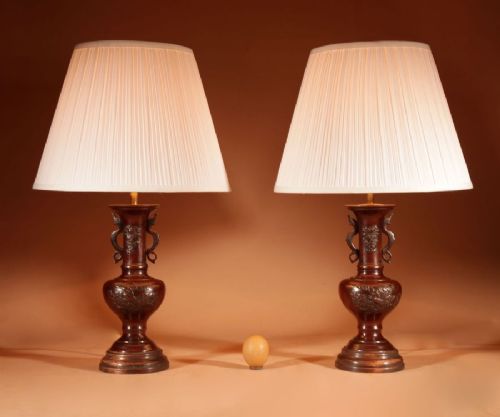
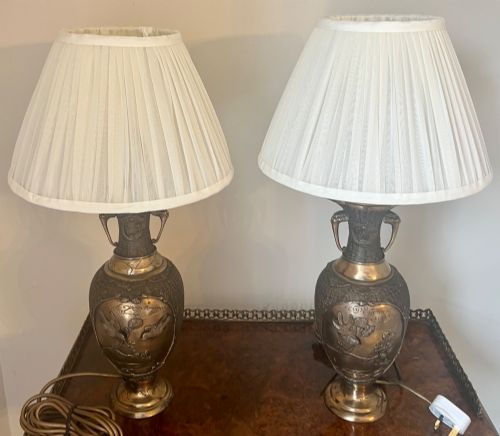
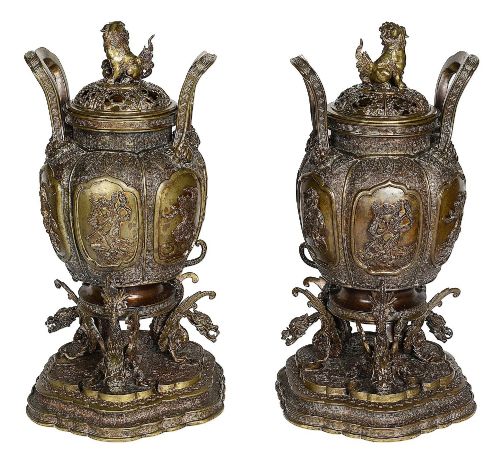
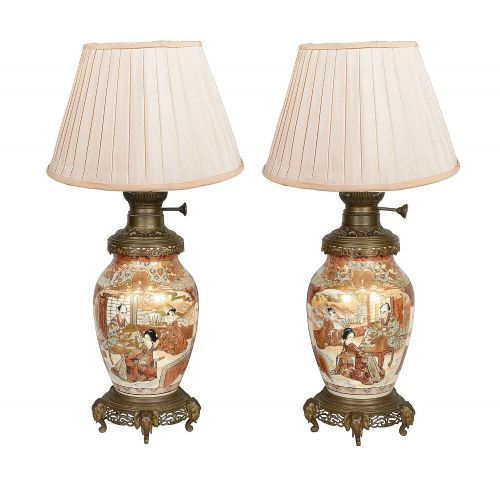
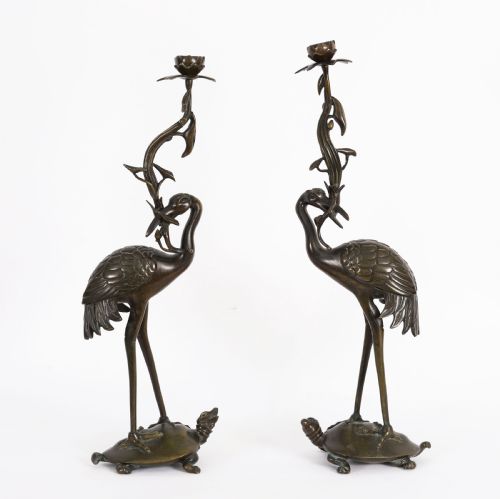
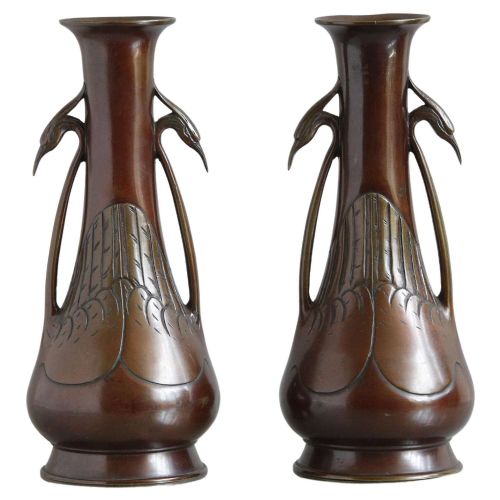
When searching for pair japanese bronze, buyers encounter matching dual items created in eastern workshops predominantly during the Meiji period and the nineteenth century. The selection spans utilitarian vessels like vases, lidded urns, and jardiniere planters alongside sculptural forms such as garden okimono geese and cranes.
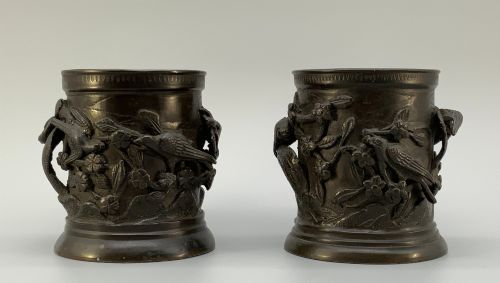
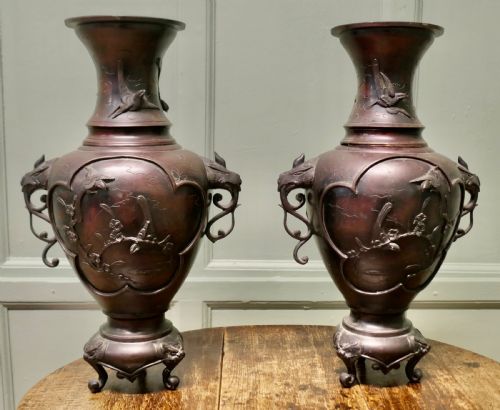
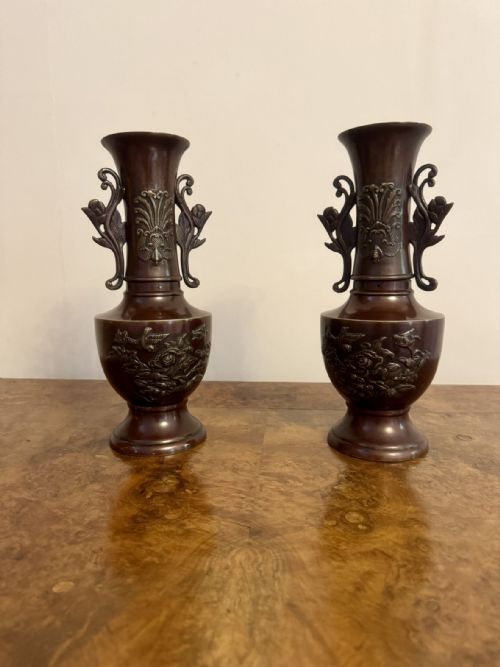
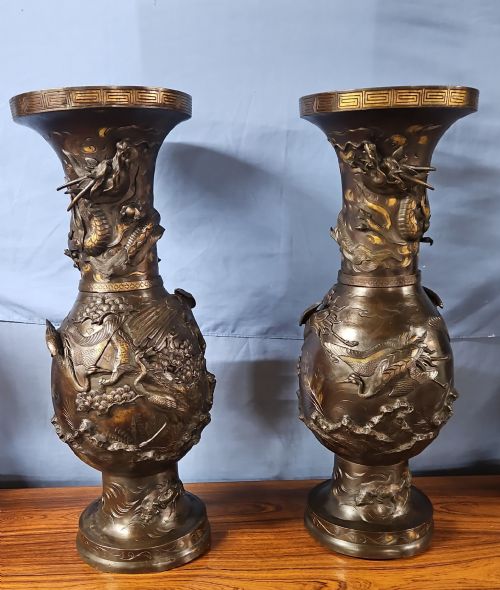
Most examples originate from the Meiji era, reflecting traditional metalworking methods adapted for international markets during the late nineteenth and early twentieth centuries. Vases remain the most common form met here, frequently decorated with relief motifs depicting birds, blossoms, and natural scenes.
How They Were Made
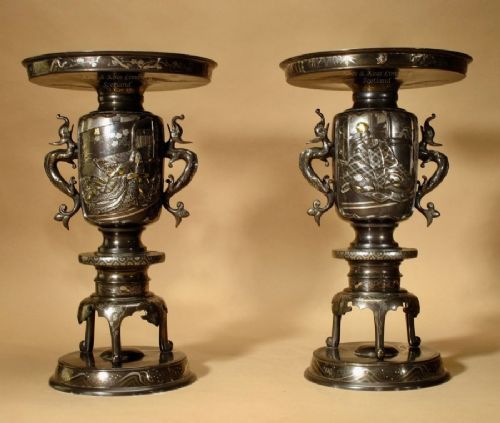
Metalworkers utilised traditional lost-wax casting methods to shape bronze into vessels and figures, often finishing surfaces with patination or chemical treatments to achieve deep brown and dark tones. Mixed metal techniques incorporated contrasting inlays of copper, brass, and gilt detailing to build intricate surface imagery of flora and fauna.
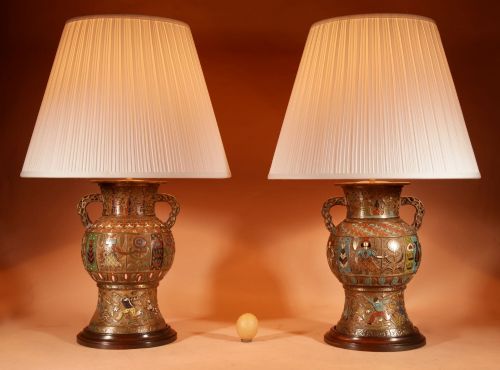
Certain pieces combined cast bronze structures with applied champlevé enamel or cloisonné wirework, filling recessed channels with coloured vitreous pastes before firing. Subsequent chasing and hand-carving sharpened fine details on feathers, robes, and handles.
Listings feature nineteenth-century and early twentieth-century pieces, spanning the Meiji period, Victorian era, and Edo period styles.
What Varies in Quality
The degree of hand-finishing and precision in applied mixed-metal work separates standard production pieces from master-level output. Sharply defined relief details on bird feathers and floral petals indicate superior craftsmanship during the casting and chasing stages.
Symmetry and balance between the two objects dictate overall cohesion in a pair, where matching patination depth and uniform weight distribution show careful workshop execution. Integrated handles, secure lidded fits, and clean enamel boundaries further distinguish higher-tier examples.
Hiromitsu·Hidekoku·Shuzan Hideyama
The Pair Japanese Bronze Glossary
- Meiji Period
- The historical era spanning from 1868 to 1912 when Japanese craftsmanship reached international markets. This period produced the vast majority of decorative bronze vases and okimono figures found on the market.
- Okimono
- Japanese decorative statues or ornaments designed for display on shelves or tokonoma alcoves. These figures frequently depict animals such as geese, cranes, and hares cast in bronze.
- Koro
- A traditional Japanese incense burner fitted with a pierced lid for diffusing scent. These lidded vessels often rest on multiple feet and feature detailed sculptural handles.
- Champlevé
- An enamelling technique where troughs are dug into the bronze surface and filled with enamel paste. The metal partitions remain visible between the coloured areas.
- Usubata
- A wide-mouthed bronze vessel traditionally utilised for formal flower arrangement displays. These large garden or interior urns often incorporate tiered bodies and steady bases.
Pair Japanese Bronze: Frequently Asked Questions
How do I date a pair japanese bronze?
Dating relies heavily on stylistic markers from the Meiji period and late nineteenth-century manufacturing techniques. Surface patination, mixed metal usage, and casting methods help narrow the production era.
Evidence from surviving pieces points toward active workshop output primarily between the late eighteen-hundreds and early nineteen-hundreds. Comparing base construction and decorative motifs against dated historical examples provides clearer chronological placement.
Were these items made for export?
A substantial portion of these metal goods was produced specifically for western export markets following the opening of trade during the Meiji era. Workshops adapted traditional domestic forms to satisfy European and American demand for decorative arts.
Vases, jardiniere planters, and large animal okimono figures reflected Western interior tastes while retaining distinct Japanese artistry. This cross-cultural exchange shaped the scale and finish of surviving dual sets.
How should I clean bronze surfaces?
Maintenance requires gentle dusting with a soft, dry cloth to prevent particulate accumulation on patinated or inlaid details. Harsh chemical cleaners and abrasive cloths must be avoided to protect the original metallic finish.
Preserving the stable layer of historical patination safeguards the visual integrity of the material over time. Professional conservation advice should be sought for pieces requiring deeper intervention.
What is the difference between an okimono and a vase?
An okimono functions purely as a decorative sculptural figure, representing animals or figures without any internal cavity for holding contents. These solid or cast sculptural pieces were placed in interior spaces or gardens for visual appreciation.
Vases and urns incorporate hollow chambers designed specifically to hold floral arrangements or display botanical stems. While both share identical bronze casting techniques, their intended functional roles dictate their structural form.