



Relief Carved Bronze Urns
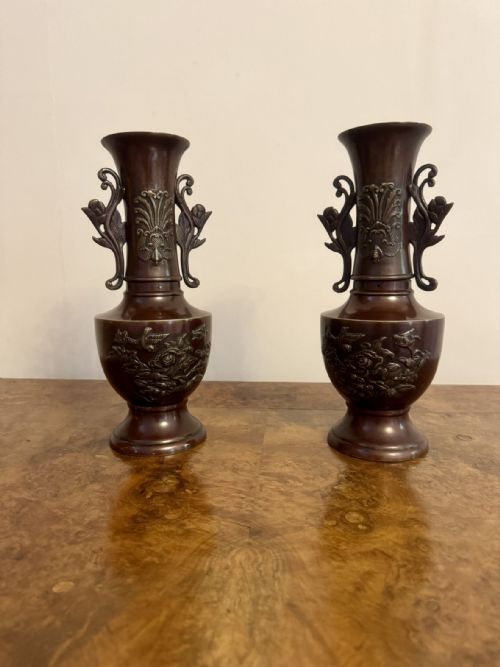
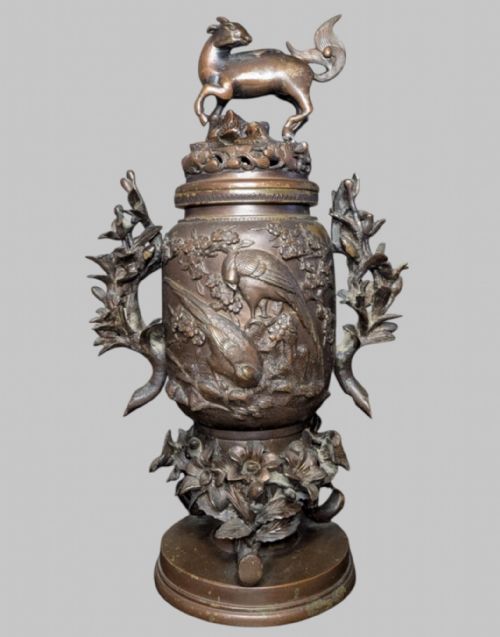
Relief carved bronze urns bring substantial weight and intricate metalwork to a room, offering striking decorative presence through high-relief casting.
Relief Carved Bronze Urns
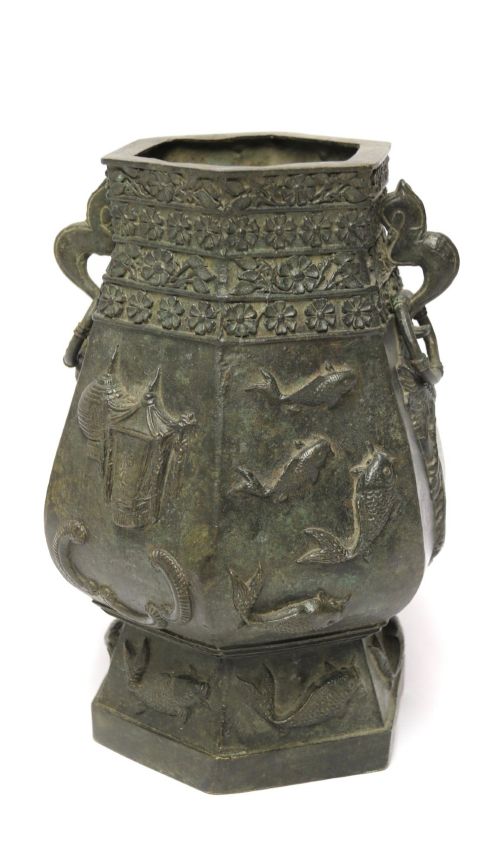
Relief carved bronze urns encompass heavy metal vessels shaped as baluster vases, incense burners, jardinières, and ornamental ewers. These pieces arrive predominantly from the Japanese Meiji period and 19th-century Chinese workshops, alongside Italian Grand Tour productions.
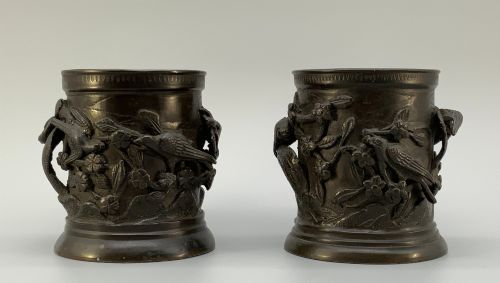
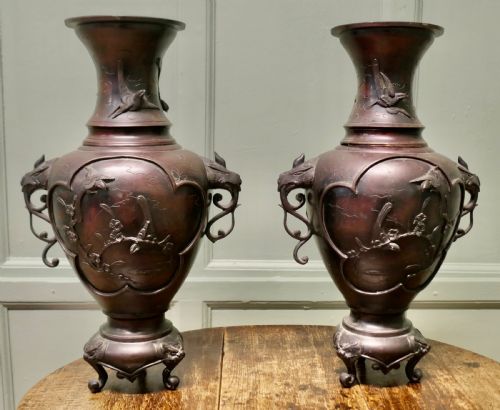
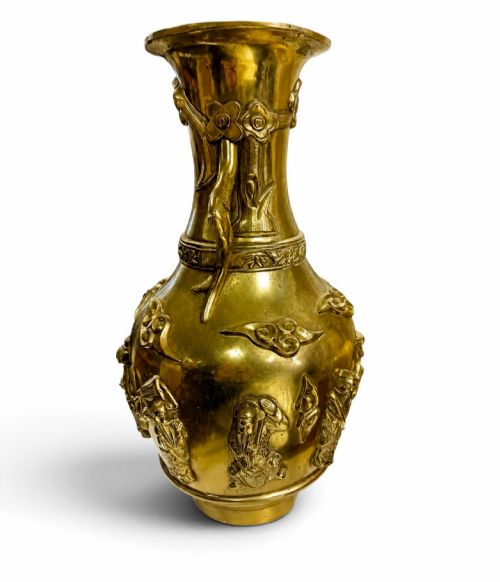
Buyers meet pairs of baluster vases most frequently on this page, often decorated with birds, blossom, or Daoist immortals. The selection spans compact posy vases up to very large presentation pieces weighing several kilograms.
Materials and Technique
Foundry workers utilised bronze, copper alloy, and brass, casting vessels with thick walls that could support deep, chased, and high-relief modelling. Surface finishes range from dark patinated bronze to applications of enamel and gold inlay.
Makers integrated cast details such as twin-dragon bases, goat finials, and elephant motifs directly into the body during production. Selected items feature distinct workshop signatures or base marks hammered or cast into the metal.
Sculptural fauna populate these vessels, with goats, elephants, and birds sharing the bronze landscape alongside Daoist immortals.
Craftsmanship and Proportion
Superior examples demonstrate precision in the undercutting and crispness of the relief carving, where birds, foliage, and figures emerge sharply from the dark metal ground. Lesser pieces display softer casting edges and simplified surface enrichment.
The balance of form dictates distinction, separating standard decorative vessels from substantial presentation pieces that maintain strict symmetry and integrated handles or finials.
Genryusai Seiya
The Relief Carved Bronze Urns Glossary
- Baluster
- A tall vase form with a rounded body and a narrow neck. This shape provides a broad canvas for high-relief decoration.
- Patinated Bronze
- Metal treated with chemicals to produce a stable surface colour. This finish deepens the visual contrast of carved details.
- Jardinière
- A large ornamental pot designed to hold plants. These heavy vessels often feature cast handles and detailed relief panels.
- Grand Tour
- 19th-century travel souvenirs collected by Europeans in Italy. Items from this tradition include classical urns and decorative ewers in bronze.
Relief Carved Bronze Urns: Frequently Asked Questions
How do I clean a bronze urn?
Dust the surface regularly with a soft, dry cloth to prevent particulate buildup. Avoid harsh chemical cleaners that strip the historic patina.
Apply a light microcrystalline wax if the metal requires protection from moisture. Buff gently after application to maintain the original sheen.
Where were these urns made?
The pieces originate predominantly from 19th-century Japanese Meiji workshops and Chinese foundries. European makers also contributed Italian Grand Tour examples.
Stylistic markers and base signatures indicate the specific cultural origin of each vessel. Japanese examples frequently depict natural subjects, while Chinese pieces highlight traditional figures and dragons.
Are these pieces heavy?
Solid metal construction grants these vessels substantial physical weight. Larger examples often exceed five kilograms.
Placement requires sturdy furniture capable of supporting concentrated mass. The weight ensures stability when holding floral arrangements or plants.
How do I date a bronze vase?
Dating relies on period styles, casting techniques, and recorded workshop marks. Victorian and Meiji eras display specific decorative motifs.
Surface wear and patina characteristics provide additional clues regarding age. Comparing casting methods helps distinguish 19th-century production from later copies.