


Cast Bronze Urn Pair
These cast bronze urn pair selections bring heavy patinated metal, ormolu, and fine detail into a room.
Cast Bronze Urn Pair
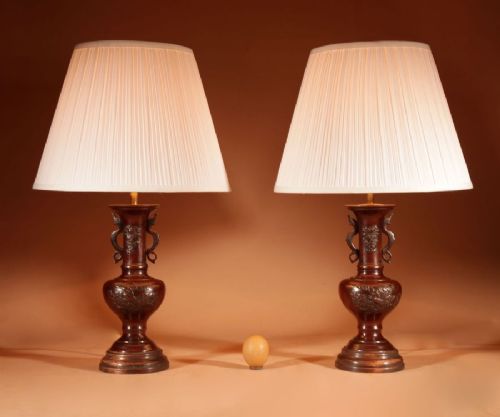
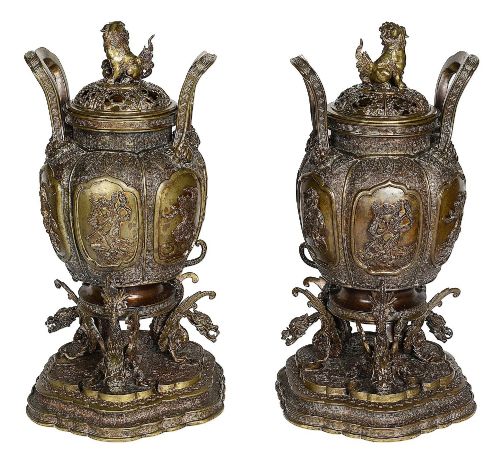
A cast bronze urn pair brings together heavy metal vessels produced in matched sets for display, often adapted into table lamps or garden pieces. When exploring a cast bronze urn pair, buyers encounter items ranging from Victorian Renaissance Revival designs to Japanese Meiji period works.
The selections on this page lean heavily towards Japanese Meiji period vases, Chinese altar vessels, and Italian Grand Tour pieces. These forms often double as table lamps, ewers, or decorative garden urns.
How they were made
The creation of these pieces relies on metal casting techniques using bronze, brass, or gilt bronze, sometimes enhanced with verdigris bronze or ormolu highlights. Artisans poured molten metal into moulds to achieve intricate relief work, handles, and lidded structures.
Many items incorporate mixed elements such as fabric shades on lamp conversions, wooden mounting blocks, or marble bases. Patination was applied chemically or achieved naturally over time to give the metal its characteristic dark or greenish surface tone.
The listings here span from Victorian Renaissance Revival styles to Japanese Meiji period pieces, executed in bronze, brass, and gilt bronze.
What varies in quality
The crispness of the casting separates standard production from superior examples, visible in the sharpness of botanical or figurative motifs. Finer pieces display meticulous hand-chasing after the casting process to refine surface textures and details.
Weight and balance also distinguish the range, as larger vessels require substantial metal thickness for stability. The depth of the patinated metal finish and the integrity of any applied ormolu or gilding indicate the care taken during production.
The Cast Bronze Urn Pair Glossary
- Ormolu
- A technique of applying finely ground, high-carat gold-mercury amalgam to a bronze object. It provides a bright golden finish that resists tarnishing.
- Patinated metal
- Metal treated with chemicals or heat to alter its surface colour. This process creates stable brown, black, or green tones.
- Grand Tour
- A traditional trip of Europe undertaken by upper-class European young men of means. Souvenirs included classical bronze urns and ewers.
- Meiji Period
- A period of Japanese history spanning from 1868 to 1912. Metalwork from this era is celebrated for technical mastery and intricate casting.
Cast Bronze Urn Pair: Frequently Asked Questions
How do I use a cast bronze urn pair at home?
These matched metal vessels work well on mantelpieces, side tables, or flanking a central focal point in a room. Many examples are pre-wired to function as striking table lamps.
Larger versions, including garden urns and jardinières, suit heavier display areas like entryways or studies. Their substantial weight provides stability for floral arrangements or standalone display.
How can I tell the Victorian pieces apart from Japanese pieces?
Victorian examples often draw on European classical motifs such as Renaissance Revival styling, ewers, and Grand Tour imagery. They frequently incorporate gilt bronze or ormolu details.
Japanese pieces from the Meiji period typically display distinct Asian flora, fauna, and bronze patination techniques. Signatures or specific ritual vessel forms also point towards East Asian production.
What is the difference between bronze and brass objects?
Bronze is an alloy primarily composed of copper combined with tin, yielding a heavy, durable material that takes dark patination well. Brass is an alloy of copper and zinc, generally exhibiting a brighter, more golden hue.
Many antique listings group patinated metal categories together, but bronze typically offers a deeper, more resonant tone when finished.
How do I care for antique bronze surfaces?
Dust the metal gently with a dry, soft cloth to prevent particulate build-up in the recessed cast details. Avoid using aggressive commercial metal polishes that can strip away historic patination.
Keep the items away from excessive moisture and direct heat sources to preserve the original chemical or natural surface finish.