




Japanese Meiji Bronze Vase
A Japanese Meiji bronze vase brings sculptural metalwork and intricate patination into a room, offering a tangible link to late nineteenth-century craftsmanship.
Japanese Meiji Bronze Vase
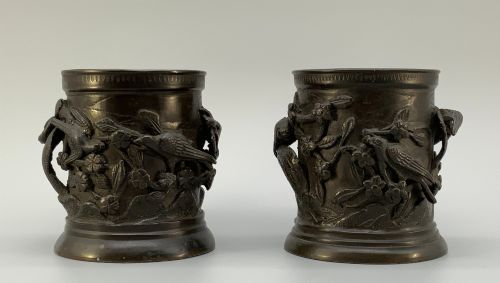
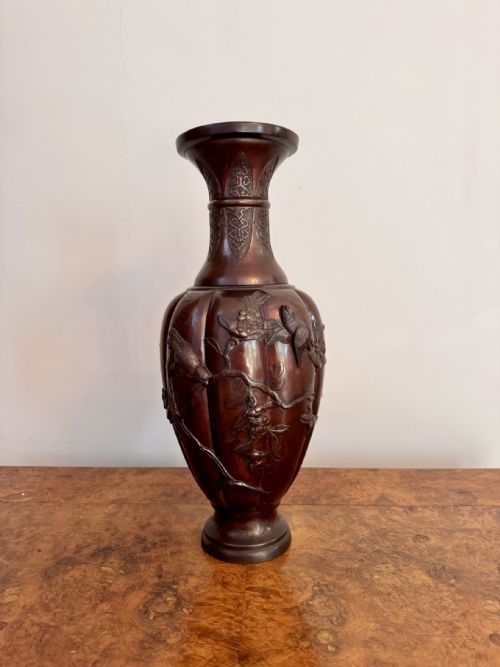
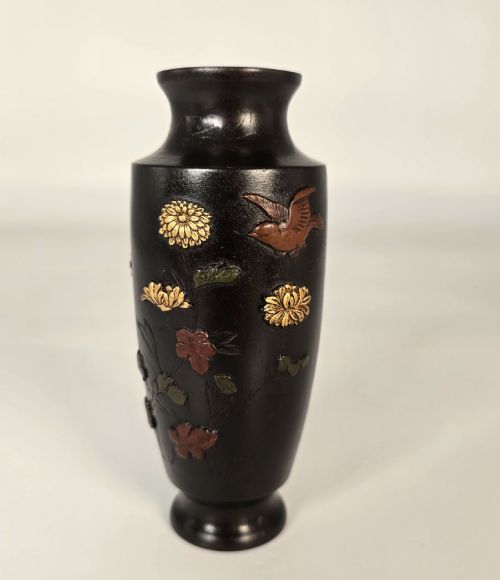
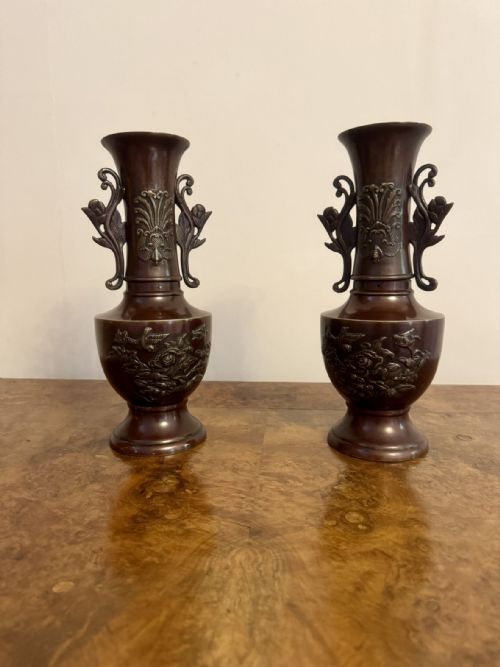
A japanese meiji bronze vase comprises baluster vessels, twin-handled forms, and large garden urns produced during the late nineteenth and early twentieth centuries. These works reflect the decorative arts of the Meiji period, ranging from simple patinated cylinders to elaborate vessels decorated with birds, blossom, and dragons.
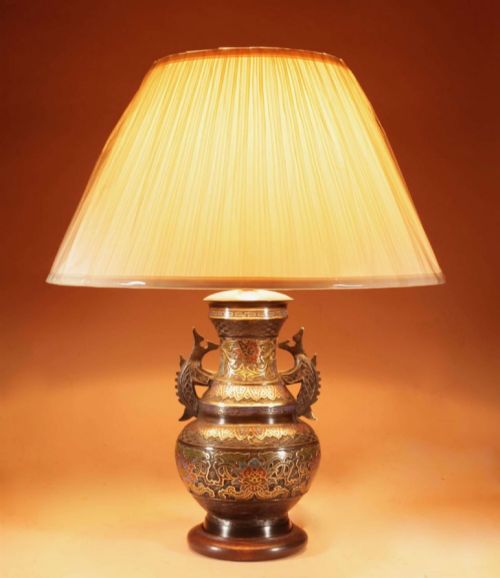
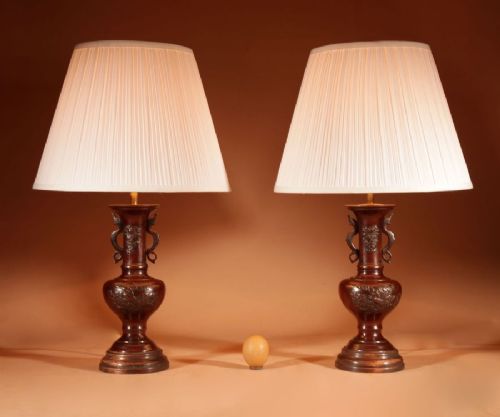
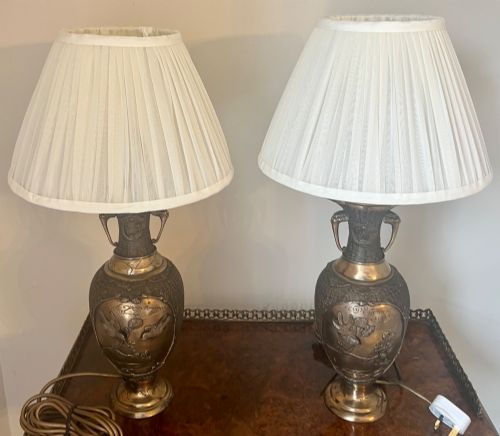
Buyers frequently encounter pairs of vases as well as single examples adapted into table lamps alongside traditional display vessels. The selection spans compact fifteen-centimetre mantel pieces up to monumental temple vases and garden planters.
Originating directly from Japanese workshops and schools, these items demonstrate the transition from traditional decorative bronze casting to domestic export production for western interiors during the victorian and edwardian eras.
How they were made
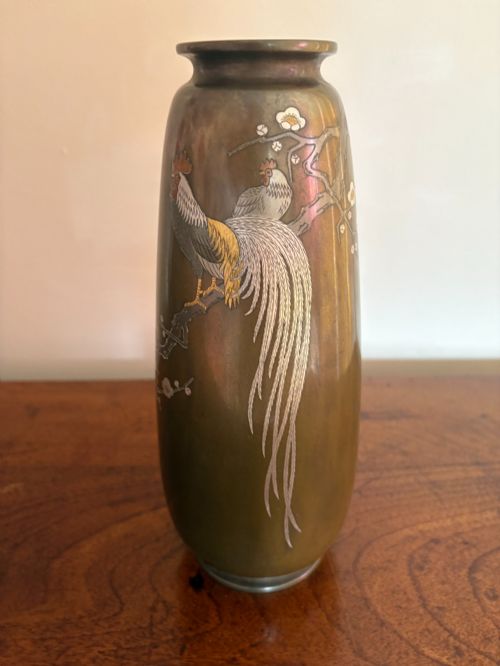
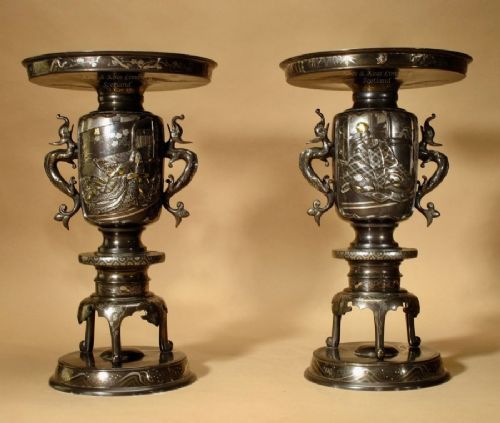
Makers utilised bronze, brass, and copper, often applying chemical patination to achieve deep, original surface colours ranging from dark brown to green tones. Mixed metal elements involving silver and gold inlay added contrast to the dark metal bodies.
Techniques included lost-wax casting, champlevé enamel work, and surface engraving to render detailed birds, figures, and floral motifs. Inlaid sections were meticulously fitted into carved recesses within the bronze body before final finishing and polishing.
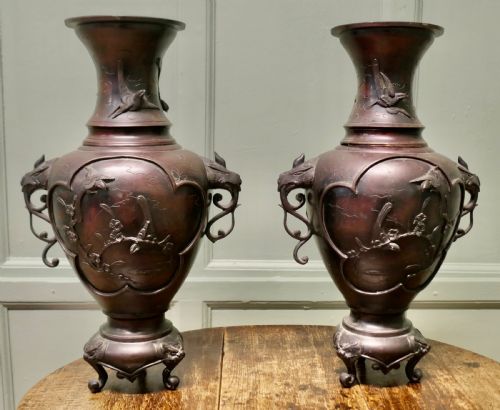
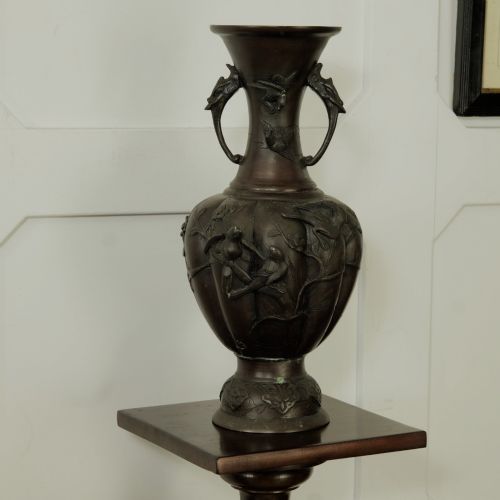
Many works incorporate applied handles shaped as dragons, birds, or stylised motifs, welded or cast integrally with the main body of the vessel.
Japanese Meiji Bronze Vase Retail Price Guide 2026
Typical asking prices for japanese meiji bronze vase among the pieces listed under this phrase on Sellingantiques today, from the lower quarter to the upper quarter. They describe what is for sale here now, not the wider market.
Egrets and dragons double as structural handles, holding up the weight of the bronze while keeping watch over the rim.
What varies in quality
The degree of refinement in the chisel work and the precision of the mixed metal inlay distinguish standard production pieces from masterworks. Sharply defined plumage on birds and crisp separation between inlaid metals signal superior workshop output.
Subtlety and depth in the patination reveal the skill applied during the final chemical treatment of the bronze. Surface textures that retain rich tonal variations demonstrate greater care than flat, uniform finishes.
KANASAWA·Oshima Joun·Takusai Honma·Nakao Munesada·Kanaya Gorosaburo XI·Seiya·Yamamoto zo·Kosen
The Japanese Meiji Bronze Vase Glossary
- Meiji
- The period in Japanese history spanning from 1868 to 1912, characterised by rapid modernisation and intense artistic output in metalwork.
- Champlevé
- An enamelling technique where troughs or cells are sunk into the bronze surface and filled with vitreous enamel before firing.
- Patinated bronze
- Metal that has been treated with chemical solutions to produce a specific surface colour and aged appearance.
- Mixed metal
- The combination of different metallic elements, such as copper, silver, and gold, inlaid or overlaid onto a bronze base.
- Usubata
- A specific form of Japanese bronze vessel traditionally used for flower arrangements, featuring a wide flat mouth atop a columnar stem.
Japanese Meiji Bronze Vase: Frequently Asked Questions
How do I date a Meiji bronze vase?
Pieces attributed to this era typically align with the reign dates of 1868 to 1912, though related export items extend slightly into the early twentieth century.
Evidence relies on stylistic markers such as mixed metal inlay, patination depth, and workshop signatures found on the base.
Are these vases watertight?
Most antique bronze vessels were created for decorative display rather than holding water for fresh flower arrangements.
Using a discreet glass insert inside the neck protects the interior metal from moisture damage over time.
What is mixed metal decoration?
This technique involves hammering contrasting metals like silver, gold, and copper into recessed channels carved directly into the bronze surface.
It creates pictorial scenes of landscapes, birds, and Mount Fuji with varied chromatic tones.
How should I clean a bronze vase?
Gentle dusting with a soft, dry cloth preserves the original chemical patination built up over the decades.
Avoid chemical metal polishes or abrasive cleaners that strip away the aged surface character.