








Japanese Imari Display Dish
A Japanese imari display dish brings traditional ceramic artistry into a room through hand-painted motifs and rich tones.
Japanese Imari Display Dish
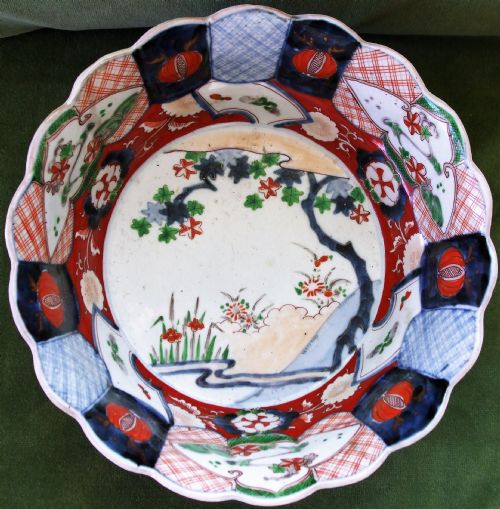
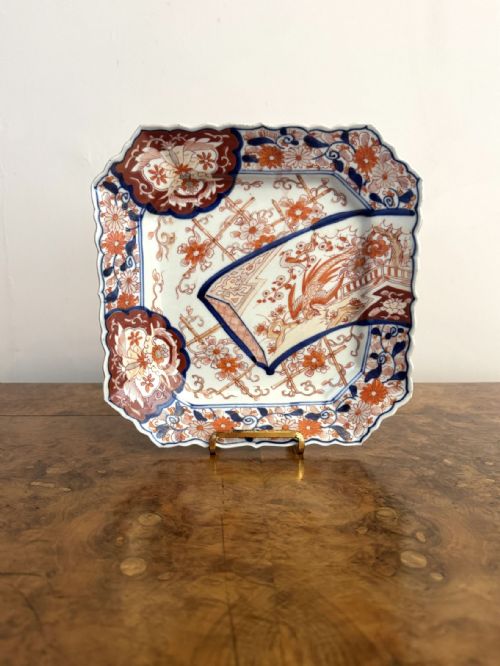
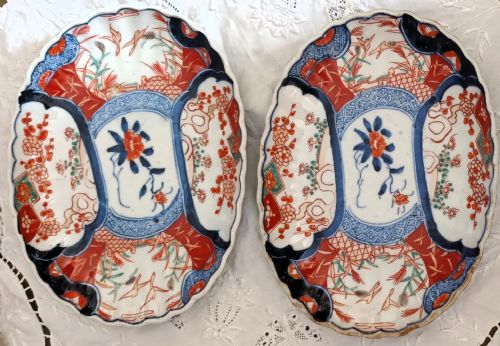
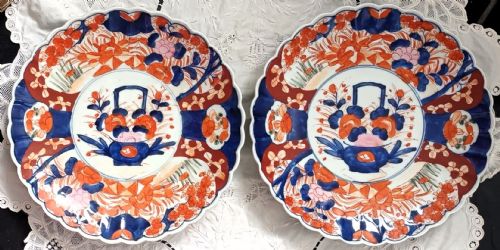
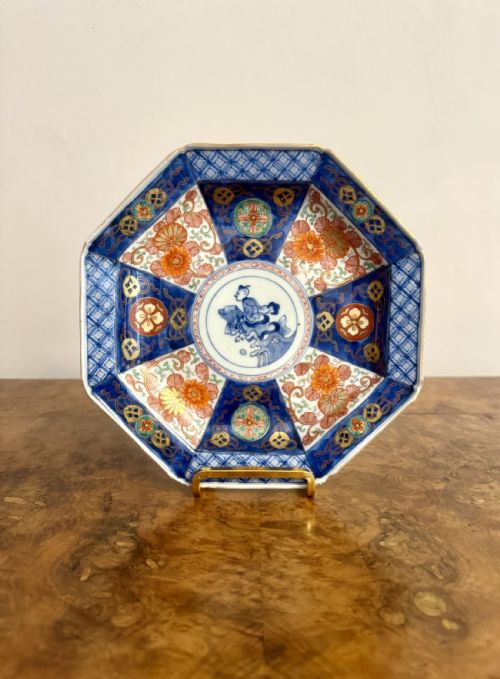
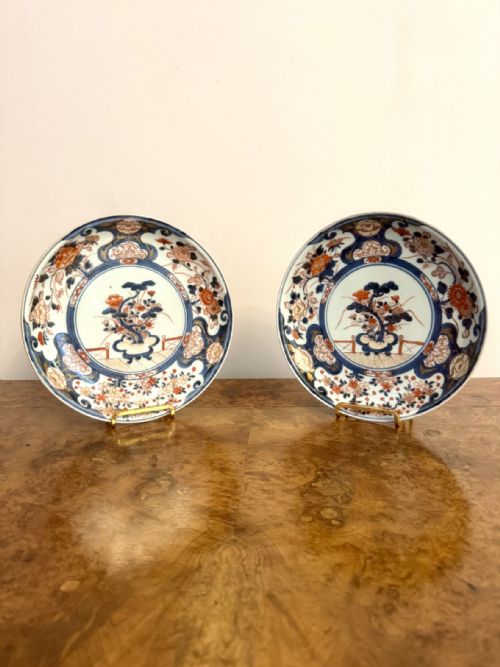
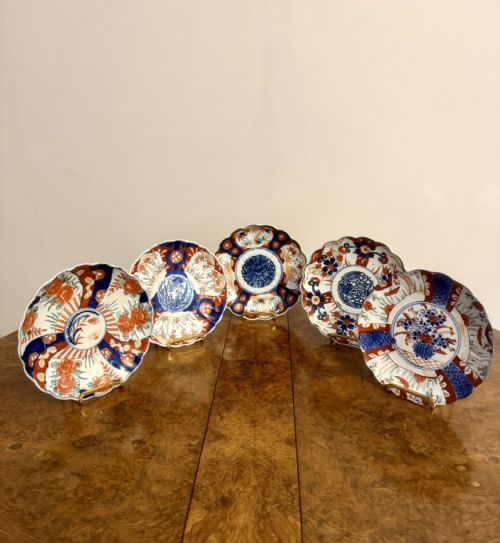
A japanese imari display dish is a decorative ceramic piece intended for visual impact and interior ornamentation. The selection includes chargers, wall plates, bowls, and square or hexagonal service items designed to be shown on tables or mounted on walls.
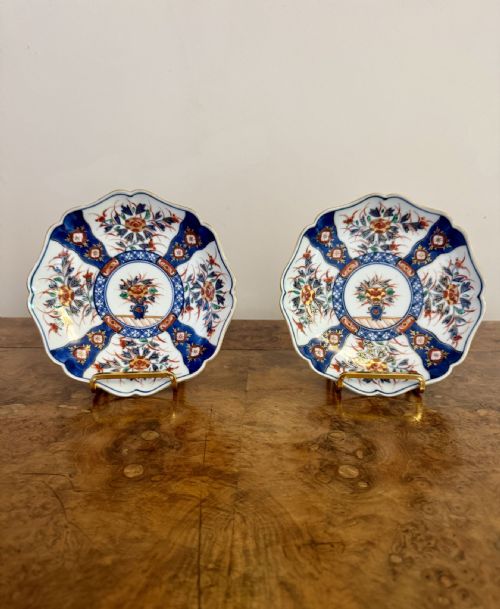
Most examples originate from the Meiji period and the later nineteenth century, though earlier Edo pieces also appear. These objects vary from individual plates to matched pairs and larger decorative sets featuring scalloped or shaped edges.
What varies in quality
The precision and detail of the hand-painted decoration set superior pieces apart from standard production items. Mastery in brushwork across birds, floral patterns, and deities dictates the visual strength of the object.
Unusual geometric forms, such as square or hexagonal plates and deep scalloped edges, demand advanced forming techniques. The richness and preservation of the applied enamel and gold leaf contribute further to the distinction between tiers.
Several plates feature the Seven Lucky Gods sharing space with exotic birds, proving that divine figures enjoy good company.
The Japanese Imari Display Dish Glossary
- Imari
- A style of Japanese porcelain originating from the port of Arita, traditionally decorated in underglaze blue, iron red, and gold. This aesthetic gained widespread popularity across domestic and export markets.
- Charger
- A large decorative plate utilised for display rather than for serving food at table. These substantial pieces often form the focal point of a collection.
- Meiji
- A historical period in Japan spanning from eighteen sixty-eight to nineteen twelve, associated with increased export of detailed decorative arts. Pieces from this era often exhibit intricate hand-painted designs.
- Edo
- A historical period in Japan preceding the Meiji era, known for foundational ceramic traditions. Items attributed to this time represent earlier stylistic phases of production.
- Gilt
- A thin layer of gold applied to the ceramic surface to highlight painted borders and motifs. This decorative technique enhances the reflective quality of the dish under interior light.
Japanese Imari Display Dish: Frequently Asked Questions
How were these dishes used originally?
Many of these large plates and chargers served as decorative centerpieces in formal rooms rather than utilitarian tableware. Their vibrant palettes and detailed scenes were meant to catch the light and draw the eye.
Smaller bowls and plates were occasionally integrated into daily dining, but larger chargers were predominantly reserved for display in traditional interiors.
How do I hang a heavy charger safely?
Displaying a large ceramic charger on a wall requires a properly sized spring-loaded wire hanger that distributes the weight evenly across the rim. Ensure the mounting hook is secured firmly into a wall stud or uses an appropriate wall anchor.
For table display, utilise a sturdy wooden or metal easel designed to support the specific depth and weight of the porcelain bowl or plate.
How do I tell Meiji period pieces apart?
Meiji period items often display a dense application of enamel colours alongside detailed depictions of exotic birds, floral arrangements, or traditional figures like the Seven Lucky Gods. The brushwork tends to be precise and layered with gilt highlights.
Earlier examples from the Edo period may show simpler underglaze blue compositions with restrained iron red and gold additions, reflecting different stylistic priorities of those decades.
How should I clean and care for them?
Dust these porcelain items gently with a dry, soft cloth to prevent the accumulation of particles on the glazed surface. Avoid using chemical cleaners, abrasive sponges, or immersion in water, which can degrade fragile enamel and gold leaf.
Keep the pieces away from direct, prolonged sunlight to preserve the intensity of the iron red pigments and the brightness of the gilding over time.