




Large Japanese Wall Plate
A large Japanese wall plate brings striking colour and intricate pattern to an interior, often taking the form of a substantial porcelain charger or cloisonné dish.

Large Japanese Wall Plate
When searching for a large Japanese wall plate, a buyer encounters substantial decorative chargers, plates, and platters created for display. These pieces originate primarily from the Meiji period and the nineteenth century, spanning various traditional aesthetic movements.
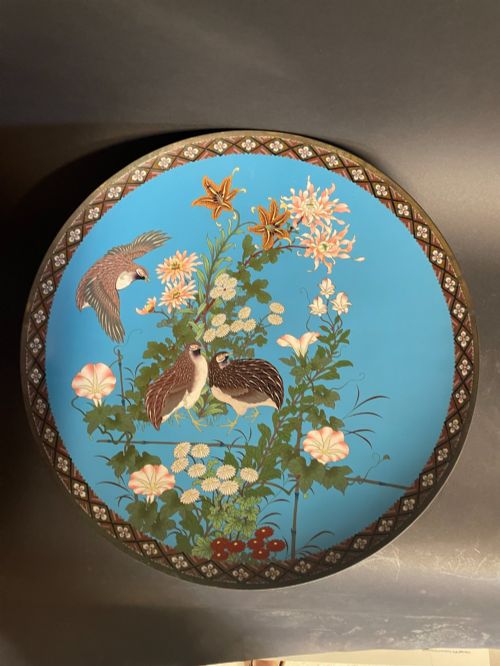
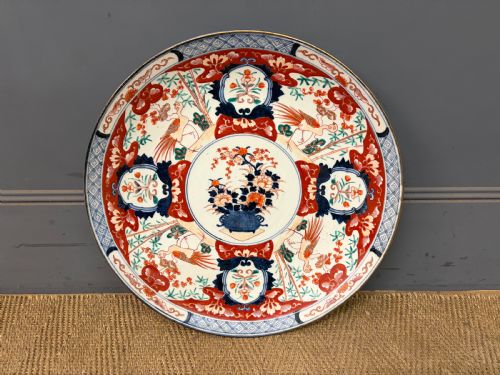
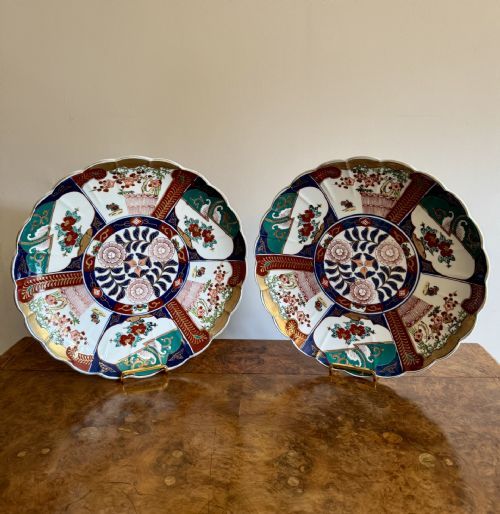
The most common examples on this page are Japanese Imari porcelain chargers, frequently decorated in characteristic blue and white or iron-red palettes. Alongside porcelain, the listings include substantial cloisonné enamel dishes depicting birds, dragons, and figures.
Forms range from traditional circular chargers to square plates and deep dishes. Production dates cluster around the late nineteenth century, reflecting the Victorian era demand for imported East Asian craftsmanship.
Materials and production techniques
Makers utilised high-fired ceramic and porcelain bodies, applying underglaze blue and overglaze enamels, sometimes accented with gilt and gold leaf. The resulting surfaces combine hand-painted pigments with durable, vitrified glazes.
Cloisonné enamel pieces required copper bases fitted with thin metal wire partitions to hold coloured enamel pastes before firing and polishing. Other variations incorporated brass elements and specialised techniques like Totai Shippo over ceramic or wire-free enamel methods.
Several Meiji cloisonné dishes feature meticulous depictions of tree bark textures rendered in enamel alongside swimming cranes.
Distinctions in quality
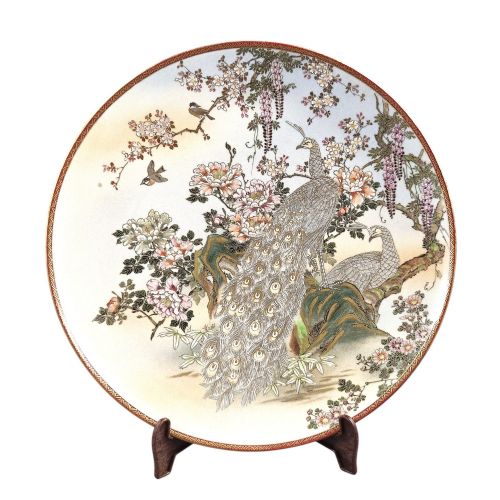
The standard of a large Japanese wall plate rests on the precision and complexity of the decoration, whether hand-painted porcelain or wirework cloisonné. Pieces depicting detailed subjects like dragons, peacocks, or multiple figures demonstrate greater artistic ambition than simpler geometric or floral motifs.
Material application also separates examples, evident in the richness of the enamel colours, the evenness of the glaze, and the presence of artist signatures on metalwork dishes. The crispness of the firing and the balance of the composition determine the standing of each charger.
The Large Japanese Wall Plate Glossary
- Charger
- A large decorative plate or platter intended primarily for display on a wall or sideboard rather than for serving food.
- Imari
- A style of Japanese porcelain named after the port town from which wares were shipped, traditionally featuring cobalt blue, iron red, and gilt detailing.
- Cloisonne
- A metalwork technique where compartments are created on a copper base using thin wire and filled with coloured enamel before firing.
- Satsuma
- A type of earthenware pottery with a pale, ivory-coloured crackle glaze, frequently decorated with elaborate polychrome and gilt designs.
- Meiji Period
- The era in Japanese history spanning from 1868 to 1912, noted for a surge in decorative arts produced for international export.
Large Japanese Wall Plate: Frequently Asked Questions
How were large Japanese wall plates displayed originally?
These decorative chargers and dishes were typically positioned on walls, in cabinets, or on heavy stands to showcase their intricate hand-painted designs in domestic interiors.
Their substantial scale made them natural focal points within Victorian and Meiji-era reception rooms.
What is the difference between Imari and cloisonne?
Imari pieces are made of porcelain decorated with cobalt blue and iron-red glazes, often highlighted with gold leaf. Cloisonne dishes utilise enamel pastes applied within wire cells on a copper or ceramic base.
Both methods yield vibrant surfaces, but they employ entirely distinct materials and workshop techniques.
How do I identify Meiji period pieces?
Meiji period items date from the late nineteenth or early twentieth century, reflecting the artistic output of Japan following the reopening of trade with the West. They frequently bear distinct signatures or feature complex imagery such as dragons, deities, and natural scenes.
The adoption of industrial techniques alongside traditional handcrafting characterises this era of production.
Can these heavy plates be hung safely on walls?
Most large chargers and platters feature sturdy construction suited to careful mounting with appropriate wall fixings designed for heavy ceramics or metalwork. It is essential to use a secure, correctly sized wire or spring hanger that distributes the weight evenly.
Professional framing or specialised display brackets offer additional security for particularly large or valuable examples.