


Japanese Geisha Porcelain
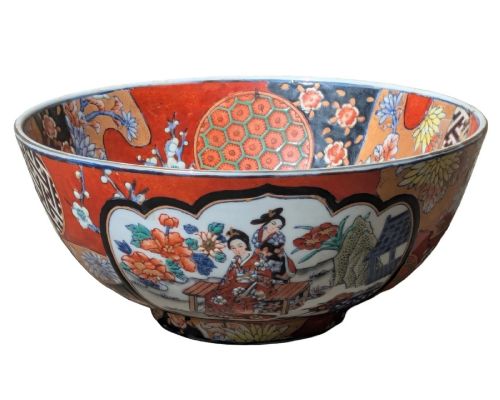
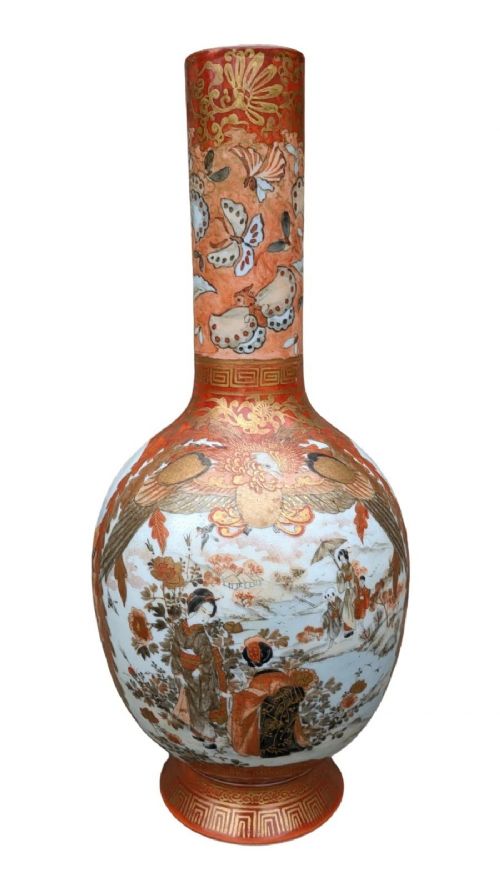
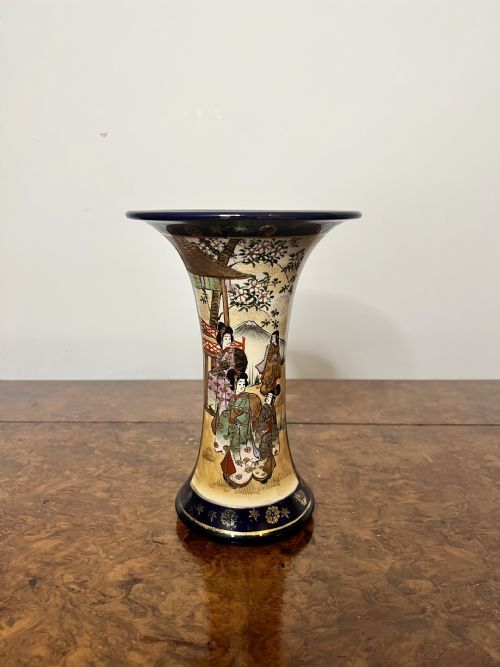
These Japanese geisha porcelain pieces offer hand-finished enamelled decoration and export forms spanning the nineteenth and early twentieth centuries.
Japanese Geisha Porcelain
Buyers seeking Japanese geisha porcelain encounter a varied selection of export ceramics, including Satsuma vases, Kutani figures, Imari plates, and decorative bowls. These objects date from the nineteenth century through the Edwardian and Taisho periods, reflecting traditional craft traditions adapted for Western markets.
The figures and vessels depict court figures, bijin, and geisha decoration rendered in enamel and gold leaf. Formats range from large bottle-shaped vases and okimono figures to sugar bowls and complete tea sets.
How they were made
Potters shaped earthenware and porcelain bodies before applying intricate hand-finished glaze and enamel work. Artisans utilised gold leaf and cobalt grounds to build rich surface patterns.
Techniques such as raised moriage decoration created tactile, textured details on Satsuma and Kutani wares. Kiln firing fixed these mineral pigments and gilding onto the ceramic base.
Even a tea service needs a drum.
What varies in quality
The precision and detail of the hand-painted enamels separate standard export items from superior studio productions. Finer pieces display crisp brushwork, balanced cobalt grounds, and controlled application of gold leaf.
Signature marks from known Kyoto studios and makers indicate higher workshop standards. The depth and execution of moriage relief work further distinguish better examples.
Nanzan mark·Kinkozan Kyoto·Shozan Kyoto Studio·Taniguchi
The Japanese Geisha Porcelain Glossary
- Satsuma
- Earthenware pottery originating from the Satsuma province, typically characterised by a ivory crackle-glaze and elaborate polychrome and gilt enamel decoration. These wares were heavily produced for the export market.
- Kutani
- Japanese porcelain and pottery traditionally associated with strong colour palettes, particularly iron red and gold. Kutani pieces often feature figurative scenes and detailed botanical motifs.
- Imari
- Japanese porcelain decorated in underglaze blue and overglaze red, gold, and green. This style gained immense popularity in Europe during the export trade.
- Moriage
- A decorative ceramic technique using slip trailed in raised dots or lines to create a textured, three-dimensional surface before glazing and gilding. It is frequently seen on Satsuma vases.
- Okimono
- A Japanese freestanding decorative figurine or sculpture intended for display on a shelf or in a tokonoma alcove. These figures often depict historical personages, deities, or traditional court figures like the bijin.
Japanese Geisha Porcelain: Frequently Asked Questions
How do I identify Satsuma ware?
Satsuma ware is typically recognised by its distinctive cream-coloured earthenware body covered in a fine, web-like network of glaze cracks. The surfaces are then richly decorated with hand-painted polychrome enamels and heavy gilding.
Many pieces also feature raised moriage details and maker seals from specific studios, particularly those working in Kyoto during the nineteenth and early twentieth centuries.
What is a bijin figure?
A bijin translates literally to a beautiful woman and refers to traditional depictions of courteous ladies, courtesans, or geisha in Japanese art. These figures appear frequently on painted porcelain plates, okimono sculptures, and decorative vases.
Artists rendered them in traditional robes with detailed hair ornaments, often holding musical instruments or fans.
Are these pieces porcelain or earthenware?
The materials vary depending on the specific tradition and region of manufacture. Satsuma items are typically earthenware with a crackled glaze, whilst Kutani and Imari pieces are generally porcelain.
Both ceramic types were utilised extensively for export wares destined for Western markets during the Meiji and Taisho periods.
How should I display these ceramics?
These decorative bowls, vases, and tea sets benefit from stable placement away from direct sunlight to preserve the stability of the enamel and gold leaf over time. Because many pieces feature delicate hand-finished details and raised gilding, gentle dusting with a dry cloth is recommended.
Okimono figures and tea services are best showcased on flat surfaces where their fine painted scenes can be properly observed.